Jordy Bos Shines as Australia Edges Paraguay in World Cup Clash
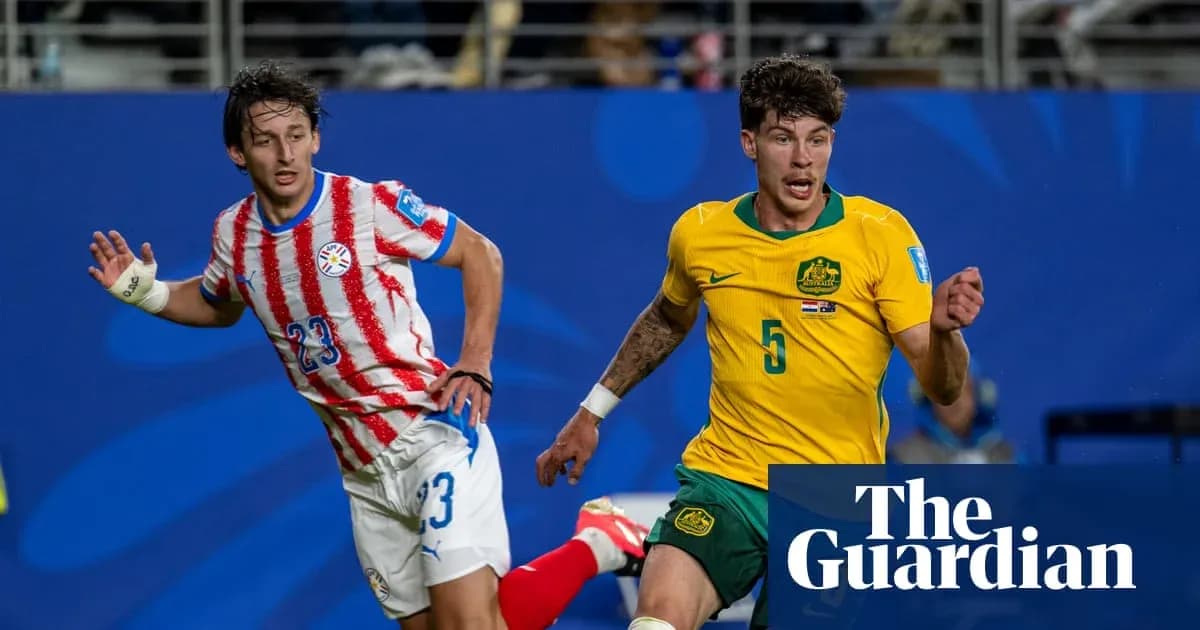
Jordan Bos did not so much play right-back as rip up the job description.
Late in the second half, he was at it again – charging down the flank, rolling through one challenge, then another, before tearing into the box. Every surge dragged Australia up the pitch and Paraguay a little closer to the edge. The Socceroos’ left-back, rebadged on the opposite side, looked less like a full-back and more like a rising tide. Or, as more than one teammate suggested, something straight out of the Gareth Bale playbook.
For long stretches of this cool night by the San Francisco Bay, the scoreboard refused to budge. At 0-0, Australia were edging towards the World Cup last 32, minute by nervous minute. The equation was simple: a point would be enough to claim second in Group D. The feeling was anything but simple.
Every time Julio Enciso slipped into space, hearts skipped. Every time Patrick Beach had to fling himself into another save, the 12,000 Australians painted across the stands gripped their seats a little tighter. Tony Popovic kept glancing at the clock, knowing his side were a single mistake from seeing the knockout rounds vanish into the Californian night.
They did not need a goal. They needed something else. A jolt. A statement that this World Cup campaign, shaken by the loss to the United States, still had a pulse.
They found it in Jordy Bos.
Just a few kilometres from Google’s Mountain View headquarters, Australia’s search engine spat out one answer again and again. Bos. On the right, on the run, on repeat. He bounced through tackles, burned past defenders, and with every metre gained he dragged the ball, and his team, away from danger.
His first-half partner Cristian Volpato was withdrawn. So too Nestory Irankunda, the match-winner against Turkey and the natural headline act in this young side. The spotlight did not dim. Bos simply stepped into it, hammering into duels, storming into the penalty area, playing as if the right flank belonged to him by birthright.
From his vantage point on the wing, substitute Ajdin Hrustic could hardly miss it. “He’s a great player, he’s got power, you’ve seen it,” he said, watching one of the standout Australian World Cup displays in recent memory unfold just ahead of him. Aiden O’Neill, clutching a player of the match trophy he suspected had the wrong name on it, looked almost apologetic. This felt like Bos’s night.
Harry Souttar did not bother to hide his admiration. Bos, he said, is “a special player, a special guy, and just takes everything in his stride”. Then the captain went one step further, marvelling at the defender’s physical presence. “The guy’s body’s just unbelievable to look at,” he said. “I don’t want to obviously put too much pressure on him, but if he keeps performing like that and there’s no ceiling.”
The praise kept coming, and it was not subtle. Milos Degenek called Bos already a top-five left-back in the world and the best in his age bracket. “That’s my opinion, I’m very biased, and I love him,” he admitted. When a journalist cheekily asked where Bos ranked as a right-back, Degenek barely paused. “Top 10,” he replied, laughing.
Irankunda went even higher with his verdict. “He’s the best player in the world, Jordy Bos, best winger in the world,” he said, only half-joking. In his eyes, this performance had cracked open a new possibility. “He might have to switch to a winger, in my opinion. He’s done so well at right-back today, but he got so high up the pitch today and he showed glimpses of what he can do with the ball.”
Popovic’s decision to start Bos at right-back had raised eyebrows before kick-off. Australia had natural options in Kai Trewin and Jason Geria. This was a calculated gamble, based on what the coach had already seen during Bos’s stint in Belgium with Westerlo and in a brief right-back cameo against New Zealand nine months earlier. Popovic trusted his adaptability. On this evidence, he had every right.
“We’ve seen that he can adapt and play on that side,” Popovic said. “It’s the best game he’s played of the three [World Cup matches] by far.”
Bos did not arrive at this tournament as a surprise package. After a strong season in the Dutch Eredivisie, he came in as one of the most polished pieces in this young Socceroos squad, a 23-year-old already hardened by European football. His World Cup, until this night, had been steady rather than spectacular. Reliable, not yet unforgettable.
Then came Paraguay, and an explosion from an unexpected angle. Out of position. One yellow card away from suspension. Every tackle carried a risk, every aerial duel a potential price. He did not blink.
In training this week, Hrustic had started calling him “Dani Alves”, a nod to the Brazilian great who redefined the attacking full-back role from the right. Others had reached for a different comparison: Arjen Robben, the left-footed right winger who spent a decade cutting inside and tormenting defences. Bos tried to cool the talk. “Unfortunately I didn’t score like him, but I tried,” he said.
The numbers, stripped of the noise, told their own story. No Australian took more shots than Bos, with three efforts. He also created the joint-most chances, completed four successful dribbles, and won more duels than anyone else in green and gold, including seven of his nine aerial contests. This was not a cameo. It was a complete performance.
“I was enjoying it too, honestly, tonight,” Bos said. It showed.
The name that has followed him most persistently, though, is Gareth Bale. The Welshman began life as a left-back, then roared forward to become one of the world’s most feared right wingers at Tottenham and Real Madrid. His threat came from a simple, devastating combination: athleticism and power. Bos, on nights like this, looks cut from a similar mould.
Asked which comparison he saw the most of himself in – Alves, Robben, Bale – Bos hesitated, then smiled. “Yeah, Robben … I don’t mind Bale, to be honest,” he replied.
In truth, the choice barely matters. For the fans belting out anthems in yellow, for the teammates grinning through their superlatives, and for a coach quietly vindicated on the touchline, this was the night when the comparisons started to feel secondary.
This was the night Jordy Bos stopped being a projection and started being a problem – for opponents, for defenders, and for anyone still trying to work out whether he is a left-back, a right-back, or something far more dangerous.