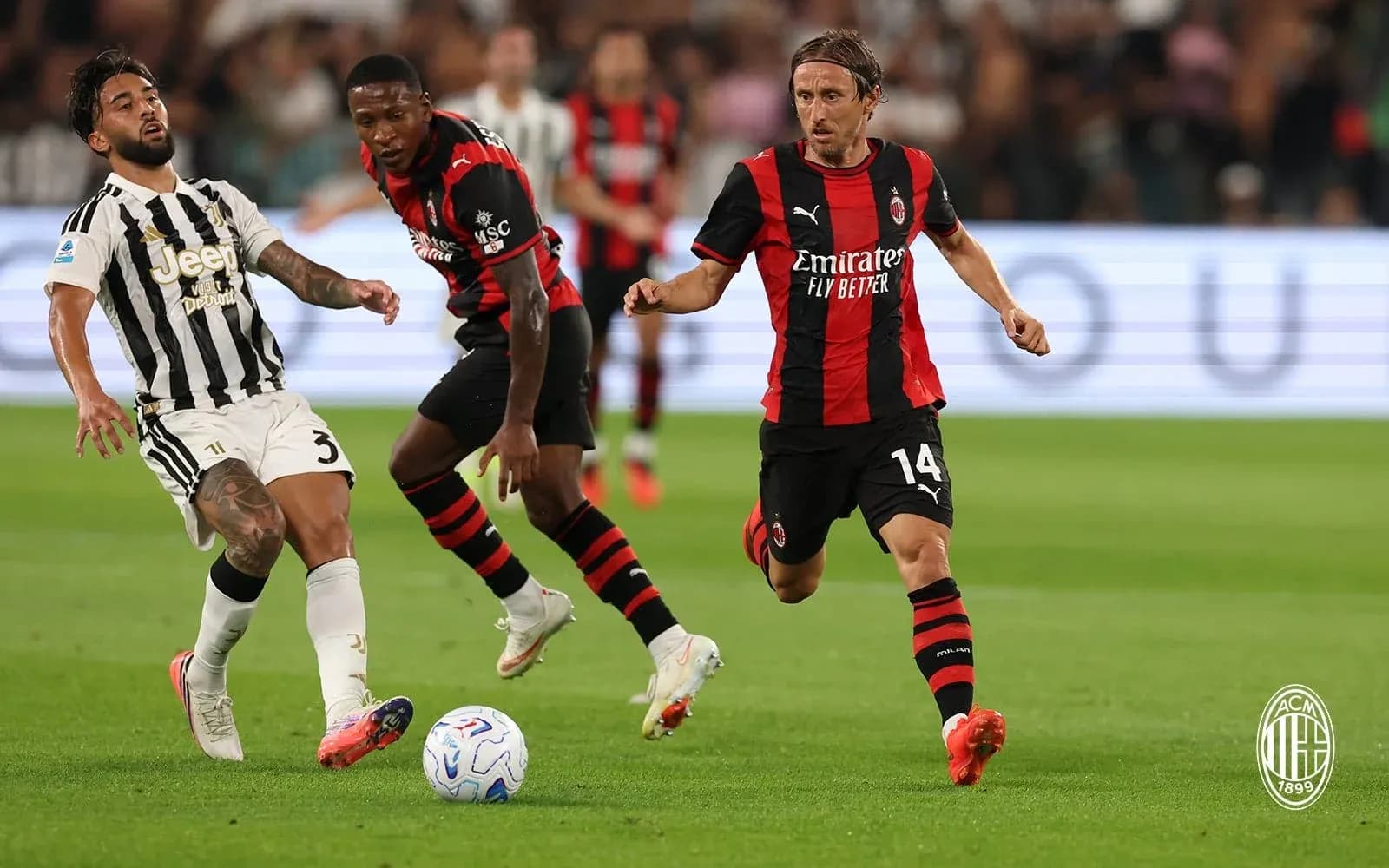
Juventus vs AC Milan: Tactical Insights and Key Matchups
Under the Turin lights at Allianz Stadium, this early‑season Serie A meeting between Juventus and AC Milan arrives with both giants already moving in step. After three rounds, Milan sit 5th with 7 points and a goal difference of 3, Juventus 6th with the same 7 points and the same goal difference of 3. The table says parity; the squads and tactical profiles suggest a far more nuanced duel.
I. The Big Picture – Two Unbeaten Identities
Heading into this game, Juventus have quietly built a platform of control. Overall this campaign they have 2 wins and 1 draw from 3 matches, with 4 goals scored and just 1 conceded. At home they have taken 4 points from 2 outings, scoring 3 and conceding 1. The numbers sketch a side that leans on structure: overall they average 1.3 goals scored and 0.3 conceded per match, a defensive baseline that underpins Luciano Spalletti’s 4‑2‑3‑1.
Milan mirror that unbeaten start with their own 2 wins and 1 draw from 3, but their attacking profile is more explosive. Overall they have scored 5 and conceded 2, averaging 1.7 goals for and 0.7 against. On their travels they have 1 win and 1 draw from 2 away matches, scoring 3 and conceding 2, suggesting more openness once they leave San Siro.
The timing of their goals hints at contrasting rhythms. Juventus are a late‑game team: overall this campaign, 50% of their goals have arrived between 76‑90 minutes, with another 25% in the 61‑75 window. Milan, by contrast, have been devastating in one particular phase: overall, 100% of their league goals have come between 61‑75 minutes. This is a contest between a side that tends to surge just after the hour and another that often lands its heaviest blows even later.
II. Tactical Voids – Absences and What They Force
Juventus arrive with a lengthy absentee list that shapes Spalletti’s options. J. Cabal (thigh), A. Cambiaso (ankle), J. Ekhator (muscle), W. McKennie (muscle), A. Milik (inactive), P. M. Sarr (muscle), K. Thuram (knee) and K. Yildiz (foot) are all ruled out. That cluster of injuries strips depth from both full‑back and midfield zones and removes a classic penalty‑box striker profile in Milik and a dynamic runner in McKennie.
The starting XI reflects that reality. G. Vicario anchors a back four of Z. Celik, J. Lucumi, Bremer and P. Kalulu in front of him, with M. Locatelli and Douglas Luiz as the double pivot. Ahead of them, F. Conceicao, N. Gonzalez and K. Alajbegovic support R. Kolo Muani. It is a side tilted toward mobility and pressing rather than traditional target‑man play.
On the bench, Spalletti’s most intriguing card is T. Koopmeiners. Overall this campaign he has 1 goal and 1 assist from just 46 minutes, with 88% pass accuracy and a key pass already to his name. He has also blocked 1 shot and made 1 interception, underscoring his two‑way value. His role as a high‑impact substitute fits Juventus’ late‑goal trend perfectly.
Milan’s only listed absentee is M. Gabbia with an ankle injury, a blow to their defensive depth but not to the starting structure. Ruben Amorim sticks to his 3‑4‑2‑1: M. Maignan behind a back three of S. Pavlovic, K. De Winter and M. Gila; a midfield line of P. Estupinan, Y. Musah, L. Modric and D. Moreira; with A. Saelemaekers and A. Rabiot tucked behind G. Ramos.
The bench, however, is loaded with game‑changers. R. Loftus‑Cheek, S. Chukwueze, A. Cisse, F. Camarda and C. Pulisic all wait in reserve, giving Amorim the ability to completely alter the attacking geometry after the hour.
Disciplinary trends matter here too. Overall this campaign, Juventus’ yellow cards are spread but spike between 46‑60 minutes (40% of their cautions) and then shared between 0‑15, 76‑90 and 91‑105 (each at 20%). Milan’s bookings cluster later: 20% in each of the 46‑60, 61‑75 and 76‑90 windows, but a heavy 40% between 91‑105. R. Loftus‑Cheek and A. Cisse both carry 1 yellow overall this season, while Loftus‑Cheek also appears among the top red‑carded profiles, underlining his disciplinary volatility when the game becomes stretched.
III. Key Matchups – Hunter vs Shield, Engine Room vs Enforcer
The “Hunter vs Shield” narrative is unusually collective rather than individual. Milan’s overall attacking edge is driven by depth: A. Cisse is their leading scorer with 2 goals from 5 shots, while A. Rabiot has added 1 goal and 1 assist, and A. Saelemaekers 1 assist. S. Chukwueze is the league’s second‑ranked provider with 2 assists and 8 key passes overall, a wide creator who can be introduced from the bench to target tiring full‑backs.
They run into a Juventus defence that has conceded just 1 goal overall this campaign, with 2 clean sheets and no match in which they have failed to score. At home, Juventus allow 0.5 goals per game. Their only conceded goal came in the 61‑75 window, exactly when Milan have scored all of theirs so far. That is the critical intersection: Milan’s post‑interval blitz against the one time Juventus have been breached.
Individually, Bremer’s duel with G. Ramos will be central. With Milan’s wing‑backs P. Estupinan and D. Moreira pushing high, Ramos will often be isolated against the Brazilian in early phases before support arrives from Rabiot and Saelemaekers. If Bremer wins those duels, Milan’s 3‑4‑2‑1 can be forced into harmless circulation in front of Juventus’ block.
In the “Engine Room”, Modric and Musah face Locatelli and Douglas Luiz. Modric’s ability to dictate tempo and find the half‑spaces where Rabiot operates will be tested by Locatelli’s positional discipline. Douglas Luiz, meanwhile, is key to Juventus’ verticality, tasked with finding early passes into Kolo Muani and the advanced midfield line. If he can bypass Milan’s first press, Juventus can attack the channels outside De Winter and Pavlovic, particularly through F. Conceicao and Gonzalez.
Later, the introduction of Koopmeiners on one side and Chukwueze or Cisse on the other could tilt the balance. Koopmeiners’ late surges and set‑piece quality offer Juventus a different threat; Chukwueze’s 4 tackles and 2 successful dribbles overall show he can both press and carry Milan up the pitch in transition.
IV. Statistical Prognosis – Margins and Moments
Both teams arrive with perfect records from the penalty spot this season only in the sense that neither has taken one: overall, each has 0 penalties, 0 scored and 0 missed. This heightens the importance of open‑play efficiency and set‑pieces.
Juventus’ under‑over profile suggests tight contests: overall they have gone over 1.5 goals just once in three matches, and never over 2.5. Milan, despite scoring more, have also stayed under 2.5 in all three of their games. Combined with their defensive records (Juventus 1 conceded overall, Milan 2), the data points to a low‑scoring, finely balanced match.
The decisive phase is likely to be from 60 minutes onward. Milan’s 61‑75 surge collides with Juventus’ only defensive lapse zone, while Juventus’ 76‑90 scoring spike meets a Milan side that concedes all of its goals between 76‑90. Expect Amorim to throw on Chukwueze and possibly Cisse around the hour to chase that window, and Spalletti to answer with Koopmeiners and perhaps E. Zhegrova or J. Boga to exploit the spaces that open as Milan commit forward.
Tactically and statistically, this feels like a game of traded punches in the final half hour rather than an early knockout. With both sides unbeaten, disciplined, and yet prone to late drama, the margins at Allianz Stadium will be measured not in volume of chances but in who manages those critical minutes between 61 and 90 with greater clarity and control.