Juventus Dominates Parma 2–0: A Tactical Analysis
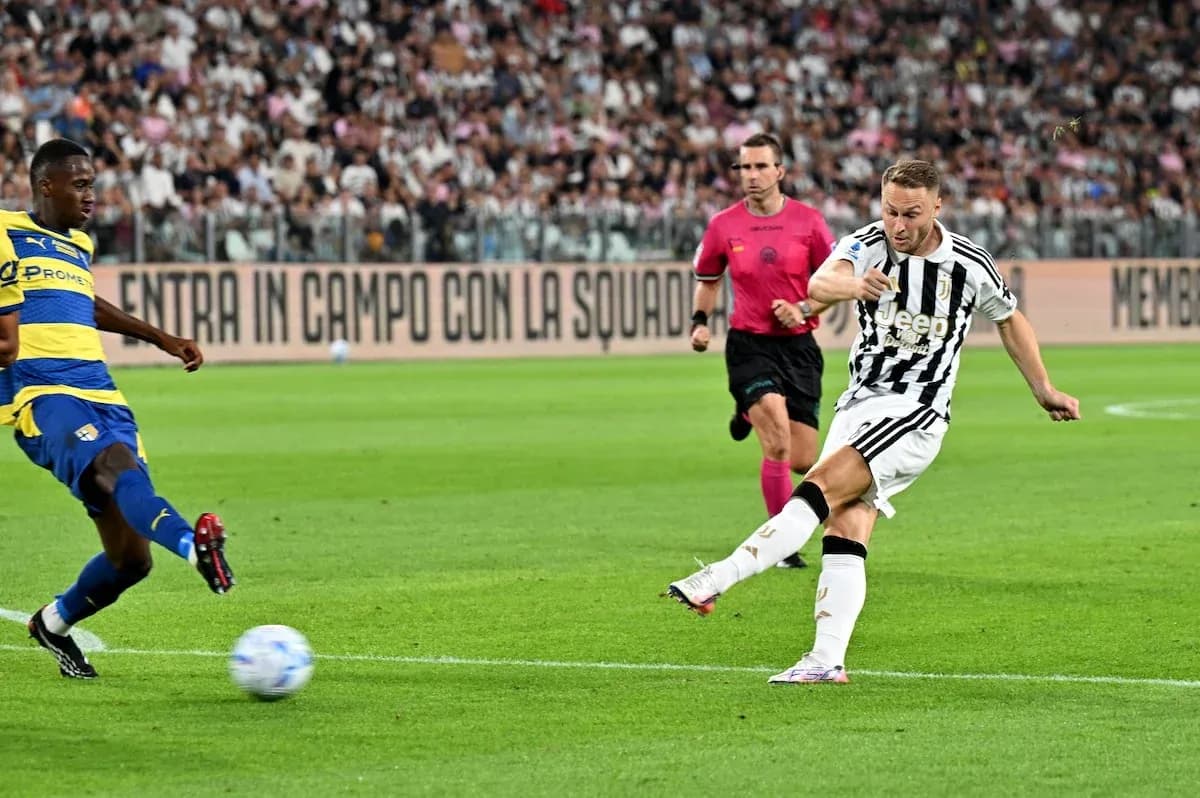
Under the lights of the Allianz Stadium, Juventus’ 2–0 win over Parma felt less like an early-season skirmish and more like a manifesto. In Regular Season - 2 of Serie A, Luciano Spalletti’s side consolidated their status as early contenders, while Carlos Cuesta’s Parma were reminded of the gulf that still exists between survival projects and Champions League aspirants.
I. The Big Picture – Structures and Season DNA
Spalletti went with a clear, symmetrical 4-4-2. Guglielmo Vicario anchored a back four of Zeki Çelik, Jhon Lucumí, Bremer and Pierre Kalulu. Ahead of them, a flat but flexible midfield line of Francisco Conceição, Manuel Locatelli, Douglas Luiz and Jérémie Boga supported a front two of Randal Kolo Muani and Jonathan David.
This shape fits neatly into Juventus’ early-season identity. Heading into this game, they had taken maximum points from 2 matches, with 3 goals scored and none conceded overall. At home they had already scored 2 and conceded 0; away, 1 scored and 0 conceded. The goal difference of +3 (3 scored, 0 against) underpins a side built on control and clean sheets rather than chaos. Their overall scoring average sat at 1.5 goals per game, with 2.0 at home and 1.0 on their travels, and they had yet to fail to score or concede.
Parma mirrored the shape but not the security. Cuesta also lined up in a 4-4-2: Elias Corvi in goal behind Enrico Delprato, Mariano Troilo, D. Drobnic and Enrico Valeri; a midfield of S. Britschgi, C. Ordonez, Adrián Bernabé and M. Keita; with S. Lontani and E. B. Toure up front. Yet beneath the symmetry lay fragility. Heading into this game, Parma had lost both matches, with 0 goals scored and 3 conceded overall – a goal difference of -3 (0 for, 3 against). At home they had lost 0–1; away, 2–0. Their averages told a stark story: 0.0 goals scored per match both home and away, and 1.5 conceded overall (1.0 at home, 2.0 on their travels).
II. Tactical Voids – Absences and Discipline
Both coaches had to navigate significant absences that shaped their benches and contingency plans.
For Juventus, Weston McKennie (muscle injury), Khephren Thuram (knee injury), Kenan Yildiz (foot injury) and Edon Zhegrova (muscle injury) were all ruled out. This stripped Spalletti of rotation options in midfield and the half-spaces, making the roles of Locatelli, Douglas Luiz and Conceição even more central. The double pivot had to shoulder both progression and protection without the energy and verticality McKennie or Thuram might normally provide.
Parma were without Hans Nicolussi Caviglia (groin injury), a notable absence in their attempt to build through midfield under pressure. In a side already struggling to score, losing a technical midfielder capable of linking phases further blunted their transitions.
Disciplinary trends added another layer. Juventus’ yellow cards this season have come in a spread that hints at controlled aggression: 25.00% in the opening 0–15 minutes, a spike to 50.00% between 46–60, and another 25.00% in the 76–90 range. It paints a picture of a team that sets an early tone, then raises the intensity after half-time and in the closing stretch. Individually, Andrea Cambiaso and Çelik have each been booked once, with Cambiaso also ranking among the league’s most carded defenders despite only 31 minutes played. Spalletti clearly trusts his full-backs to defend on the front foot, even at the cost of bookings.
Parma’s yellow-card distribution is more reactive. They have collected cards only after the break: 33.33% between 46–60, 33.33% from 76–90, and 33.33% in added time (91–105). That late-game cluster speaks of a side chasing, fouling under pressure rather than dictating. Abdou Konate, Troilo and Delprato all sit on one yellow each, with Troilo and Delprato key figures in a back line that is often forced into last-ditch interventions.
III. Key Matchups – Hunter vs Shield, Engine Room Battles
The “Hunter vs Shield” duel in this contest was less about a single scorer and more about Juventus’ collective attacking cast against a porous Parma defence.
From the bench, Teun Koopmeiners has been one of Juventus’ early-season difference-makers, with 1 goal in just 20 minutes of league action. Even though he did not start here, his presence among the substitutes offered Spalletti a late, high-impact option between the lines against a Parma defence that concedes 2.0 goals per game on their travels. Troilo, one of Parma’s standout defenders so far, has blocked 2 shots and maintained a passing accuracy of 91%, but his single yellow card and the team’s overall concession rate underline how often he is defending under duress rather than in structure.
On the flanks, Conceição’s duel with Valeri and Keita was decisive. Conceição has already delivered 1 assist in 2 appearances, with 70 passes at 90% accuracy, 6 key passes and 12 dribble attempts, half of them successful. His ability to attack one-on-one and deliver from wide areas is central to Juventus’ 4-4-2. Against a Parma unit that has yet to keep a clean sheet and has conceded from both home and away positions, his creativity was always likely to tilt the game.
In the “Engine Room”, Locatelli and Douglas Luiz faced Bernabé and Ordonez. Locatelli’s season numbers are those of a metronome with bite: 159 passes at 90% accuracy, 5 key passes, 7 interceptions and 2 tackles in 180 minutes, plus 1 assist. He sets Juventus’ tempo and shuts down counters. Parma, by contrast, have not yet found a midfielder with comparable control. Konate’s 3 tackles and 2 interceptions in 94 minutes hint at promise, but he is more firefighter than conductor in a side that spends long stretches without the ball.
IV. Statistical Prognosis – What This Performance Signals
Following this result, Juventus’ early-season profile hardens: a team that wins, keeps clean sheets and manages games with maturity. Their overall record of 2 wins from 2, 3 scored and 0 conceded, is no accident. The clean-sheet streak, supported by a defensive line that has yet to allow a league goal, gives Spalletti the platform to rotate attacking weapons like Koopmeiners, Cambiaso, Milik and Nicolás González from the bench without fear of destabilising the structure.
Parma, meanwhile, leave Turin with their problems laid bare. Two defeats, 0 goals scored and 3 conceded overall heading into this fixture, now extended by another 2–0 away loss, reinforce the narrative of a side that can organise in phases but cannot yet threaten consistently. Their failure to score in both home and away matches, combined with a concession rate of 1.5 goals per game overall, suggests that even marginal xG improvements will not be enough unless Cuesta finds a reliable finisher and a more secure midfield screen.
In tactical terms, Juventus look like a side built to overperform their raw numbers: efficient rather than explosive, with a deep bench and a clear structure. Parma, by contrast, are exactly what their statistics say they are – defensively stretched on their travels, blunt in attack, and reliant on defensive heroics from players like Troilo and Delprato just to stay in games.
The night in Turin, then, was less a surprise than a confirmation: Juventus are already moving with Champions League-stage assurance, while Parma are still learning how to survive ninety minutes against a side that rarely gives you a second chance.