Liverpool and Brentford Conclude Season with 1–1 Draw
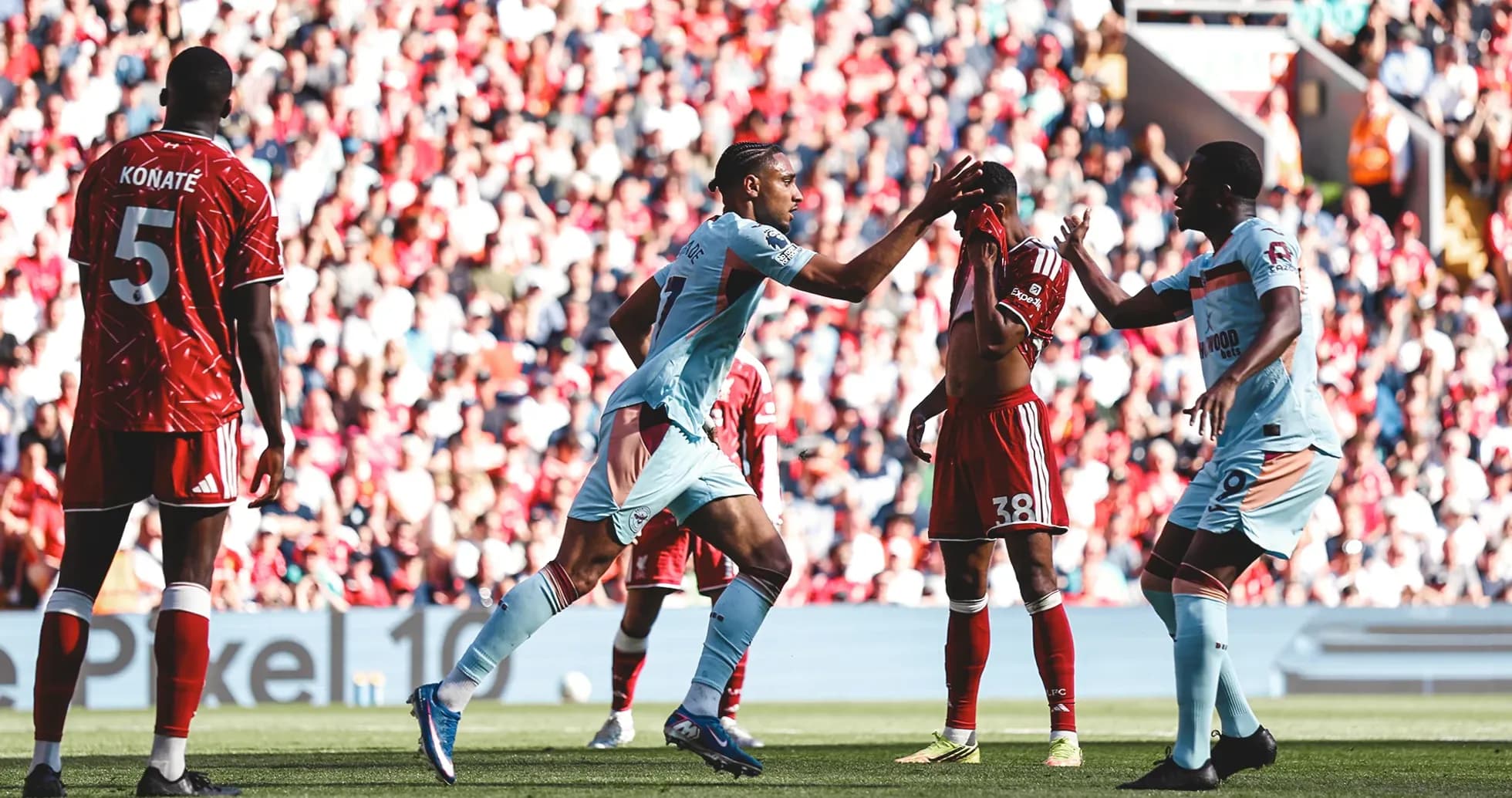
Anfield’s final act of the 2025–26 Premier League season ended not with a roar but with a stalemate: Liverpool 1–1 Brentford, a result that crystallised the identities of both sides. Following this result, Liverpool closed the campaign in 5th on 60 points, Brentford in 9th with 53. The numbers behind them tell a story of contrasting routes to the same destination: Liverpool’s overall 63 goals for and 53 against (a goal difference of 10) speak of attacking ambition laced with defensive volatility, while Brentford’s 55 scored and 52 conceded (a goal difference of 3) underline a side that has learned to live on fine margins.
I. The Big Picture – Structure and Intent
Both managers doubled down on their seasonal blueprint. Arne Slot went again with Liverpool’s favoured 4-2-3-1, a shape the team has used in 34 league games. Alisson anchored a back four of C. Jones, Ibrahima Konaté, Virgil van Dijk and Andy Robertson. Ahead of them, Ryan Gravenberch and Alexis Mac Allister formed the double pivot, with Mohamed Salah, Dominik Szoboszlai and the young R. Ngumoha supporting Cody Gakpo as the lone forward.
Keith Andrews mirrored the system with Brentford’s own 4-2-3-1, their most-used formation with 29 league outings. Caoimhín Kelleher started in goal, protected by M. Kayode, Sepp van den Berg, Nathan Collins and K. Lewis-Potter. In midfield, the industrious pairing of J. Henderson and Vitaly Janelt sat behind an energetic band of three: Dango Ouattara, Mathias Jensen and Kevin Schade, all funnelling service into their talisman Igor Thiago.
The tactical symmetry set the stage for a chess match more than a shootout, despite both clubs’ attacking profiles. At home, Liverpool have averaged 1.8 goals for and 1.1 against, while Brentford on their travels have produced 1.2 goals for and conceded 1.6. The draw reflected a balance between Liverpool’s home thrust and Brentford’s capacity to survive and counter away.
II. Tactical Voids – Who Was Missing, and What It Cost
Both benches were shaped by absences that mattered more in structure than in star power. Liverpool were without S. Bajcetic (hamstring), C. Bradley (knee), H. Ekitike (Achilles tendon) and G. Leoni (knee). Ekitike’s absence was the most tactically significant: with 11 league goals and 4 assists, he has been Liverpool’s alternative focal point, a different profile to Gakpo. Without him, Slot’s front line was narrower in its options, leaning heavily on Gakpo’s all-round play and Salah’s creativity.
For Brentford, F. Carvalho (knee), Rico Henry (hamstring) and A. Milambo (knee) were ruled out. Henry’s absence on the left has been a season-long tactical wound; without his overlapping threat, Andrews has often repurposed K. Lewis-Potter deeper, as here, trading some attacking width for defensive stability. Carvalho’s creativity between the lines was also missed, placing more responsibility on Jensen as the primary connector.
Disciplinary trends shaped the emotional undercurrent, even if no new red cards were shown here. Liverpool’s season-long yellow-card profile shows a pronounced late-game spike: 31.58% of their bookings arrive between 76–90 minutes, a sign of a side that pushes the edge when chasing or protecting results. Brentford, too, lean into the chaos of the final quarter, with 26.09% of their yellows in the same window and a notable 21.74% from 61–75 minutes. Both sides are accustomed to walking the disciplinary tightrope as legs tire and spaces open.
III. Key Matchups – Hunter vs Shield, Engine Room Battles
The headline duel was always going to be Igor Thiago versus Liverpool’s defensive core. Thiago closed the season with 22 league goals and 1 assist in 38 appearances, a classic penalty-box hunter who still contributes outside the area: 67 shots, 43 on target, plus 24 key passes. He also carries a physical edge, engaging in 524 duels and winning 202, and he has earned 7 yellow cards through that combative style. Crucially, he is not flawless from the spot; with 8 penalties scored and 1 missed, his record is strong but not unblemished.
Against him stood Van Dijk and Konaté, shielded by Gravenberch and Mac Allister. Liverpool’s overall defensive record – 53 conceded, with 20 at home – suggests they can be controlled at Anfield but are far from impermeable. The task was to restrict Thiago’s service from wide and half-space areas, where Ouattara and Schade thrive. Schade, in particular, embodies Brentford’s edge-of-the-knife aggression: 8 goals, 3 assists, 429 duels (188 won), and a disciplinary line that includes 6 yellows and 1 red, plus 2 penalties won but 1 missed.
In the engine room, the contrast was equally stark. For Liverpool, Szoboszlai has been the season’s metronome and disruptor: 6 goals, 7 assists, 78 key passes and 2,184 completed passes at 87% accuracy. He also does the dirty work, with 55 tackles, 8 blocked shots and 30 interceptions – and his edge has sometimes spilled over, with 8 yellow cards and 1 red, plus a missed penalty that underlines Liverpool’s fallibility from the spot despite a separate team record of 1 penalty scored from 1 taken in the league.
Alongside him, Salah and Gakpo formed a creative triangle. Salah’s 7 goals and 7 assists, backed by 49 key passes, framed him as both finisher and playmaker. Gakpo, with 7 goals and 5 assists, added vertical running and link play, his 53 key passes and 334 duels (162 won) making him central to Liverpool’s pressing and transition game.
Brentford’s response lay in Henderson’s experience and Janelt’s work rate. Their job was to compress the central lanes, deny Szoboszlai time to thread vertical passes, and force Liverpool’s attacks wide into areas where Kayode and Lewis-Potter could double up with their wingers. Jensen’s role as the creative hinge was to exploit any overcommitment from Liverpool’s double pivot, feeding Thiago early and often.
IV. Statistical Prognosis – What the Numbers Say About the Draw
Across the season, both teams’ Expected Goals profiles (while not explicitly listed here) can be inferred from their raw scoring and conceding trends. Liverpool’s overall 1.7 goals for and 1.4 against per game, combined with 10 clean sheets and only 4 games where they failed to score, describe a side whose xG for is consistently healthy but whose defensive xG against is rarely trivial. Brentford’s overall 1.4 goals for and 1.4 against, with 10 clean sheets and 12 games failing to score, suggest a more volatile attacking output but a broadly similar defensive xG footprint.
In that context, a 1–1 feels like the median outcome of two teams whose statistical baselines converge. Liverpool’s home attacking average of 1.8 met Brentford’s away concession of 1.6; Brentford’s away scoring rate of 1.2 brushed against Liverpool’s home concession of 1.1. Both sides are used to matches decided in the final quarter, where their yellow-card surges point to frantic, stretched football. That this finale settled level rather than in late drama owed as much to individual duels – Van Dijk and Konaté versus Thiago, Szoboszlai versus Henderson and Janelt – as to system.
Following this result, Liverpool’s season reads as a high-ceiling, high-variance campaign that still delivered Champions League qualification. Brentford’s, by contrast, is the story of a mid-table side with an elite finisher in Thiago and a structure robust enough to travel to Anfield and emerge unbowed. The numbers suggest that, on another day, with the same shot volumes and penalty profiles, either side could have edged it. But on this one, the data and the drama aligned: two teams with mirrored systems, converging averages and combustible late-game tendencies walked away with a point that felt, statistically and tactically, exactly what they deserved.