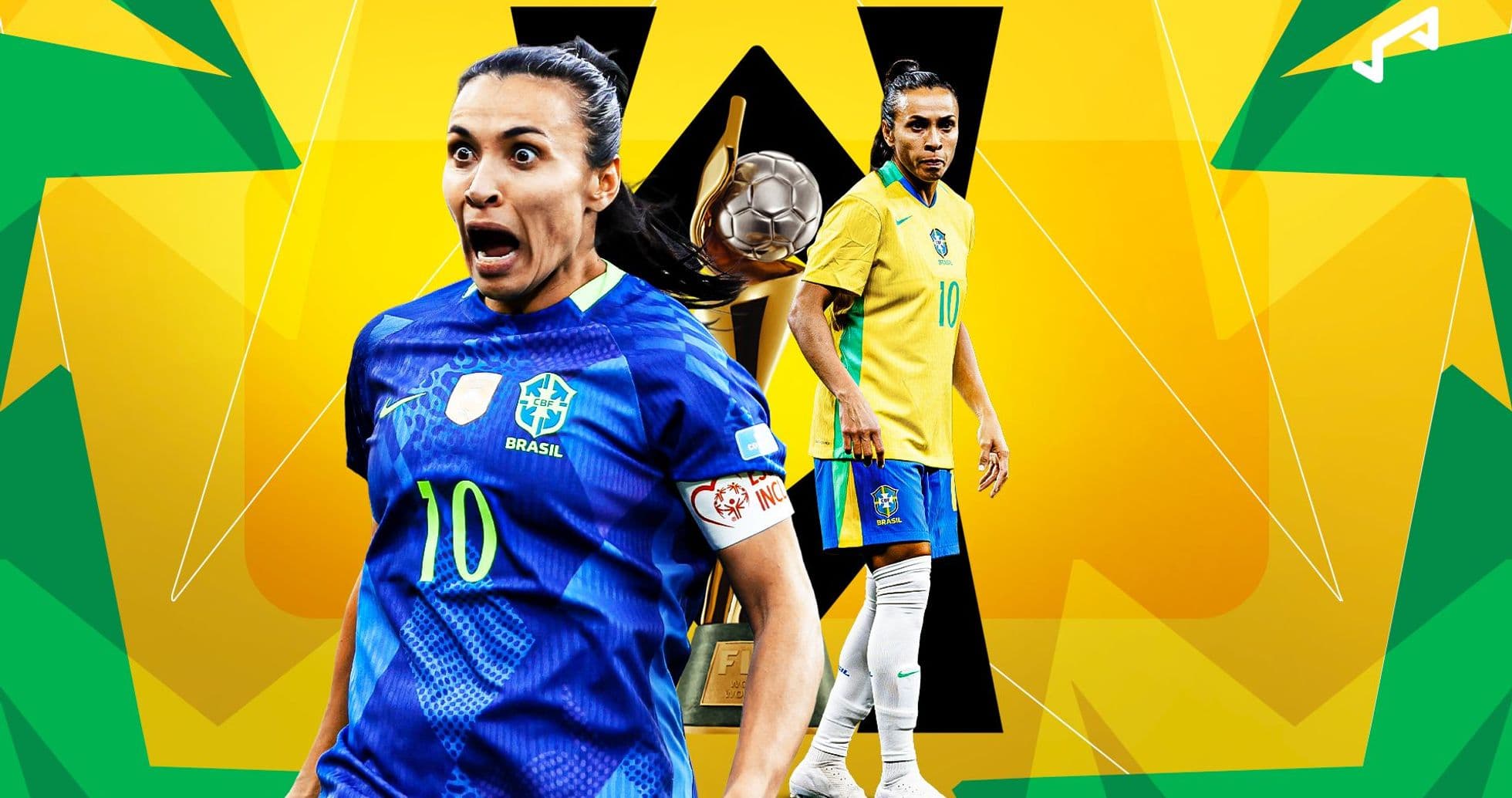
Marta's Final World Cup: Brazil's Legendary Forward Eyes Historic Farewell in 2027
Known as the greatest female footballer ever, Marta is preparing to lead Brazil one last time on home ground during the 2027 Women’s World Cup. At 41 years old when the tournament begins, she hopes to inspire her nation and secure a long-awaited World Cup title.
The Unmatched Legacy of Marta
In sports, GOAT debates are common. For men’s football, names like Lionel Messi and Cristiano Ronaldo dominate discussions, with legends such as Diego Maradona and Pele also present. On the women's side, Marta stands alone. The Brazilian icon was even called ‘Pele in a skirt’ by Pele himself. Her brilliant career spans over two decades, shining brightly before women’s football gained its current popularity.
Marta’s talent helped her win titles including the Champions League and Copa America. She holds the record as the all-time top goal scorer in Women’s World Cup history. Yet, a World Cup winners’ medal has eluded her so far.
At 40, Marta is chasing what might be her final chance. Though she initially retired from international play after the 2024 Olympics—where Brazil narrowly lost to the United States in the gold medal match—she returned to play a key role in Brazil’s 2023 Copa America victory. With Brazil hosting the 2027 tournament, it looks like Marta will have one last opportunity to make history on home soil.
The Golden Generation That Almost Was
Back in 2007, Marta was the standout player as Brazil reached the Women’s World Cup final. Despite their talent, the team fell to Germany 2-0. That year, Marta won the second of five consecutive FIFA World Player of the Year awards.
She wasn’t alone in excellence; teammates included Cristiane, a powerful forward with multiple top-three finishes in FIFA awards; Formiga, who became the most capped international footballer ever; Pretinha, known for clutch goals in major tournaments; and Rosana, who earned over 100 caps and played for Lyon, contributing to one of their eight Champions League wins.
This group formed a golden generation that many believed would bring Brazil its first Women’s World Cup trophy.
Missed Opportunities Due to Lack of Support
Unfortunately, the Brazilian Football Confederation (CBF) did not invest adequately or early enough. Rosana once explained that unlike other countries, investment in Brazilian women's football only came after the players had already proven themselves on the field.
Brazil dominated South America, winning nine out of ten Copa America Femenina tournaments since 1991. Yet, they repeatedly fell short on the global stage, securing silver medals at the 2004 and 2008 Olympics but never capturing a major world title. Some say this may be the strongest women’s football team to never win a major international trophy.
Rosana expressed regret in 2021 about the timing of investment missing their prime chances to achieve ultimate glory.
Marta’s Club Success and Rising Stardom
Beyond the national team, Marta’s career blossomed. She joined Umea IK in Sweden in 2004, where she adapted quickly despite arriving in snowy conditions. With Umea, she secured four consecutive Damallsvenskan titles and a UEFA Women’s Cup (now Champions League), reaching additional European finals.
Her unique style broke patterns on the pitch, winning games and trophies in ways coaches hadn’t seen before. Later, she moved to the United States, claiming two national championships, then returned to Sweden—a country where she holds citizenship and speaks fluently. Along the way, she earned numerous individual honors, including Golden Boots and Player of the Year awards.
International Heartbreaks Persist
Despite her club success, Marta and Brazil struggled internationally throughout the 2010s. The 2011 World Cup saw Brazil eliminated in the quarterfinals after a penalty shootout loss to the U.S., followed by defeat to Japan at the 2012 Olympics at the same stage.
The 2015 World Cup ended in the round of 16 with a loss to Australia, raising concerns. Brazil hosted the 2016 Olympics and reached the semifinals, but a defeat in the bronze medal match was painful.
An Emotional Farewell That Wasn’t
The 2019 World Cup seemed like Marta’s swan song. At 33, her future was uncertain, and after Brazil’s exit against France in the last 16, she gave an emotional plea to younger players and fans.
“There’s not going to be a Formiga forever, there’s not going to be a Marta forever, there’s not going to be a Cristiane. Women’s football depends on you to survive. Think about it, value it more. We’re asking for support. You have to cry at the beginning and smile at the end.”
Her heartfelt message recognized her own career’s nearing end but encouraged others to keep the sport alive.
One More Shot at Glory
Rather than retiring, Marta continued playing. In 2023, despite another tough tournament with Brazil’s early exit, she remained determined. By 2024, at 38, she helped the Orlando Pride win both the NWSL Shield and Championship. That same year, she played a pivotal role in guiding Brazil to their first major final since 2008—the Olympic gold medal match.
No players from the 2007 World Cup squad remain except Marta. Though she may no longer be the dominant force she once was, her influence helped build a new generation ready to challenge for the World Cup.
As captain in 2027, Marta will lead Brazil on home soil, hoping to claim the ultimate prize in what could be her final, unforgettable farewell.