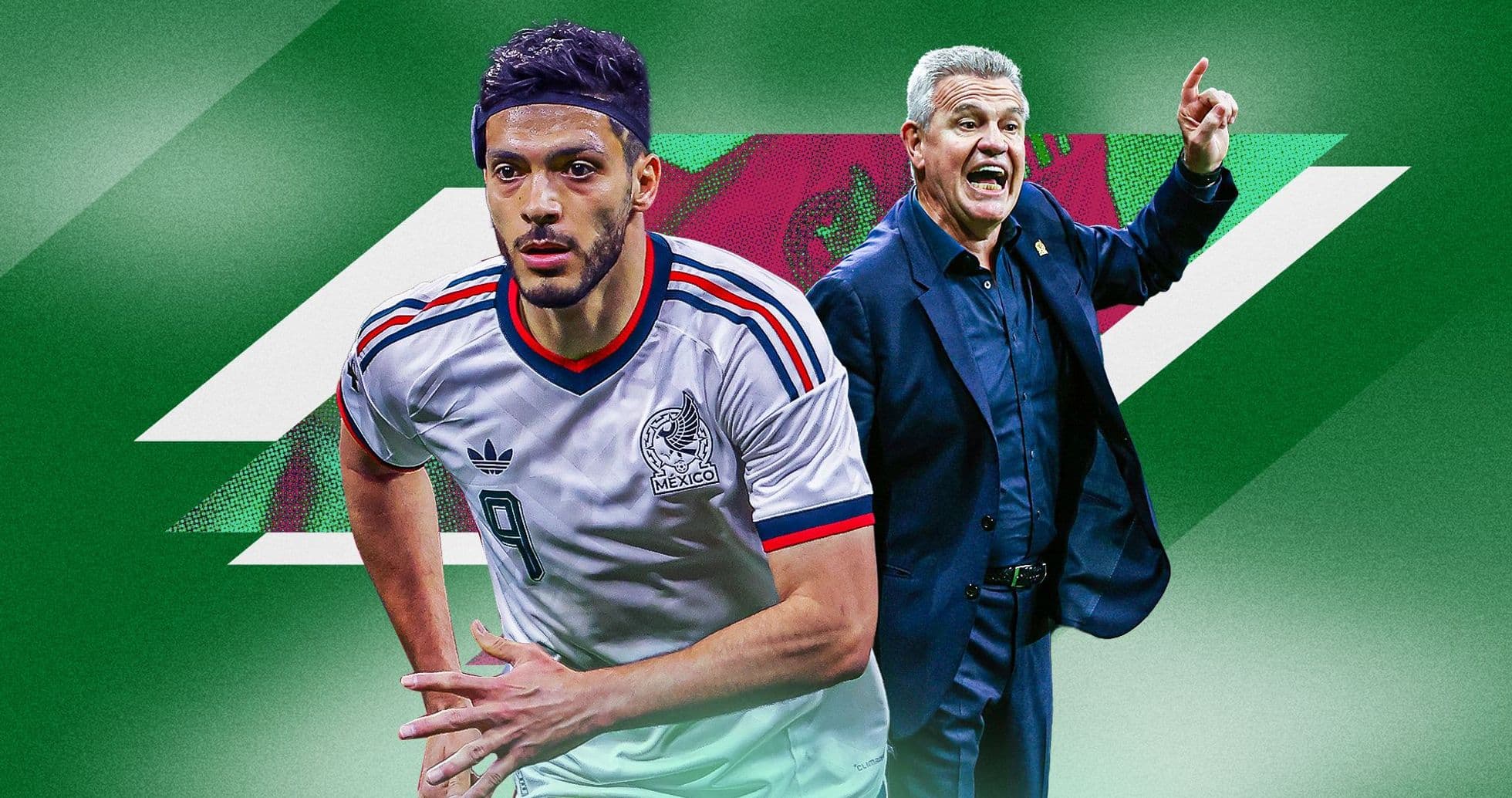
Mexico's World Cup Hopes: Aguirre's Last Stand
The clock is ticking loudly for El Tri.
A nation that has lived with the same World Cup wound for decades expects, at the very least, safe passage from the group. Anything less than the last 16 would be a failure. Topping the group, though, could clear a lane to the knockouts before the real giants appear on the horizon.
This Mexico side arrives built on contrast: grizzled veterans who know every scar of this tournament, and kids who grew up watching those scars on television.
Aguirre’s last stand
On the touchline, a familiar figure returns for one last shot. Javier Aguirre, ‘El Vasco’, is back for a third World Cup with Mexico, knowing he will hand the reins to his assistant Rafa Marquez when the tournament ends.
He comes with a heavy résumé: two-time Gold Cup winner, a coach who has been trusted in Europe and with national teams. Yet at home, he divides opinion. Many Mexican fans rail against his conservative streak, his preference for structure over spectacle. They see a coach who protects results, sometimes at the expense of the kind of football they feel this generation should play.
True to form, Aguirre leans again on Liga MX. Long before the domestic season wrapped up, 12 players from the league had already reported for the preliminary camp. The foreign-based contingent joined later, but the spine of the squad still carries the stamp of the domestic competition he knows best.
Steel at the back, questions in the middle
If Mexico go deep, their central defence will almost certainly be the reason. Johan Vasquez and Cesar Montes form a partnership that gives Aguirre exactly what he craves: height, timing, and a certain cold-blooded calm when the box turns chaotic.
In front of them, the midfield offers a more delicate balance. Alvaro Fidalgo brings control and passing range, the sort of metronome who can set the tempo in tight games. Alongside him, Obed Vargas, still young, is being asked to grow up quickly on the biggest stage.
Then there is the captain. Edson Alvarez has endured an injury-hit campaign, but he has made it. His presence alone changes the mood around the team: a leader who can drop into defence, step into midfield, and bark instructions that cut through the noise.
Big names have fallen away. Diego Lainez is not here. Neither is Chucky Lozano. Talents who once carried the banner for Mexico’s future now watch from afar, reminders of how quickly the national-team picture can shift.
Jimenez, one last World Cup as the reference point
Up front, the debate is shorter. Mexico have options, but they do not have another Raul Jimenez.
At 35, the Fulham striker walks into his fourth World Cup as the undisputed focal point of the attack. His form in 2025 underlines why: nine goals in Mexico’s 22 across their two trophy-winning campaigns that year. When the stakes rose, he delivered.
This time, the dependency is even sharper. Santiago Gimenez has endured a difficult season at AC Milan, leaving Aguirre with little choice but to build the attack once more around Jimenez’s movement, hold-up play, and penalty-box instincts. The plan is clear: keep him fit, keep him supplied, and hope his finishing can carry Mexico past that cursed frontier of the round of 16.
Ochoa, the enduring symbol
Behind everyone stands a ghost who refuses to fade. Guillermo Ochoa, the eternal World Cup figurehead, is back in the frame.
Not long ago, it looked as though his time with El Tri had passed. Then Luis Malagon’s injury reopened the door, and suddenly Ochoa is on the brink of a sixth consecutive World Cup. It is a milestone that will place him alongside Lionel Messi and Cristiano Ronaldo at this tournament, a staggering testament to longevity in one of football’s most unforgiving positions.
For Mexican fans, his presence is more than a statistic. It is a familiar ritual: the hair, the saves, the sense that when the world is watching, Ochoa finds a way to stretch beyond his club form and into something mythic.
A 17-year-old spark
For all the experience, Mexico still wrestle with the same old problem: chance creation. This team can defend, it can suffer, it can grind. What it cannot always do is unlock a packed defence with regularity.
That is where the most intriguing figure of the squad steps in.
Gilberto Mora is only 17. An attacking midfielder from Tijuana, he has just returned from an injury that erased much of his Liga MX season. Yet within Mexican football circles, his name already carries a different weight. They talk about him as a once-in-a-generation creator, a player whose vision and touch feel new in a landscape that has long relied on wingers and counter-attacks.
He is already rewriting records at home. Scouts from Europe’s biggest clubs have circled, studying his every touch, preparing offers to bring him across the Atlantic. For now, though, he belongs to Mexico.
If Aguirre loosens the reins and trusts the teenager, Mora’s imagination in the final third could transform this side. He can slip passes between lines, drift into pockets defenders hate, and turn a cautious game on its head with one moment of clarity.
In a tournament where a single pass can change a nation’s mood, his creativity might do more than light up matches. It could finally crack open the round-of-16 barrier that has haunted Mexico for generations.
The pressure is immense. The expectation is brutal. But with a veteran goalkeeper chasing history, a 35-year-old striker carrying the load one more time, and a 17-year-old prodigy ready to rewrite the script, El Tri arrive at this World Cup with a simple, unforgiving question hanging over them:
If not now, when?