Michael Edwards' Departure from Liverpool: Unfulfilled Ambitions
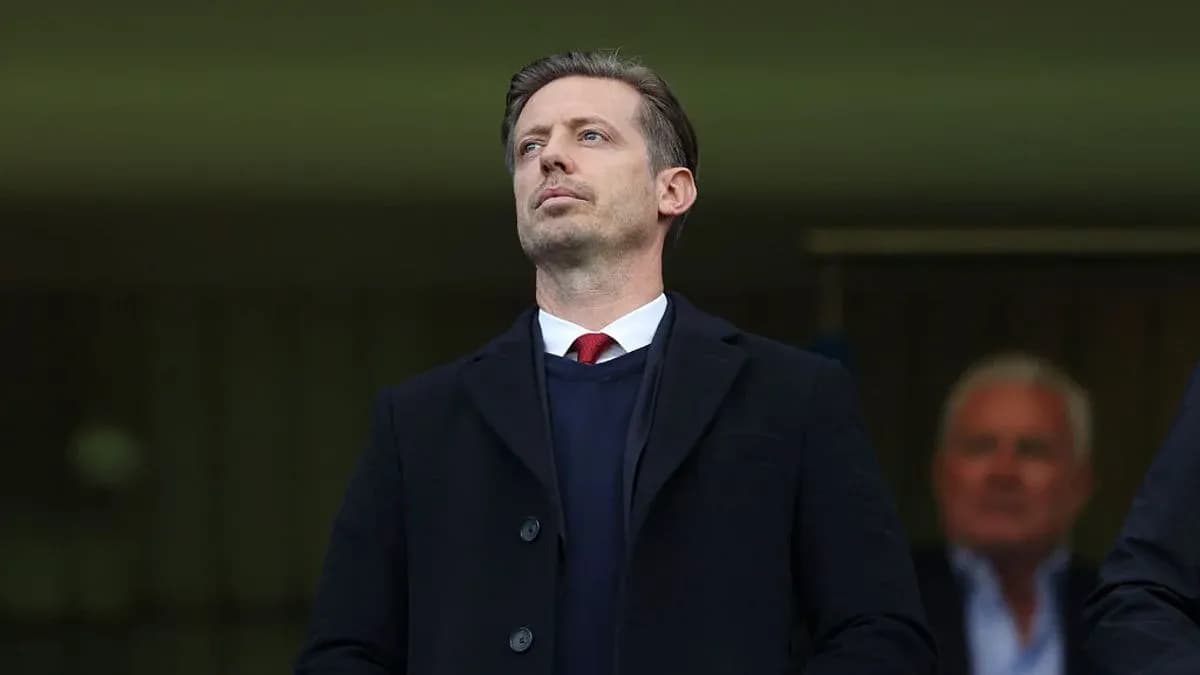
Michael Edwards’ second Liverpool chapter was never meant to end like this.
The architect of the Klopp era rebuild, the man credited with helping deliver Mohamed Salah, Sadio Mané and Andy Robertson to Anfield, returned to Fenway Sports Group in 2024 on the promise of something bigger: a multi-club empire, with Liverpool at the heart of it. That vision never materialised. The fallout has now cost FSG one of the sharpest operators in the modern game.
A grand plan that never left the drawing board
When Edwards walked away from Liverpool in 2022, he did so at the peak of his reputation. Manchester United called. Chelsea called. He said no. Two years later, he came back not as sporting director, but as CEO of football at FSG, a role designed to stretch beyond Merseyside.
The key lure was clear. FSG told Edwards they intended to buy another European club and build a multi-club model to support Liverpool’s long-term ambitions. In the current landscape, where elite outfits collect satellite clubs like assets in a portfolio, it was a logical, aggressive play.
Edwards bought in. Publicly, he admitted that wider project was “crucial” to his decision to return. Privately, according to The Athletic, he was “very keen” for FSG to secure that second club.
It never came. Two years on, there is no sister club, no network, no tangible sign that the plan has moved beyond strategy decks and internal presentations. Those close to the situation describe Edwards as frustrated by the lack of progress. Eventually, that frustration hardened into a decision: he would leave a year before his contract expired, having already signalled his intentions last year.
Frustration at the top
This is not a routine executive reshuffle. Edwards was not just another backroom figure. During most of Jürgen Klopp’s reign, he was the quiet constant behind Liverpool’s smartest moves, the counterweight to the spending sprees elsewhere in the Premier League.
His return in 2024 was sold as a statement. A new era, post-Klopp, guided by the same meticulous mind that had helped build a Champions League and Premier League-winning squad. Yet the job he came back to was very different.
This time, he sat closer to Boston than to the touchline, working more with FSG than with the day-to-day grind at Liverpool. His remit: shape the group’s football strategy, plot the expansion, and provide the framework for the next decade.
The work was done, at least from his side. In his departure statement, Edwards was careful, but the subtext was hard to miss.
“While that broader project ultimately evolved differently to how we had originally envisaged,” he said, “I am proud of the work our team undertook in presenting ownership with a broad range of thoughtful and well-developed options for the future.”
In other words: the ideas were on the table. The ownership chose not to act on them.
Hughes in, Hughes out
Edwards’ influence since returning was not limited to boardroom strategy. He moved quickly to reshape Liverpool’s football operations, installing Richard Hughes as sporting director.
Hughes arrived with a strong reputation from Bournemouth, where he had worked alongside Andoni Iraola, though the head coach did not hold full control over transfers on the south coast. At Liverpool, Hughes was positioned as the central figure in recruitment, the man to steer the club through the first years after Klopp.
Now, even that pillar is shaking. Hughes is reportedly set to leave Liverpool at the end of the summer to join Al-Hilal, barely a year after taking one of the most demanding roles in European football. The man handpicked by Edwards to run the sporting side of the club looks likely to follow him out of the door.
For all the talk of continuity, that is a lot of upheaval in a very short space of time.
Gordon steps back into the spotlight
With Edwards gone and Hughes expected to depart, FSG have turned back to a familiar figure. Mike Gordon, the group’s president and long-time powerbroker in the background, is understood to be resuming day-to-day control of operations at Liverpool.
Gordon has been here before. During Liverpool’s rise under Klopp, he was the key link between the manager, the recruitment team and ownership. His return to a more hands-on role restores a structure that once worked, but it also underlines how far the grander FSG vision has stalled.
The multi-club model that tempted Edwards back was supposed to push Liverpool into a new tier of strategic sophistication. Instead, the club finds itself leaning again on a trusted internal figure to stabilise the football side.
Edwards leaves, but his shadow stays
For all the tension behind the scenes, Edwards’ parting words were respectful and measured.
“It has been a privilege to return to Fenway Sports Group and Liverpool Football Club at such an important moment,” he said. “I leave believing Liverpool is in a strong position, with outstanding people, a clear direction and the foundations in place for continued success.”
He thanked Mike Gordon, John Henry, Tom Werner, everyone at FSG and Liverpool, and, pointedly, the supporters “whose passion makes this club so special”.
There was no public criticism, no direct attack on ownership. That is not his style. Yet the facts speak loudly enough. A senior executive returns on the promise of a bold expansion, spends two years laying out options, watches the plan drift, and then walks away early.
The question now is not just who fills his chair. It is whether FSG are willing to match the ambition of the people they keep hiring to drive Liverpool forward, or whether this was the last time a figure of Edwards’ calibre signs up to a project that never quite leaves the page.