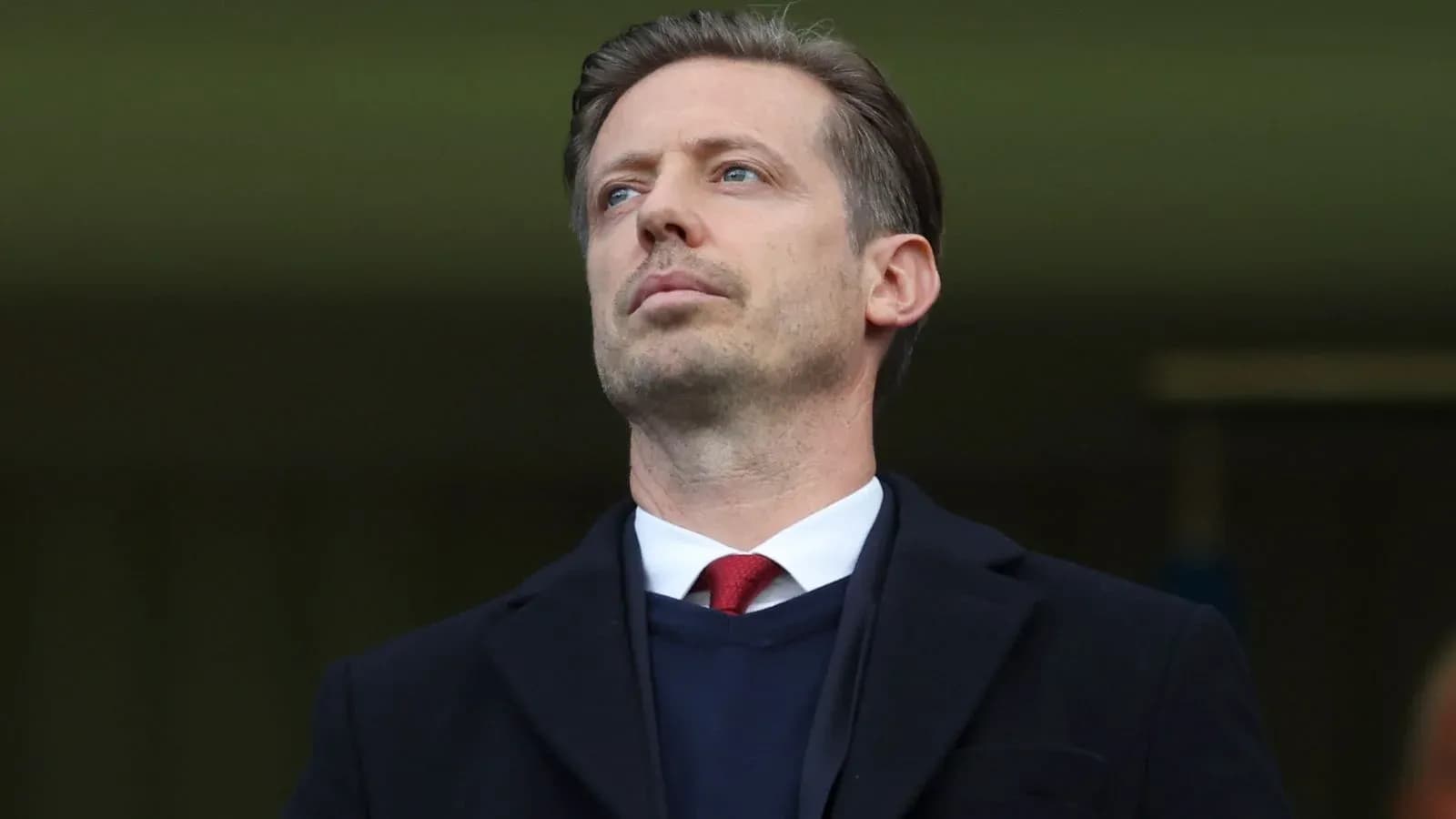
Michael Edwards Leaves Liverpool: A Transition in Leadership
Michael Edwards has stepped away from Liverpool for the second – and quite possibly last – time, leaving his role as Fenway Sports Group’s CEO of football and walking out of Anfield again just as another era begins to turn.
FSG confirmed his exit as a “planned transition”, the closing act of a carefully managed handover that has reshaped the club’s football structure over the past two years. The timing is no coincidence: the 2026/27 season looms, a pivotal summer window is under way, and Liverpool are staring at the daunting task of replacing Mohamed Salah.
Architect of a modern Liverpool bows out
Edwards’ name is stitched into Liverpool’s recent history. He first arrived in 2011, working his way from performance director into the sporting director’s chair by 2016. From there, he became one of the central figures behind the club’s revival under Jurgen Klopp.
His work in the market helped build the side that finally broke the 30-year title drought, delivering the 2019/20 Premier League crown – Liverpool’s first league triumph since 1990. The club’s recruitment, once a source of ridicule, became a benchmark. Edwards was at the heart of that transformation.
He stepped away in 2022, his reputation secure, only to be tempted back in March 2024 in a very different capacity. This time he returned as CEO of football for FSG, charged with overseeing all football operations at Liverpool just as Klopp’s departure loomed and the club braced for a seismic transition.
Steering through upheaval
FSG’s statement underlined the scale of the job he walked into and, in their view, successfully navigated.
“Since returning to the organisation in March 2024, he has helped oversee Liverpool through a significant period of change, including the implementation of a new football leadership structure and the appointment of a new head coach,” the ownership group said.
That period of change was not gentle. Klopp’s exit, the shift to a new model of leadership, and the need to keep Liverpool competing at the very top created a delicate balancing act. Under Arne Slot, who arrived in June 2024, Liverpool surged to a historic 20th English league title in 2025, matching Manchester United’s tally and underlining the club’s resurgence.
Edwards, in his executive role, “oversaw the continued evolution of the club’s football operation during a period in which Liverpool secured its historic 20th English league title in 2025, before preparations for the next phase of its development,” FSG added.
Yet football rarely stands still. Slot’s second season sagged below expectations, the early optimism draining away. The response was ruthless. In early June, Liverpool replaced Slot with Andoni Iraola, another major decision shaped within the framework Edwards had helped construct.
A project that changed shape
Edwards’ own words painted the picture of a job that grew beyond Liverpool alone and then shifted again.
“It has been a privilege to return to Fenway Sports Group and Liverpool Football Club at such an important moment,” he said. “I leave believing Liverpool is in a strong position, with outstanding people, a clear direction and the foundations in place for continued success.”
His remit stretched across FSG’s wider football ambitions, an attempt to build something broader than a single club.
“When I returned, I was excited not only by the opportunity to help guide Liverpool through an important period of transition, but also by the chance to help shape FSG’s wider football ambitions. While that broader project ultimately evolved differently to how we had originally envisaged, I am proud of the work our team undertook in presenting ownership with a broad range of thoughtful and well-developed options for the future.”
The wording is careful but telling. The grander multi-club vision did not unfold as first drawn up. The Liverpool piece, though, is what he chooses to emphasise: a club he believes he leaves “in a strong position”.
He closed with a familiar nod to those around him: “I’d like to thank Mike [Gordon], John [W. Henry], Tom [C. Werner] and everyone across FSG and Liverpool for their support and friendship and, most importantly, the supporters, whose passion makes this club so special. I will always be grateful to have been part of its story.”
Questions at the top, pressure on the pitch
His exit does not arrive in a vacuum. It lands in a summer that was already shaping up as one of the most consequential in recent Liverpool history.
Salah’s future and the club’s need to plan for life beyond their talismanic forward dominate the football conversation. Replacing his goals, his aura, his reliability – that is a sporting challenge of the highest order. The decisions around that rebuild will now be taken without the man whose judgement has so often defined Liverpool’s transfer strategy.
There is also noise around sporting director Richard Hughes, with speculation that he too could move on. If that scenario unfolds, Liverpool’s hierarchy would be shaken again, stripping away two key figures in the club’s decision-making structure in quick succession.
For now, FSG insist this is the end point of a managed process, not the start of a crisis. The club has its 20th title in the bag, a new head coach in Iraola, and what Edwards describes as “foundations in place for continued success”.
But foundations only matter if the next layer holds. With Edwards gone, questions over Hughes’ future lingering, and the Salah succession plan still unwritten, Liverpool’s next moves will reveal whether this is simply the closing chapter of one architect’s story or the start of a more profound shift in the way the club is built.