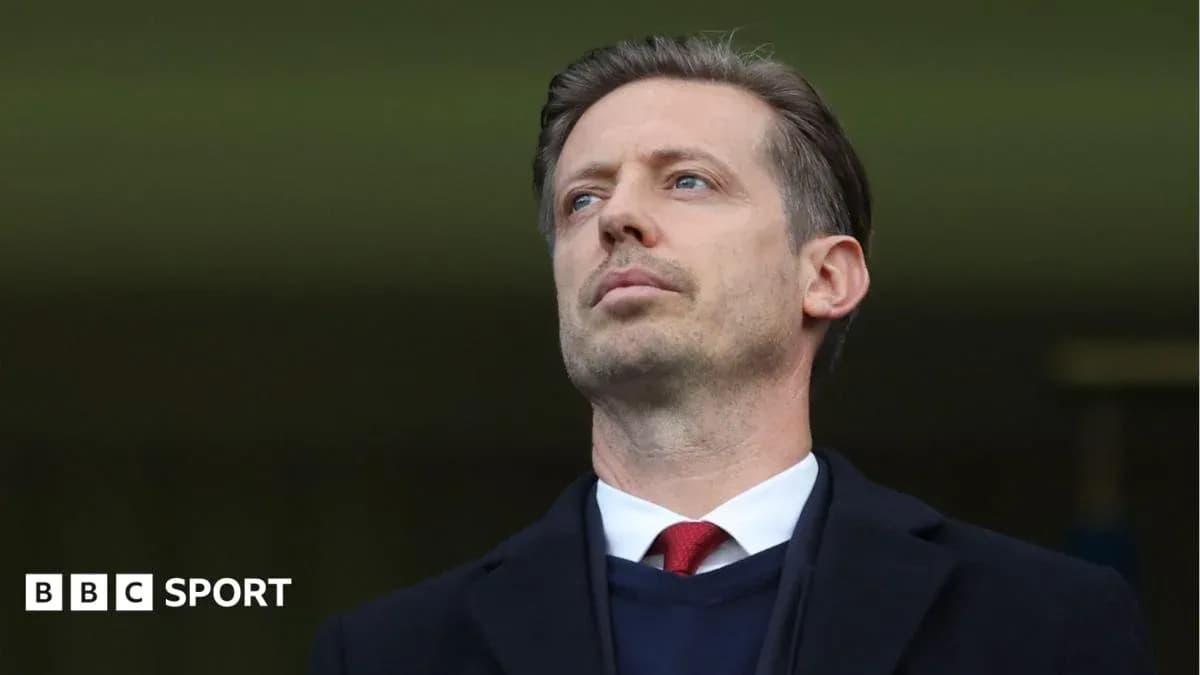
Michael Edwards Exits FSG Role as Liverpool Faces Transition
Michael Edwards, the architect of much of Liverpool’s modern revival, has stepped away from his role as chief executive of football at Fenway Sports Group, two years into a three-year contract and at a moment when the club already feels mid-transition.
FSG described the move as part of a “planned transition following the completion of key strategic priorities”, language that hints at a handover rather than upheaval. Yet the tone from within the ownership group told its own story. Group president Mike Gordon admitted they are “naturally disappointed” to see Edwards go, underlining how central he was to their football vision.
Edwards returned to FSG in March 2024 for a second spell closely tied to Liverpool, charged with steering the club from the Jurgen Klopp era into something new. He was hired to sit above the football operation, to plot what came next once the most transformative manager in a generation walked away.
In his parting words, Edwards painted a picture of a club still well set.
“Liverpool is in a strong position, with outstanding people, a clear direction and the foundations in place for continued success,” he said, stressing that the framework he helped shape remains intact.
His remit had stretched beyond Anfield, into FSG’s broader football ambitions, a project he suggested had shifted course.
“When I returned, I was excited not only by the opportunity to help guide Liverpool through an important period of transition, but also by the chance to help shape FSG’s wider football ambitions,” he said. That wider vision, he admitted, “ultimately evolved differently to how we had originally envisaged”, though he expressed pride in the “broad range of thoughtful and well-developed options” presented to ownership.
So the man who once mastered the margins of the transfer market moves on again, just as Liverpool brace for another defining summer.
The challenges stack up quickly. Mohamed Salah, the club’s talisman of the Klopp years, has gone at the end of the last campaign. Replacing his goals, his aura and his reliability is not a single signing’s job; it is a structural question, a test of recruitment, coaching and nerve. The task of reshaping the attack without the Egyptian forward would have been a central theme of the Edwards era. Someone else will now carry that burden.
Uncertainty does not end there. Speculation continues to swirl around sporting director Richard Hughes, who only recently stepped into one of the most scrutinised roles in European football. If Hughes were to move on as well, Liverpool’s famed alignment between owners, recruitment and manager would again come under stress.
Few figures understand how precious that alignment is better than Edwards. He first arrived at Liverpool in 2011, rising through the hierarchy before being promoted to sporting director in 2016. From that vantage point he became one of the most influential backroom operators in the game.
The roll call of signings from his tenure still defines this Liverpool side. Salah, Roberto Firmino, Sadio Mane, Andy Robertson, Virgil van Dijk: players who did not just improve the team but rewrote its ceiling. They dragged Liverpool from nearly-men to champions, culminating in the club’s first top-flight title in 30 years in 2020.
Those deals built his reputation as a transfer specialist who could spot value, sell ruthlessly and construct a squad with both edge and balance. They also set a standard that every subsequent recruitment chief at Anfield has been measured against.
Now, with Edwards gone from FSG’s football helm and the Klopp era already consigned to history, Liverpool stand at a familiar junction. The structure he helped design remains, the foundations he mentions are still there. The question is whether the next wave of decision-makers can turn that platform into another cycle of trophies, without the quiet strategist who helped deliver the last one.