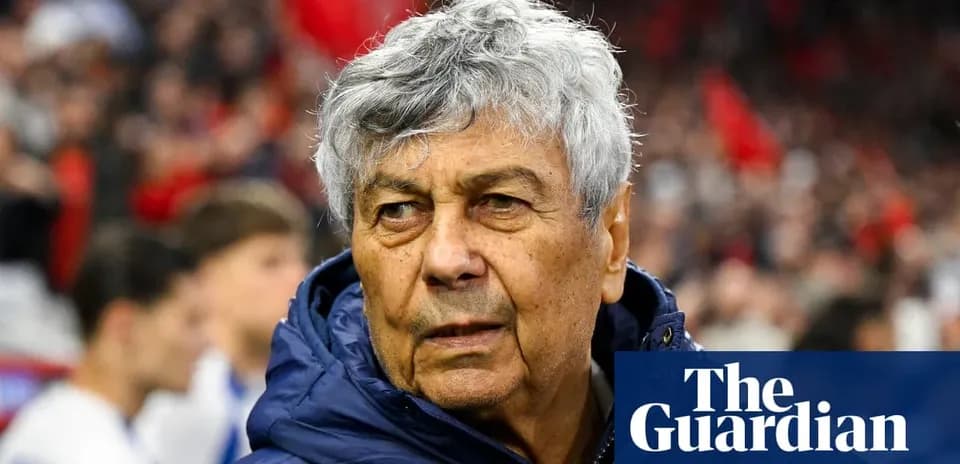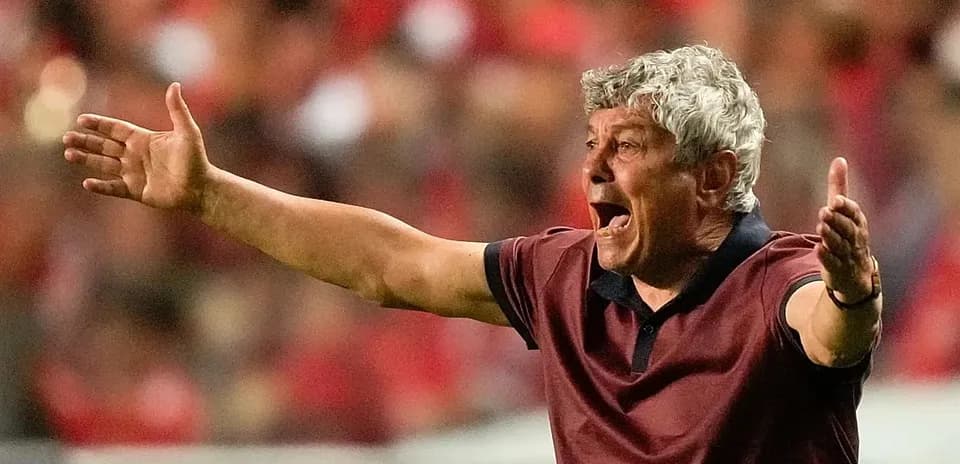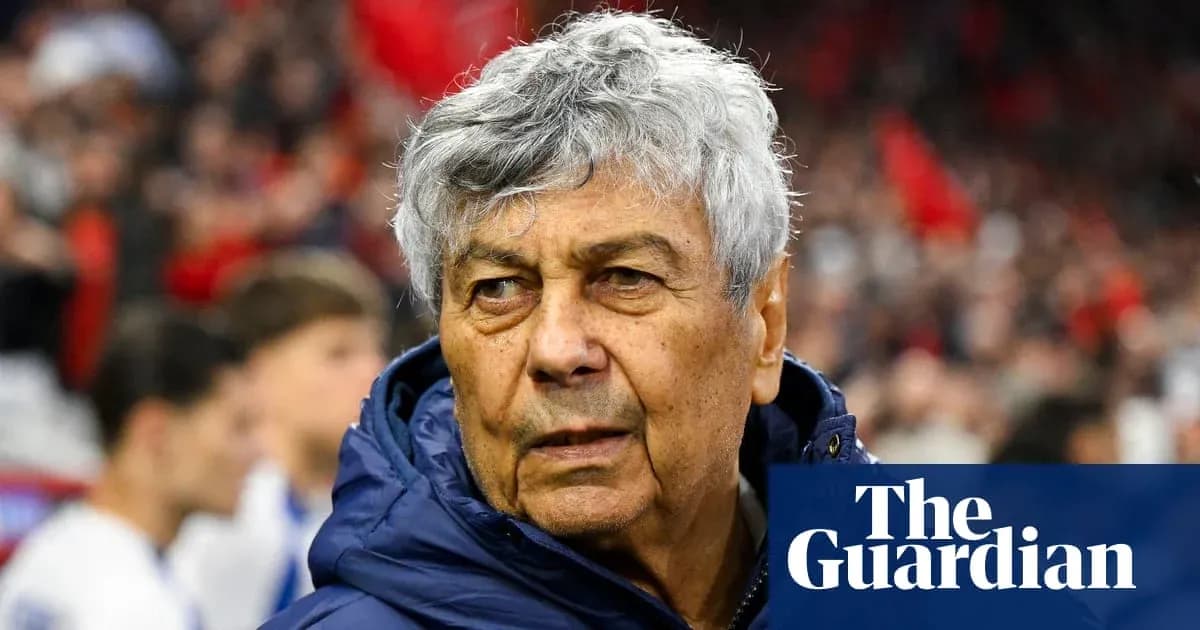
Mircea Lucescu, the sharp-eyed strategist who carried Romanian football on his back for half a century, has died aged 80 – leaving behind a career that stretched from World Cups to the farthest corners of European club football.
The Bucharest university emergency hospital confirmed his death on Tuesday. Lucescu had been taken there after reportedly suffering a heart attack on Friday morning. Romania did not just lose a coach. It lost a reference point.
“Mr Mircea Lucescu was one of the most successful Romanian football coaches and players, the first to qualify the national team for a European Championship, in 1984,” the hospital said. “Entire generations of Romanians grew up with his image in their hearts, as a national symbol.”
For a country that often measured itself through football, Lucescu became a mirror.
The captain who became an architect
Before the dugout came the armband. Lucescu won 64 caps for Romania and captained his country at the 1970 World Cup, leading a side that carried Eastern European football’s defiant flair onto the global stage. He read the game then as he would later from the touchline – two steps ahead, always calculating.
His first spell in charge of the national team began in 1981. Three years later, he delivered a breakthrough that would define him at home: qualification for Euro 1984. Romania topped a qualifying group that included Italy, Sweden and Czechoslovakia, muscling past giants with a mix of discipline and daring. For Romanian fans, that campaign felt like an arrival.
Decades on, he still saw the national team as unfinished business. Lucescu returned for a second spell in charge and stayed in the role until last Thursday, when he stepped down after falling ill during training. It came just three days after Romania’s 1-0 playoff defeat to Turkey ended their bid to reach the 2026 World Cup.
He had spoken openly about his health in March, while preparing for the playoff semi-final against the same opponents. “I’m not in my best shape so I would have stepped away if there was another option available,” he said then. “But I insist: I can’t leave like a coward. We must believe in our chance to qualify.”
Those words now sound like a final manifesto.
“I felt it was my duty to take charge of the team,” he added. “It was my duty for everything that Romanian football has ever given to me. I was indebted. It was never about money, never about another medal. I have enough trophies.” Duty, not decoration, drove him to the end.
A serial winner across Europe
If Romania was his heart, Europe became his canvas. Lucescu’s club career took him from Italy to Turkey to Ukraine and Russia, collecting silverware and shaping identities wherever he landed.
In Turkey, he carved out a legacy in Istanbul’s fevered football culture. With Galatasaray he lifted the Uefa Super Cup in 2000, then the Turkish title in 2001-02. He crossed the divide to Besiktas and promptly won the league again the following season, imposing his structure and belief on both sides of one of football’s fiercest rivalries.
The defining chapter, though, came in Ukraine. In May 2004 he took over at Shakhtar Donetsk and built a powerhouse. Across 12 years he won eight league titles and, in 2009, the Uefa Cup – a landmark triumph that announced Shakhtar as a permanent fixture in Europe’s elite conversations. His teams were bold, technical and aggressive, a blend of local steel and imported flair.
Shakhtar’s tribute on X captured the club’s sense of loss: “Thank you for everything, Mister. Your name is forever written into the history of world football.”
Galatasaray’s message followed the same line of respect: “We extend our deepest condolences to Mircea Lucescu’s family, loved ones, and the football community. We will never forget you.”
He kept moving, always searching for another project to shape. There were spells at Zenit Saint Petersburg and Dynamo Kyiv, and a stint in charge of the Turkish national team. Each stop added another layer to a résumé that already looked complete.
Italian interlude and the “Brescia Romeno”
Long before he dominated in Donetsk, Lucescu had left his fingerprints on Italian football. He coached Pisa, Brescia, Reggiana and Inter, absorbing Serie A’s tactical obsessions and twisting them to his own use.
With Brescia he won Serie B in 1991-92, but the trophies only tell part of the story. Supporters remember the “Brescia Romeno” side he assembled, a team built around four Romanian players, including Gheorghe Hagi. It was a small revolution in a provincial club: a slice of Bucharest transplanted to Lombardy, playing with a mix of grit and imagination that mirrored their coach.
That was Lucescu in microcosm. He did not just win. He left an imprint.
A career that ends where it began
There is a certain symmetry in how his journey closed. After managing across the continent, he returned to Romania’s bench after a 38-year gap, chasing one more World Cup. He knew his body was failing him, said as much, but still walked back into the storm.
He did not get the fairytale ending. No World Cup ticket. No final celebration. Just a narrow defeat to Turkey and a training-ground illness that forced him to step aside days before his death.
Yet for a man who insisted it was “never about another medal,” the absence of one more tournament hardly dims the light of what came before. He captained his country at a World Cup. He took them to a European Championship. He built title-winning sides in three countries and delivered a European trophy to a club from Donetsk.
The medals sit in cabinets. The influence lives in the players, coaches and fans who grew up with his image, as the hospital statement put it, “in their hearts, as a national symbol.”
Romanian football must now move on without the man who shaped so much of its modern history. The question is not whether it can replace Mircea Lucescu. It is who will dare to carry the game with the same sense of duty he considered a lifelong debt.