Netherlands vs Japan: A Tactical Chess Match in Group F
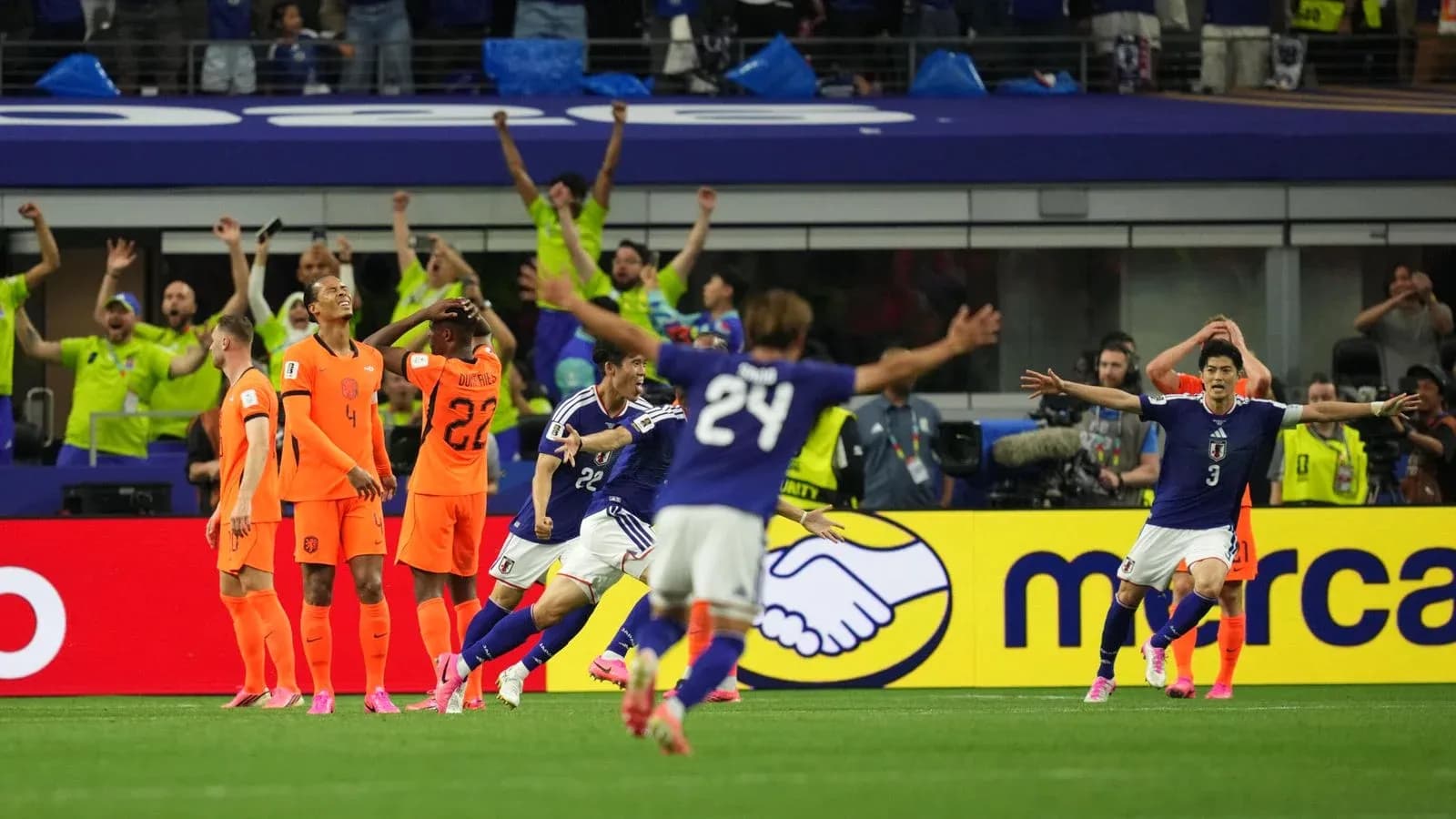
The World Cup’s opening act for Group F at AT&T Stadium delivered a 2-2 draw that felt less like a settling of accounts and more like the opening chapter of a tactical chess match between two very different football cultures. Following this result, Netherlands and Japan both sit on 1 point, each with a goal difference of 0 after scoring 2 and conceding 2 overall. The numbers are level, but the paths they took to that balance could not be more contrasting.
Netherlands
Netherlands leaned into their traditional 4-3-3 under Ronald Koeman, but this was a modern, vertical interpretation rather than a slow, possession-obsessed version. With B. Verbruggen behind a back four of D. Dumfries, J. P. van Hecke, V. van Dijk and M. van de Ven, the Dutch built a broad, stable platform to release a highly mobile front three. The structure is already becoming a statistical identity: in total this campaign they have played 1 match, all at home, scoring 2.0 goals on average at home and conceding 2.0 at home as well. No clean sheets, no matches failed to score – this is an open, high-event Netherlands.
Japan
Japan, by contrast, arrived in a 3-4-2-1 that felt engineered for transitions. Hajime Moriyasu’s choice of a back three – T. Watanabe, S. Taniguchi and H. Ito in front of Z. Suzuki – allowed the wing spaces to be patrolled by hard-running midfielders, with R. Doan and K. Nakamura wide and D. Kamada, K. Sano and T. Kubo linking into a fluid front line of D. Maeda and A. Ueda. On their travels they have also played 1 match, scoring 2.0 goals away and conceding 2.0 away, mirroring Netherlands’ risk-reward profile but from a deeper starting block.
There were no listed injuries or suspensions in the data, which meant both coaches could lean into their strongest structural ideas. The real disciplinary story sits with Netherlands. Their season card map shows a clear late-game edge: all three yellow cards overall have arrived after the interval, with 33.33% between 61-75 minutes, another 33.33% between 76-90, and the final 33.33% in the 91-105 window. That pattern underlines a side that ramps up aggression as tension rises – something that already has faces attached to it.
C. Summerville is the emblem of that edge. In total this campaign he has 1 goal from 1 appearance, with an 8.3 rating and a yellow card to his name. He dribbled once and succeeded, attempted 7 duels and won 5, and drew 3 fouls while committing 1. His numbers tell the story of a winger who attacks the game and lives on the disciplinary line. M. Depay, introduced from the bench, also sits on 1 yellow card in just 20 minutes, committing 1 foul and engaging in 3 duels. Koeman’s bench options are not just technical; they carry a disruptive, combative profile that can change the emotional temperature of a match.
For Japan, the discipline map is pristine so far: no yellow or red cards recorded in any time window. That calmness complements their system. The back three plus double pivot rely on collective movement rather than individual interventions, and the data reflects a side that prefers to stay on the right side of the referee. In a tight group, that restraint could matter when suspensions begin to accumulate.
Key Players
The “Hunter vs Shield” duel for Netherlands is embodied by Summerville and the creative supply line of R. Gravenberch. Gravenberch, already on 2 assists in total from a single 81-minute outing, is the conductor between the lines. He completed 25 passes at 88% accuracy, including 2 key passes, and attempted 3 dribbles with 2 successes. From the left half-space of that 4-3-3, he shapes the angles for C. Gakpo and D. Malen while feeding Summerville’s darts on the far side. Against a Japan defence that concedes 2.0 goals on average away, Gravenberch’s ability to pull S. Taniguchi out of the central lane and force H. Ito to defend wider channels will be crucial.
On the Japanese side, the “Hunter” is more collective. T. Kubo, already with 1 assist and 16 passes at 75% accuracy, drifts into the inside-right pocket, while K. Ogawa, who has 1 assist in just 15 minutes off the bench, offers a late-game penalty-box presence. The Shield they must pierce is a Dutch back line that, for all its pedigree, has conceded 2 goals at home in their only outing. V. van Dijk and M. van de Ven will be asked to defend large spaces when Dumfries surges forward; Kubo’s job is to find those vacated corridors and slip Maeda or Ueda in behind.
Engine Room
In the “Engine Room”, the duel is between Gravenberch and F. de Jong on one side, and Kamada plus Sano on the other. De Jong, stationed centrally, gives Netherlands control of rhythm, while Kamada’s role is to break that rhythm with late arrivals and vertical passes into the front three. Whichever pairing can tilt the central zone in their favour will dictate whether this fixture becomes a Dutch positional play exercise or a Japanese transition showcase.
From a statistical prognosis standpoint, both sides profile as high-variance teams: 2.0 goals for and 2.0 against overall, no clean sheets, no penalties taken or missed yet. With neither side yet showing defensive solidity, the expected goals landscape for future group matches points toward another multi-goal contest rather than a cagey stalemate. Netherlands carry slightly more structured creativity through Gravenberch and a lethal wide threat in Summerville; Japan counter with system cohesion, disciplined defending and the capacity for late, impactful changes like Ogawa.
Following this result, the story of Group F is balance on paper but volatility on the pitch. Netherlands look like the side more capable of imposing a plan; Japan look like the team more comfortable when that plan breaks. Over the next rounds, whoever can bend those 2.0-for, 2.0-against numbers toward control rather than chaos will step out of this shared stalemate and into genuine contention.