Sweden Dominates Tunisia 5-1 in World Cup Opener
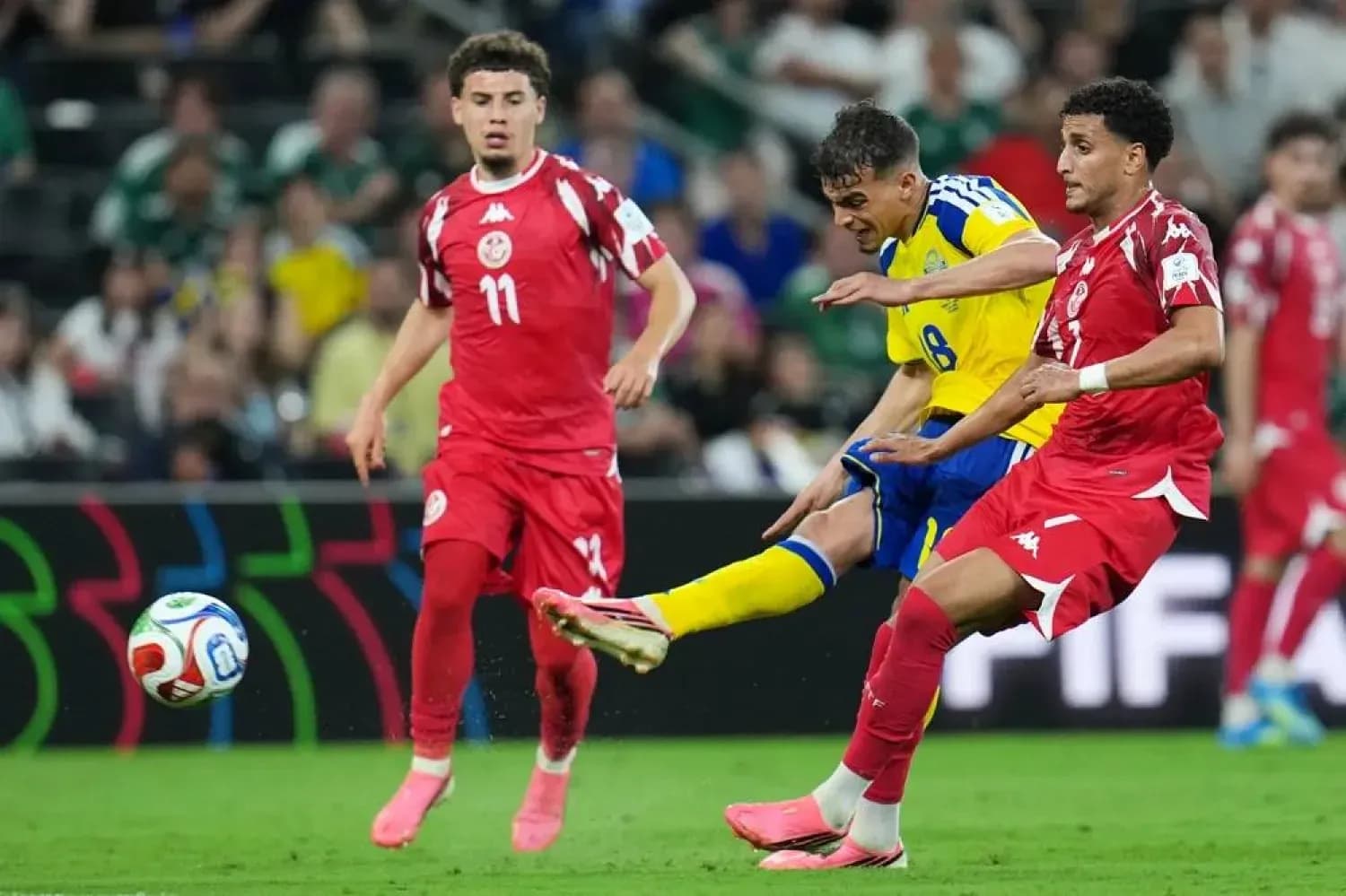
Under the lights of Estadio BBVA in Monterrey, Sweden’s World Cup campaign ignited with a statement. A 5-1 dismantling of Tunisia in Group F did more than deliver three points; it sketched the early tactical identity of Graham Potter’s side and exposed the structural frailties Sabri Lamouchi must urgently address.
I. The Big Picture – Sweden’s new shape, Tunisia’s early crisis
Heading into this game, Sweden arrived as a team in transition, but following this result they sit top of Group F with 3 points, a goal difference of +4 and the clearest attacking blueprint in the group. Overall this campaign, they have played 1 match, winning 1, scoring 5 and conceding 1. At home in this tournament (this fixture counted as a home match), they average 5.0 goals for and 1.0 against.
Potter’s choice of a 3-1-4-2 was bold and aggressive. With K. Nordfeldt behind a back three of V. Lindelof, I. Hien and G. Lagerbielke, Sweden built from a solid platform, but the real story lay ahead of them. J. Karlstrom operated as the single pivot, screening and recycling, while a four-man band of G. Gudmundsson, Y. Ayari, B. Nygren and A. Bernhardsson stretched Tunisia horizontally and vertically, feeding a powerful front two of V. Gyökeres and A. Isak.
Tunisia, by contrast, set up in a conservative 5-3-2. A. Chamakh was protected by a back five of A. Abdi, M. Ben Hamida, M. Talbi, O. Rekik and Y. Valery, with a compact midfield trio of H. Mejbri, E. Skhiri and R. Khedira behind the front pair E. Saad and A. Slimane. On paper, the 5-3-2 was designed to absorb pressure and break into the spaces Sweden’s wing-backs would leave. In practice, it became a low block that was repeatedly pulled apart.
Tunisia’s World Cup numbers now underline the damage: overall this campaign they have played 1 match, losing 1, scoring 1 and conceding 5, with an overall goals-against average of 5.0 and a goal difference of -4. On their travels, they have 1.0 goal for and 5.0 against.
II. Tactical Voids – Where the structures cracked
Sweden’s system revolved around controlled risk. Karlstrom’s single-pivot role was pivotal: he allowed the back three to stay relatively narrow while Gudmundsson and Bernhardsson pushed high and wide. This created a de facto front four when Sweden had the ball, pinning Tunisia’s wing-backs deep and isolating their forwards.
The absence of any listed suspensions or injuries meant both coaches had full tactical freedom. Sweden’s bench, stacked with options such as M. Svanberg, L. Bergvall and A. Elanga, gave Potter flexibility to change the tempo and profile of the midfield and attack without altering the basic structure. Svanberg’s 13 minutes, crowned by a goal, showed how the second wave of midfielders can arrive late into the box once opponents are stretched.
Tunisia, however, found their 5-3-2 turning into a 5-4-1 or even 5-5-0 without the ball, as Mejbri and Slimane were forced deeper to help their overrun midfield. The statistics reveal a discipline issue under stress: their only recorded yellow card this tournament came between 46-60 minutes, a 100.00% share of their cautions in that window. It hints at a side that, when the game speeds up after half-time, can be drawn into rash challenges rather than structural adjustments.
Sweden’s card profile is blank so far; no yellow or red cards recorded in any time range. That clean disciplinary slate aligns with the control and composure they showed in possession.
III. Key Matchups – Hunter vs Shield, Engine Room vs Enforcer
Hunter vs Shield
The frontline axis of A. Isak and V. Gyökeres emerged as one of the most terrifying “hunters” of the opening round. Isak’s numbers are devastating: in total this campaign he has 1 goal and 2 assists from 2 shots on target, with 17 completed passes at 82% accuracy and a rating of 8.9. Gyökeres complements him with 1 goal, 1 assist, 4 shots (2 on target), 19 passes at 84% accuracy and 4 key passes, earning an 8.2 rating.
Against Tunisia’s “shield” – a back line that has now conceded 5 goals overall, all on their travels – the mismatch was brutal. The three central defenders, Talbi, Rekik and Ben Hamida, were repeatedly dragged into uncomfortable zones. Sweden’s front two alternated between pinning the line and dropping into pockets, while Nygren and Ayari attacked the half-spaces. Tunisia’s five-man defence was numerically heavy but structurally light: too many in the last line, not enough pressure on the ball ahead of them.
Engine Room – Ayari vs Skhiri and Khedira
In midfield, Y. Ayari was the conductor. In total this campaign he has 2 goals from 2 shots on target, 27 passes (2 key) and 3 tackles with 1 interception, earning an 8.6 rating. Operating as a right-sided central midfielder in the 3-1-4-2, he constantly found pockets between Tunisia’s lines, timing his arrivals into the box perfectly.
E. Skhiri and R. Khedira, normally reliable anchors, were outnumbered and outmaneuvered. With Karlstrom anchoring Sweden, Ayari was freed to join the forwards, while Nygren drifted inside to overload the central corridor. Tunisia’s midfield three could not simultaneously protect the back line, press the ball and track runners. The result was a constant numerical inferiority in the most dangerous zones.
Sweden’s bench deepened this midfield dominance. When M. Svanberg entered, he added a fresh vertical threat, scoring with his only shot and showing how Potter can rotate his “engine room” without losing intensity. L. Bergvall’s cameo – 6 passes at 83% accuracy, 1 key pass, 1 successful dribble and 2 duels won – hinted at yet another profile: a ball-carrying connector between lines.
IV. Statistical Prognosis – What this performance projects
With only one match played, xG data is not provided, but the volume and efficiency of Sweden’s attacking output already suggest a high Expected Goals profile. Overall this campaign they average 5.0 goals for per match, with 5.0 shots on target converted into 5 goals from their primary scorers and midfield runners. The spread of contributions – Isak, Gyökeres, Ayari and Svanberg all scoring or assisting – points to a multi-source attack rather than a single talisman.
Defensively, Sweden’s overall average of 1.0 goal against per match, with 0 clean sheets so far, is the one note of caution. The back three of Lindelof, Hien and Lagerbielke were rarely exposed here, but against stronger counterattacking sides, the single pivot of Karlstrom will be severely tested.
Tunisia’s prognosis is more stark. An overall average of 1.0 goal for and 5.0 against, with a goal difference of -4, suggests their current 5-3-2 is offering neither solidity nor counterpunch. Their biggest away loss – 5-1 – already defines their campaign. Without penalties to lean on (0 taken, 0 scored, 0 missed), they must find open-play solutions quickly.
Following this result, Sweden look like a tactically coherent, offensively rich side built around a 3-1-4-2 that maximizes the talents of Isak, Gyökeres and Ayari. Tunisia, meanwhile, must rethink the balance of their block: either push the wing-backs higher to relieve pressure or add an extra midfielder to avoid being outnumbered in the zones where Sweden so ruthlessly decided this contest.