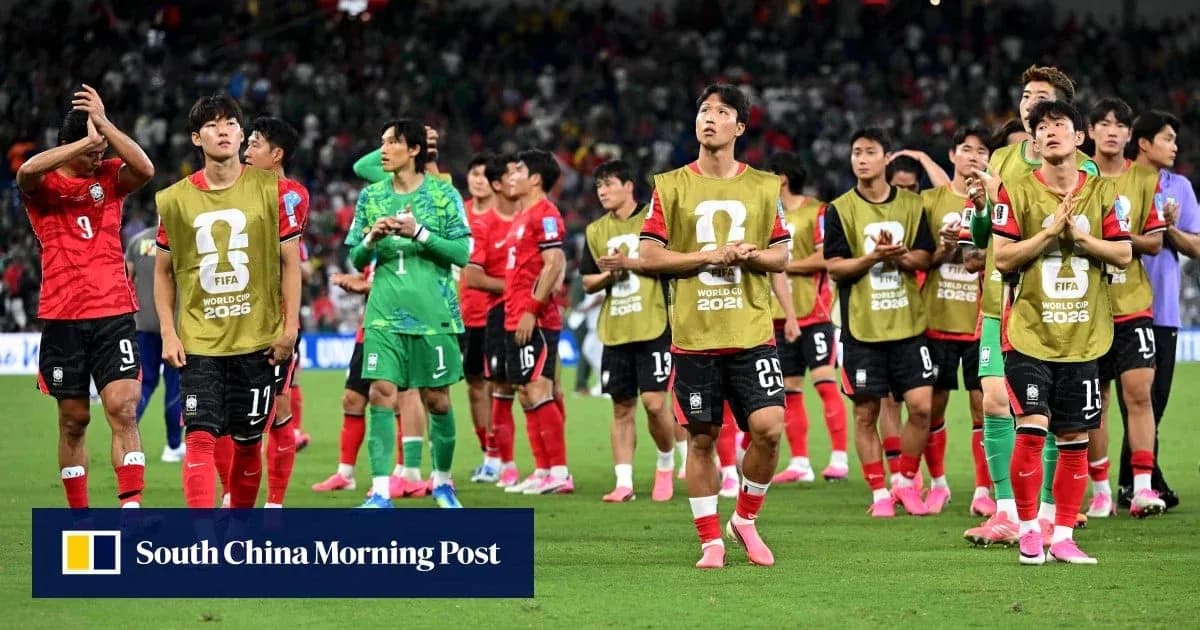
South Korea's World Cup Struggles: A Defiant Response to Defeat
The sound hit first.
Down one tunnel in Monterrey, South African players spilled out in waves of noise – songs, laughter, the kind of unrestrained joy that only a World Cup win can unlock. Down the other, South Korea’s players moved slowly, faces drawn, words measured, the weight of a 1-0 defeat hanging off every step.
The contrast could not have been sharper.
As journalists gathered around the beaten South Koreans, a member of South Africa’s staff brushed past. It looked innocuous. It wasn’t received that way. Hwang In-beom, already simmering, snapped, telling the unsuspecting staffer to “show some f****** respect”. For a few tense seconds, the corridor felt like it might become the real battleground their team had failed to find on the pitch.
Security and staff moved in. Tempers cooled. The moment passed. But the image lingered.
If only that flash of fury had surfaced during the 90 minutes.
South Korea’s performance against South Africa never truly caught fire. The urgency came late, the aggression sporadic, the belief fragile. A side that has built its modern identity on intensity and collective steel looked strangely muted, second best in too many duels, too easily pushed to the margins of the game.
While the South Africans sang their way toward the team bus, the biggest South Korean star was nowhere to be seen. Son Heung-min had been taken for doping control, a routine process that stretched on. Reporters from home waited. And waited. More than two hours after the final whistle, he finally emerged to face their questions.
Son did not talk about splits or cliques or fractures. He went the other way.
“There’s no problem with the vibe in our dressing room,” he said, insisting that the external noise did not match the internal reality. “I can honestly tell you that we’ve had zero issues with our team atmosphere.”
The words were calm, almost defiant. They needed to be. When a team underperforms on the biggest stage, the first rumours always circle around the dressing room. Son moved to shut that down, to protect what remains of South Korea’s campaign and, perhaps, to shield younger teammates from the storm.
Yet the table tells its own harsh story. Three group matches. Three points. A negative goal difference. And still, somehow, South Korea stand with a chance of reaching the knockout rounds.
It is a quirk – and, to many, a damning reflection – of this expanded World Cup that such a record might be enough to survive. The margins have been stretched, the safety nets widened. Teams can stumble through the groups, patchy and inconsistent, and still emerge with a route into the last 16.
South Korea are living in that space now: bruised, criticised, still alive.
They left Monterrey with their ears ringing – from South African songs, from their own frustrations, from the questions that trail a side not playing to its potential. The fight in the tunnel showed their pride remains intact.
The real question is whether that edge arrives in time where it truly counts: on the pitch, with their World Cup fate on the line.