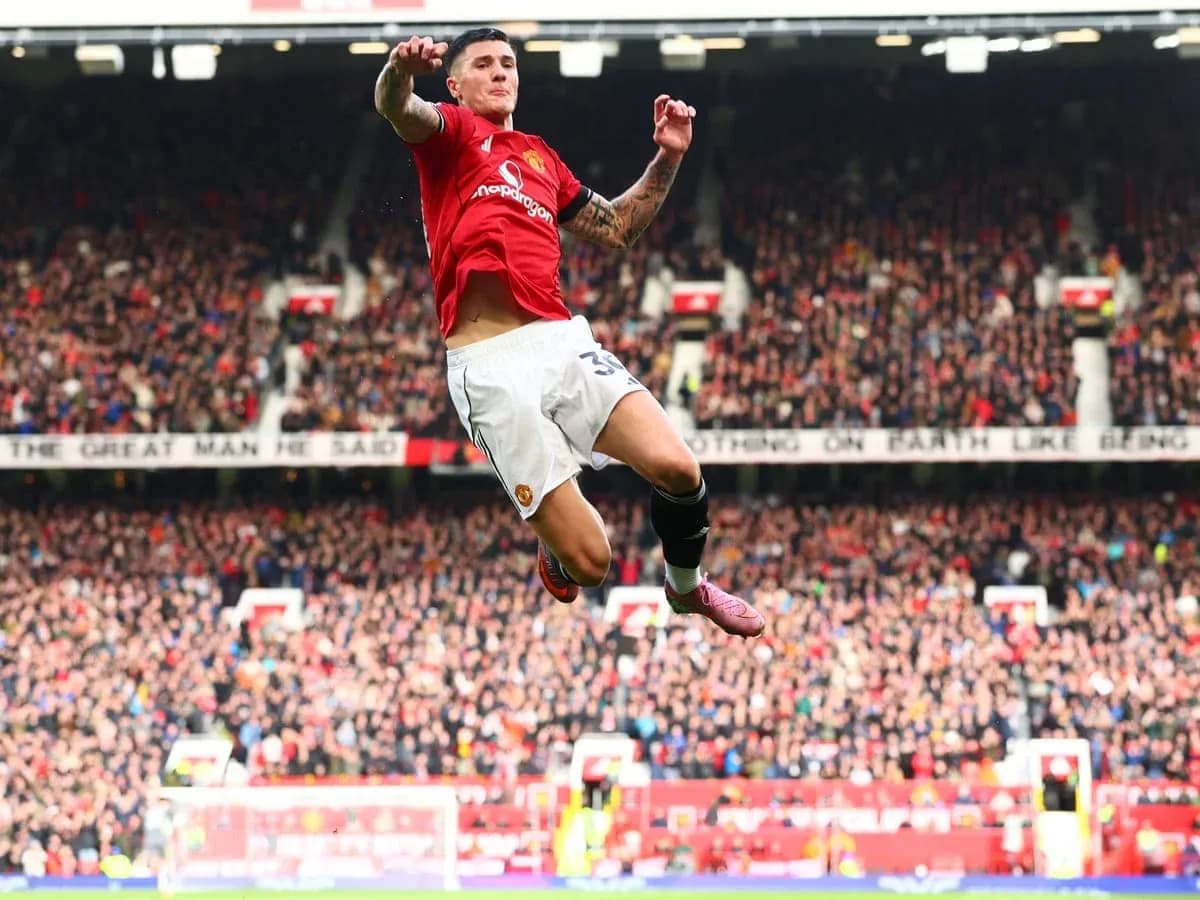
Sunderland vs Manchester United: Premier League Clash Impact
Sunderland host Manchester United at the Stadium of Light in a late-season Premier League fixture (Regular Season - 36) that shapes different battles: for Sunderland, safely in mid-table at rank 12 with 47 points and a -9 goal difference in the league phase (37 scored, 46 conceded), this is about consolidating security and building momentum; for Manchester United, sitting 3rd with 64 points and a +15 goal difference in the league phase (63 scored, 48 conceded), it is a high-stakes match in the Champions League qualification race with little margin for error in the final three rounds.
Head-to-Head Tactical Summary
The recent head-to-head record in the Premier League is weighted heavily in Manchester United’s favour, but with notable exceptions at the Stadium of Light.
On 4 October 2025 at Old Trafford, Manchester United beat Sunderland 2-0, leading 2-0 at half-time and closing the game out without conceding. Earlier meetings show a similar pattern in Manchester: on 26 December 2016 at Old Trafford, United won 3-1 after a 1-0 half-time lead, and on 26 September 2015 they won 3-0, again 1-0 up at half-time. These Old Trafford fixtures underline United’s ability to establish control early and extend it after the interval.
At the Stadium of Light, the picture is more mixed. On 9 April 2017, Manchester United won 3-0, having gone in 1-0 up at half-time, showing they can translate their dominance to this venue when on top. But on 13 February 2016, Sunderland claimed a 2-1 home win, with the match level 1-1 at half-time, highlighting that they can disrupt United when they manage to stay in the game and use the home environment effectively.
Global Season Picture
- League Phase Performance: In the league phase, Sunderland are 12th with 47 points from 35 matches, scoring 37 goals and conceding 46. Their home record is relatively solid: 8 wins, 5 draws, 4 losses, with 23 goals for and 19 against at the Stadium of Light, suggesting a competitive but not dominant home side. Manchester United, in contrast, are 3rd with 64 points from 35 matches, having 18 wins, 10 draws and 7 losses. They have scored 63 and conceded 48 in the league phase, with an away profile of 6 wins, 7 draws, 4 losses, and a near-balanced away goal record (27 for, 26 against), indicating an effective but not flawless travelling team.
- All-Competition Metrics: Across all phases of the competition, Sunderland average 1.1 goals for and 1.3 goals against per match (37 scored, 46 conceded over 35), with stronger attacking output at home (1.4 goals per game) than away (0.8). Their 10 clean sheets across all phases contrast with 12 matches where they failed to score, underscoring an inconsistent attack (1.1 goals per game) that can be blunt. Disciplinary-wise, Sunderland’s yellow cards are concentrated between minutes 31-75 (stats show peaks from 31-60), and they have seen red cards in the 16-45 and 91-105 minute ranges, suggesting risk around transitions and late-game pressure.
- Across all phases of the competition, Manchester United average 1.8 goals for and 1.4 against per match (63 scored, 48 conceded over 35), with a more potent attack at home (2.0 goals per game) but still strong away (1.6). They have 6 clean sheets and have failed to score only 3 times, indicating a consistently dangerous attack. Defensively, conceding 1.4 per match across all phases points to a vulnerable back line that can be exposed despite their offensive strengths. Their yellow-card distribution is broad, with notable spikes between minutes 46-60 and 76-90, and they have picked up red cards mainly just after half-time (46-60) and late (76-90), hinting at aggressive pressing phases that can spill into ill-discipline.
- Form Trajectory: In the league phase, Sunderland’s form string “DLLWW” shows a recent upturn: after a draw and two losses, they have responded with back-to-back wins, suggesting a team regaining confidence and sharpness at exactly the point where they can play with reduced pressure. Manchester United’s league-phase form “WWWLD” indicates a strong run (three consecutive wins followed by a draw) interrupted by a defeat in the latest five. The pattern is of a high-performing side that has recently dropped points, increasing the urgency to avoid further slips in the closing rounds.
Tactical Efficiency
Across all phases of the competition, Sunderland profile as a reactive, mid-table side: 1.1 goals scored versus 1.3 conceded per match and 10 clean sheets against 12 blanks underline a modest attack and a defense that is serviceable but not tight. Their varied use of formations (4-2-3-1 in 18 matches, with 4-3-3 and 5-4-1 also used) suggests tactical flexibility, but the overall numbers point to limited attacking efficiency relative to goals conceded.
Manchester United’s all-phase numbers (1.8 goals scored, 1.4 conceded per match) describe a more expansive, attack-first profile. Their consistent use of 3-4-2-1 (18 matches) and 4-2-3-1 (17 matches) supports a structure that commits numbers forward. The relatively high goals against (1.4 per match) shows that their aggressive approach leaves space to be exploited, particularly away from home where they concede 1.5 per game.
Without explicit numerical “Attack/Defense Index” values in the comparison block, the efficiency contrast is best read through these scoring and conceding rates: United’s attack is clearly superior in volume and consistency across all phases, while Sunderland rely on compact spells and home advantage to narrow that gap. Defensively, both concede at similar ranges (1.3 vs 1.4 per match across all phases), meaning the key tactical differential is United’s greater probability of converting pressure into goals over 90 minutes.
The Verdict: Seasonal Impact
For Sunderland, already in 12th with 47 points in the league phase, this match is more about ceiling than survival. A win would push them further into the top half conversation and provide a strong narrative of progress going into 2026, reinforcing the Stadium of Light as a difficult venue and potentially influencing recruitment and tactical continuity. A draw or defeat would not dramatically alter their relegation risk, but a poor performance could stall the positive momentum indicated by their recent “WW” in form.
For Manchester United, the seasonal impact is far sharper. At 64 points and 3rd in the league phase, they are in a strong position for Champions League qualification but with no room for complacency. Dropping points here would invite pressure from teams below and could turn the final two matches into must-win scenarios, with increased psychological and tactical strain. An away victory, by contrast, would consolidate their top-4 standing, maintain separation from chasing clubs, and keep open any outside chance of climbing higher if rivals falter. In strategic terms, this fixture is a leverage point for United’s 2026 project: securing Champions League football early allows clearer planning for squad building and tactical evolution, while failure to win risks turning a solid campaign into a fraught run-in.