Tennessee Lady Vols Face Total Roster Reset
Tennessee women’s basketball has known heartbreak before. It has known rebuilding years, awkward transitions, the weight of following a legend. It has never known this.
The Lady Vols will walk into next season without a single returning player who has ever worn their jersey in a game. Not one.
All eight Tennessee players with eligibility left have chosen to transfer after a bruising 16–14 campaign that unraveled into an eight-game losing streak and the program’s first winless March. A proud standard-bearer of the sport suddenly finds itself stripped to the studs.
The latest departure came Monday, when freshman guard Jaida Civil announced on Instagram that she would enter the transfer portal. Her decision completed a stunning roster exodus that had been gathering speed for days.
Four seniors were already set to graduate, including key contributors Janiah Barker and Zee Spearman. That was the normal churn. What followed was anything but.
Freshman twins Mya and Mia Pauldo went public with their decision last week, their joint statement on Instagram capturing both gratitude and finality.
“After much thought, conversation, & soul-searching we have decided to enter the transfer portal,” they wrote. They thanked the coaching staff, the “Lady Vol family,” and the teammates they described as a sisterhood. Then came the pivot: “Excited to accept the challenge of the next phase in our journey.”
The message landed like a starting gun.
From there, the announcements kept coming: transfer portal, transfer portal, transfer portal. The backbone of Kim Caldwell’s second Tennessee team scattered across the map.
Junior forward Alyssa Latham has already found her next stop at Virginia Tech. Others — Civil, Kaniya Boyd, Lauren Hurst, Deniya Prawl and Talaysia Cooper — are still searching for new homes, their futures now tied to a national marketplace rather than the orange and white.
The damage wasn’t confined to the current roster. Tennessee also lost a cornerstone of its future. Oliviyah Edwards, the No. 2 prospect in the SC Next 100 class of 2026, decommitted, backing away before ever setting foot on campus. As of now, only one incoming player is locked in for next season: wing Gabby Minus, a four-star recruit and, at this moment, the lone name attached to the Lady Vols’ future lineup.
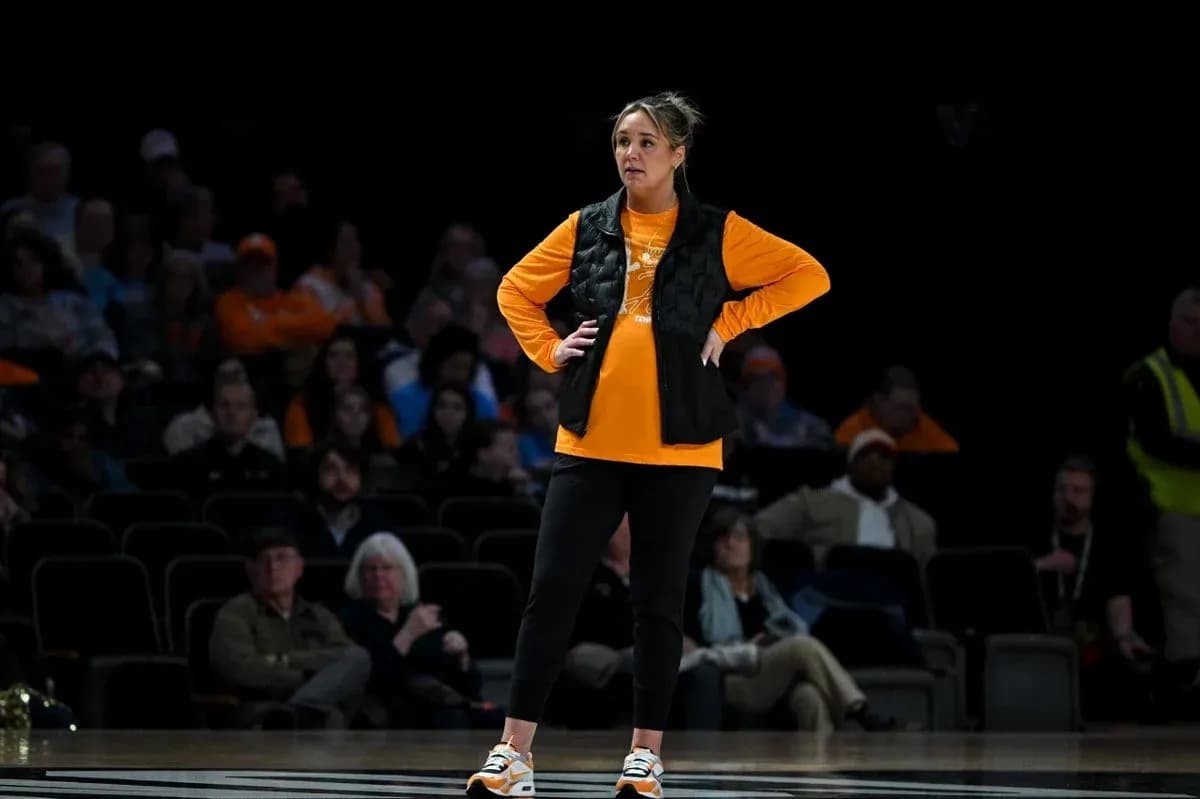
For Caldwell, the timing could hardly be more brutal.
Her debut season in Knoxville brought optimism and validation as she steered Tennessee to the Sweet 16, suggesting the program had found its next long-term architect. Year two told a different story. The Lady Vols faded badly down the stretch, then crashed out in the first round of the NCAA Tournament against NC State.
The warning signs flashed even before March. On Feb. 8, Tennessee absorbed a 93–50 beating from South Carolina — the largest defeat in program history. A week earlier, UConn had run them off the floor by 30. Those numbers don’t just sting; they linger. They shape how players, recruits and rivals see you.
Now the consequences are written across an empty depth chart.
Tennessee, once the sport’s gold standard, has not lifted a national championship trophy since 2008. That gap already weighed heavily on everyone who walks past Pat Summitt’s name and into the gym each day. The current situation adds a new layer of urgency and scrutiny.
Caldwell is not on a short-term deal. Her contract runs through 2030 and carries a $4 million buyout, a figure that signals institutional commitment and complicates any talk of drastic change. She was hired to modernize and re-energize a blueblood, not preside over a mass departure.
Yet this is where Tennessee stands: a powerhouse brand, a proud fan base, an elite history — and, for now, a virtually blank roster.
The transfer portal era has turned college basketball into a fast-moving marketplace where rosters can be rebuilt in a single offseason. Tennessee will have to lean on that reality now, aggressively and creatively. The name on the front of the jersey still carries weight. The question is how quickly Caldwell can convince a new group of players to believe in it again.
In Knoxville, the banners still hang. The history still echoes. What comes next will reveal whether that legacy is a foundation — or just a memory.