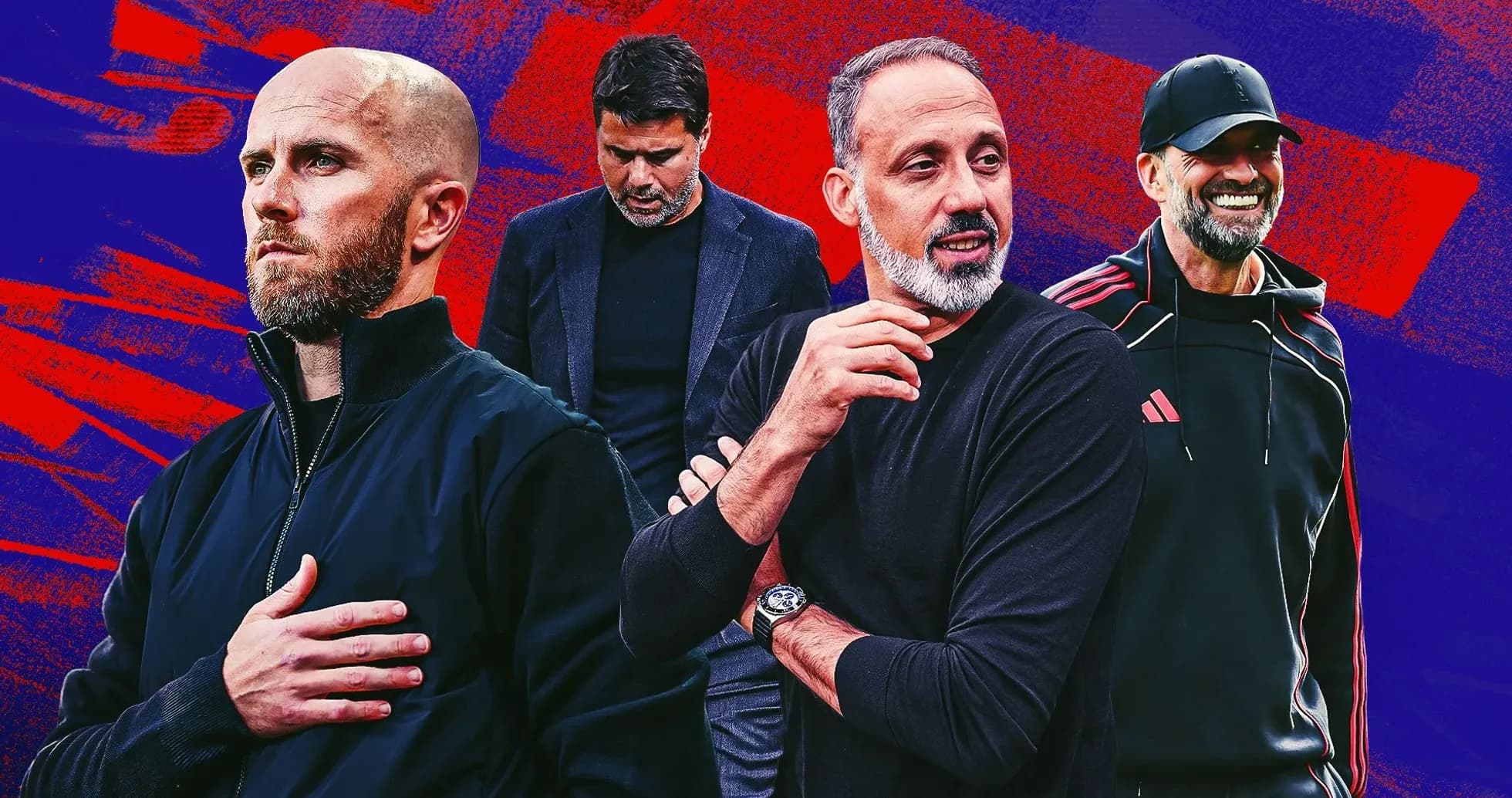
USMNT’s Next Coach: Familiar Faces and Bold Choices
For a certain corner of USMNT fans, the B.J. Callaghan era still feels like a pleasant fever dream. Seven games, a trophy, no defeats. A caretaker who was never really meant to be anything more than that, yet somehow became a reference point for what this team could look like when it clicked.
Gregg Berhalter was out — briefly, as it turned out — and the program sat in limbo. One foot searching for a new identity, the other still planted in the old regime. Into that gap stepped Callaghan, Berhalter’s assistant, tidy on the touchline and even tidier in the results column.
He didn’t just keep things afloat. He won. Four victories, the 2023 CONCACAF Nations League, and a landmark moment: the first USMNT manager since 1934 to beat Mexico in his debut. For a stopgap, that’s quite a legacy.
He didn’t get the national team job then. Club football came calling instead, and Nashville SC are now reaping the rewards. An Open Cup triumph in 2025, a place among the Eastern Conference elite this year, and a clear sense of structure and purpose. If U.S. Soccer wants someone who knows the inner wiring of the federation but has proved he can run his own show, Callaghan’s résumé lands on the top shelf.
Klopp: The Call That Changed the Search
When Matt Crocker started the hunt for a new manager in 2024, he dialed the biggest name he could. Jurgen Klopp. The answer was no.
The German had just stepped away from Liverpool at the end of the 2023-24 season, emotionally and physically spent. He spoke of needing a break, even floated the idea that he might never coach again. Instead of another dugout, he took a front-office role as Head of Global Soccer in the Red Bull organization, a position that seems to suit his energy without draining it.
But the question of what’s next for Klopp never really goes away. It follows him like a shadow. England and Germany? Those bridges feel burned or, at the very least, closed. Spain would be a shock. Most other club jobs don’t match his scale.
That leaves national teams.
Germany would be the obvious fit, yet Julian Nagelsmann has the job and is doing it well. Thomas Tuchel, meanwhile, has committed long term to England. So when the dust settles after the World Cup, the U.S. post could easily be the most alluring vacancy on the international market.
If Klopp ever wants to taste a World Cup from the bench, this is the sort of project that might tempt him back into the storm.
Michael Bradley: Inevitable… But Not Yet
Of all the names in the frame, Michael Bradley’s feels the most inevitable. At some point, barring a wild detour, he will manage the USMNT.
He captained his country 48 times, played at a high level for club and country, and grew up in a household where tactics and team sheets were part of the dinner table conversation. His father, Bob Bradley, ran the national team for five years and remains one of the most respected American coaches of his generation.
The path seems written. Just not for this cycle.
Right now, Bradley is in charge of the New York Red Bulls, and his team looks like a laboratory for ideas. Young, expressive, relentlessly attacking, sometimes to their own detriment. You can see the Red Bull imprint in every press, every vertical run, every risk.
He’s three months into full-time professional management at a high level. Three months. This is a coach still testing, still breaking things to see how they work, still learning how to adjust when Plan A misfires.
Give him time. Give him more systems to master, more locker rooms to control. By 2030, the conversation might sound very different. For now, a move to a European club — Leipzig sits there as a natural extension of his current environment — feels more likely than an early coronation with the USMNT.
Jim Curtin: Not Flashy, Just Fundamentally Sound
There’s a truth that needs to be said out loud: Jim Curtin would not be a glamorous appointment. No global headlines. No viral unveiling.
What he would be is stable. Competent. Relentlessly organized.
Curtin spent a decade steering the Philadelphia Union through constant churn. Players came and went, prospects were sold, lineups shifted. The one constant was that Philly remained competitive. He developed talent, trusted youth, and kept the club punching above its financial weight.
The trophy cabinet is modest for a coach of his tenure. A Supporters’ Shield in 2022, five finals reached, but no avalanche of silverware. His credentials as a “serial winner” can be challenged.
Yet there’s something undeniably valuable about a manager who knows how to build a functioning team from moving parts and who consistently squeezes the best from young, ambitious players. For a national program trying to knit together a deep, evolving player pool, that sort of reliability matters. A lot.
Pellegrino Matarazzo: From Lower-League Journeyman to European Trophy Winner
Pellegrino Matarazzo’s story reads like a parable for late bloomers.
Born in New Jersey to Italian parents, he chased the European dream and never quite caught it as a player. Trials in Italy ended in disappointment. He drifted through the lower leagues in Germany and Italy, a solid pro but nowhere near the top.
The breakthrough came on the other side of the white line. As an academy coach, Matarazzo found his calling. At Hoffenheim, he learned under Julian Nagelsmann, absorbing the ideas of one of the most innovative minds in the modern game. Eight years later, he’s no longer a promising assistant. He’s one of the most respected American coaches in Europe.
His work with Real Sociedad has been nothing short of remarkable. From relegation danger in December to Copa del Rey champions in April, with European qualification now within reach. Six months ago, that sounded fanciful. Today, it’s the new standard.
Two decades after failing to make it as a top player, he stands as the only American coach to win a major trophy in one of Europe’s top five leagues. That’s not just a line on a CV; it’s a marker of genuine tactical and man-management quality.
His trajectory, though, feels club-bound. Spanish media already link him with bigger jobs, potentially with Champions League football attached. That seems a more natural next step than stepping into a national team role.
He hasn’t closed the door on the USMNT. Nor should anyone else close it for him. But his rise suggests a long club career at the sharp end of European football before any return home.
Pep Guardiola: The Ultimate Fantasy Hire
Whenever a football problem looks unsolvable, someone inevitably says the same thing: give it to Pep Guardiola.
There’s logic behind the fantasy. No modern coach has redefined the sport more often or more ruthlessly. From Barcelona to Bayern Munich to Manchester City, he has not only won but reinvented his own ideas, season after season, until his teams played with a clarity and precision that made the game look almost unfair.
If you want a guarantee of structure, of a defined style, of relentless standards, Guardiola is the template.
But there’s a catch for any national team — and for the USMNT in particular. Guardiola lives in the details. He needs daily training sessions, hours on the grass, endless tactical briefings, constant repetition. International football doesn’t offer that. The calendar is too sparse, the contact time too limited.
Spain is off the table for political and personal reasons tied to his Catalan identity. Most other top European nations feel unlikely as landing spots. If he ever chooses a national team, Argentina — where he is revered — or the U.S., with its resources and growing ambition, stand out as the most plausible destinations.
Would he shine in a looser, more episodic role, where players drop in for a few weeks and then disappear back to their clubs? That’s the great unknown. The idea is intoxicating. The reality might be far more complicated.
Jesse Marsch: The Burned-Bridge Candidate
This one would be wild.
Jesse Marsch once seemed destined for the USMNT job. He certainly thought so. He has said he turned down Leicester City at the last moment because of serious interest from U.S. Soccer, only to watch the federation pivot and reappoint Berhalter in 2023.
The fallout has been ugly. Since then, Marsch has taken aim at the USMNT, U.S. Soccer, and even the broader American soccer landscape. For a proud Wisconsin native, his relationship with the game back home now feels strained, if not broken.
What hasn’t changed is his ability. Marsch remains one of the most gifted coaches the United States has produced. His high-energy, pressing style fits the modern game, and his personality is built for the spotlight. Charisma, conviction, presence — he has all of it.
In almost any other reality, he would stride into the national team job as the obvious choice. In this one, he may have torched too many bridges to cross back over.
And that, in the end, is the crux of the USMNT’s search: do they lean into familiarity and continuity with someone like Callaghan or Curtin, bet on future stars like Bradley and Matarazzo, or swing for the fences with a global giant like Klopp or Guardiola?
The talent in the player pool is no longer the question. The only real unknown now is who they trust to lead it.