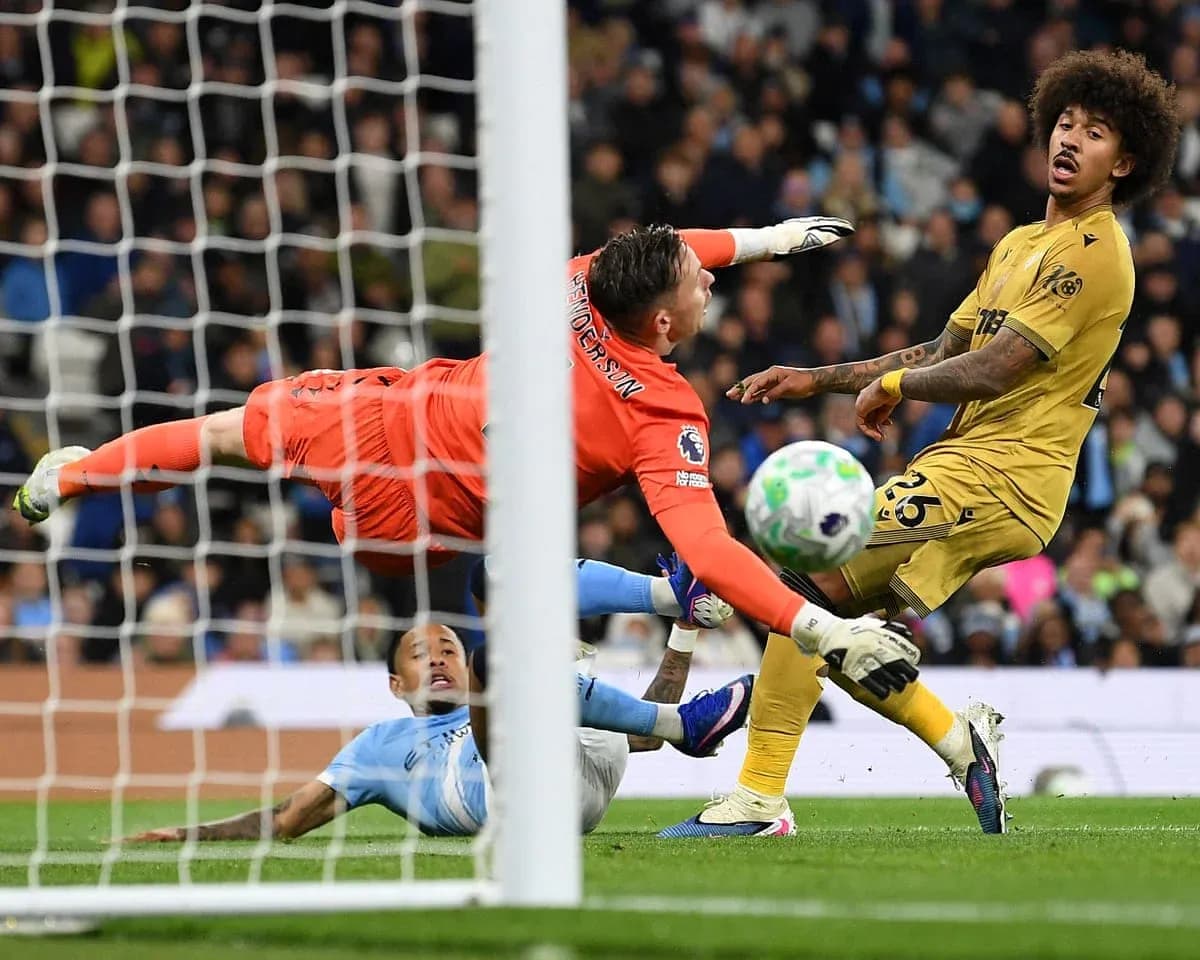
Wolves vs Fulham: Premier League Round 37 Preview
Wolves host Fulham at Molineux Stadium in a high‑pressure Premier League Round 37 fixture in 2026. In the league phase, Wolves come into this as bottom side in 20th place on 18 points with a -41 goal difference (25 scored, 66 conceded in 36 games), already in the relegation zone, while Fulham sit 11th on 48 points with a -6 goal difference (44 scored, 50 conceded). For Wolves, this is about salvaging pride and avoiding finishing adrift; for Fulham, it is a chance to lock in a solid mid‑table finish and potentially climb further in the final two rounds.
Head-to-Head Tactical Summary
The recent head-to-head record is finely balanced but venue-dependent. On 1 November 2025 at Craven Cottage, Fulham beat Wolves 3-0 in the Premier League, leading 1-0 at half-time before pulling away. Earlier in the same Premier League cycle, on 25 February 2025 at Molineux Stadium, Fulham won 2-1 after a 1-1 first half, showing their ability to edge tight games away from home.
On 23 November 2024 at Craven Cottage, Wolves produced a decisive 4-1 away win, having been level 1-1 at half-time, their most dominant attacking display in this mini-series. Going back to 9 March 2024 at Molineux Stadium, Wolves won 2-1 after a 0-0 first half, underlining how often this matchup has opened up after the interval. The 27 November 2023 clash at Craven Cottage ended 3-2 to Fulham, with the sides tied 1-1 at half-time.
Across these five Premier League meetings from 2023 to 2025, both teams have shown they can score multiple goals, with Wolves winning twice (4-1 away, 2-1 home) and Fulham winning three times (3-0, 2-1, 3-2), and Molineux producing two one‑goal games that were decided late.
Global Season Picture
- League Phase Performance: In the league phase, Wolves’ numbers explain their position: just 18 points from 36 matches, with only 3 wins and a goal record of 25 for and 66 against (goal difference -41). Home form is slightly better but still weak, with 3 wins, 4 draws and 11 losses, 18 goals scored and 33 conceded at Molineux. Fulham, by contrast, are securely mid‑table: 48 points from 36 matches, 14 wins and 44 goals scored against 50 conceded. Their away record is more fragile (4 wins, 4 draws, 10 losses, 16 scored, 30 conceded), which keeps them outside European contention.
- Season Metrics: In the league phase, Wolves’ statistical profile is that of a low-output, high‑concession side. They average 0.7 goals per game overall (25 in 36), with just 1.0 at home and 0.4 away, and concede 1.8 per match both home and away (66 total). Their scoring is back‑loaded, with 32.14% of goals coming between minutes 76-90, reflecting late chasing rather than control. Defensively, they are vulnerable early and before the interval, conceding 14.29% of goals in minutes 0-15 and 22.22% in 31-45. They have kept only 4 clean sheets and failed to score in 19 league games, underlining a blunt attack and porous defence (0.7 goals for vs 1.8 against). Discipline is also an issue, with yellow cards heavily concentrated between minutes 46-75, pointing to reactive, late tackling under pressure.
- Form Trajectory: Wolves’ league phase form string of “LDLLL” shows a side in free fall: one draw followed by four defeats, with no evidence of a late-season surge. Combined with only 3 league wins all year, this underlines a long‑term structural decline rather than a short slump. Fulham’s “LLWDL” sequence is inconsistent: two straight losses, a win, a draw, then another defeat. They oscillate between competitive performances and setbacks, typical of a mid‑table team with limited stakes in the final rounds. Momentum therefore favours neither side strongly, but Wolves’ trajectory is clearly downward while Fulham’s is more flat.
Tactical Efficiency
In the league phase, Wolves’ efficiency profile is stark: 25 goals from 36 matches (0.7 per game) against 66 conceded (1.8 per game) indicates a low‑conversion attack and a defence that gives up sustained volume. Their goal timing – heavily weighted to the final quarter of matches – suggests they struggle to create high‑quality chances early and are often chasing games. The high rate of matches under 2.5 goals for their own scoring (only 1 game over 2.5 goals for Wolves alone) further reflects a lack of cutting edge.
Fulham’s league phase metrics point to a more balanced but still imperfect efficiency. With 44 goals in 36 matches (1.2 per game) and 50 conceded (1.4 per game), they are slightly negative on goal difference but competitive in most matches. Their capacity to score late and in multiple time windows indicates they can translate possession and territory into chances over 90 minutes, even if their away attacking average (0.9 goals per game) is modest. Their clean-sheet count (8) and 11 games without scoring show a streaky attack/defence balance – capable of both shutting down opponents and going flat themselves.
Without explicit comparison indices, the implied “Attack/Defense Index” contrast is clear: Wolves project as a bottom-tier attack and defence in this league phase (0.7 for, 1.8 against), while Fulham sit in the mid‑table band on both metrics (1.2 for, 1.4 against). Fulham’s attack is more likely to reach its expected output across a match, especially late on, whereas Wolves’ pattern of conceding early and scoring late points to a tactical inefficiency: they spend long periods under pressure before generating their limited threat.
The Verdict: Seasonal Impact
For Wolves, this match is about damage limitation and, if mathematically still alive, clinging to any remaining survival scenario. In the league phase, 18 points from 36 games with a -41 goal difference is relegation form; even a win here would only lift them to 21 points with one match left, likely still short of safety and reliant on multiple other results. The realistic seasonal impact is reputational: avoiding finishing cut adrift at the bottom, showing some resilience at Molineux, and giving a platform for a rebuild in the Championship if relegation is confirmed.
For Fulham, the stakes are about consolidation and marginal upside. At 48 points in 11th, they are clear of relegation and outside the European race, but a win would move them to 51 points with one game remaining, opening the door to a top‑half finish and a stronger bargaining position for squad planning in 2026. Dropped points against the bottom side would reinforce their away fragility (already 10 away losses) and could see them slide towards the lower half if others around them win.
Looking forward, the most likely seasonal narrative is that Wolves’ long‑term structural weaknesses in both attack and defence (0.7 goals for, 1.8 against in the league phase) are too deep to be fixed in the final two rounds, while Fulham’s mid‑table efficiency should be enough to capitalise on this and secure a stable finish. A home win would only slightly soften the story of Wolves’ relegation year; an away win or draw would confirm Fulham as a solid, if unspectacular, mid‑table side heading into 2026 with a clearer platform to build on.