AC Milan vs Atalanta: Tactical Insights from a Thrilling 2–3 Clash
Under the San Siro lights, this felt less like a routine league fixture and more like a late‑season reckoning. AC Milan, 4th in Serie A on 67 points with a goal difference of 18 heading into this game, welcomed 7th‑placed Atalanta, who arrived on 58 points and a goal difference of 16. The stage: Stadio Giuseppe Meazza, Round 36 of the 2025 Serie A season, with Luca Zufferli in charge and the scoreboard eventually frozen at 2–3 after 90 breathless minutes.
I. The Big Picture – Systems, Rhythm, and Seasonal DNA
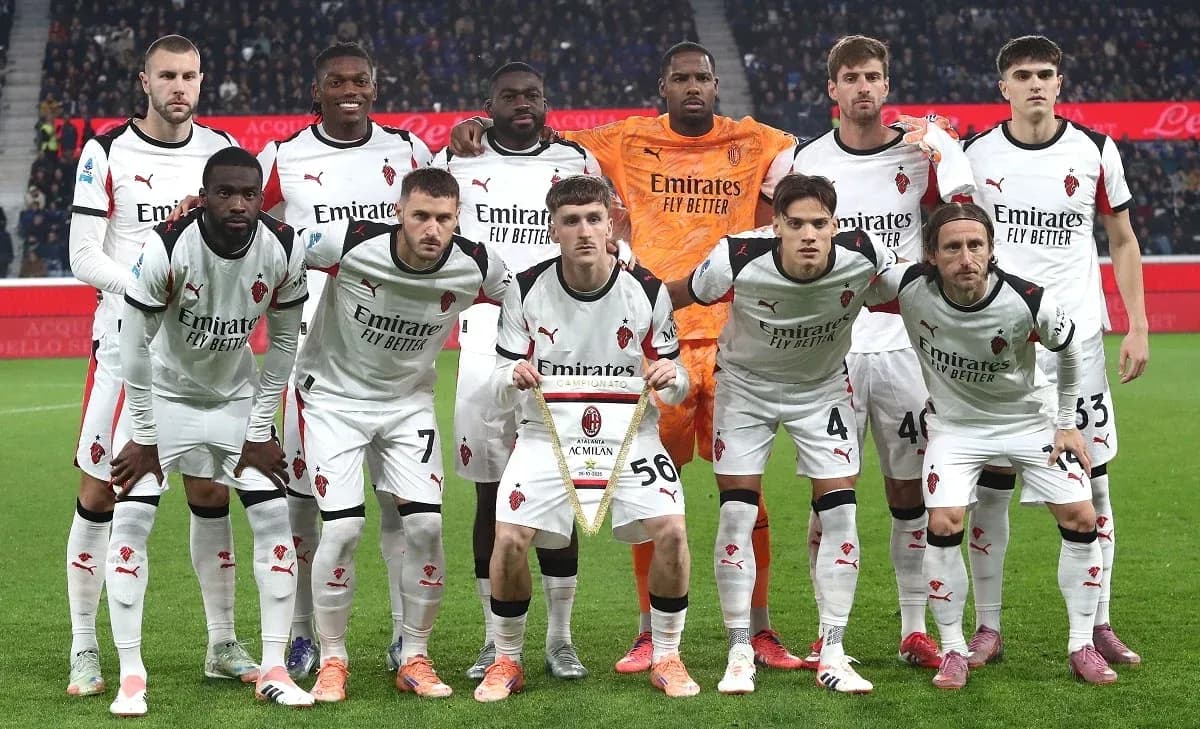
Massimiliano Allegri doubled down on Milan’s season-long identity, rolling out the familiar 3‑5‑2 that has been his default (32 league uses). M. Maignan anchored a back three of K. De Winter, M. Gabbia, and S. Pavlovic, with a broad, possession‑oriented midfield line of A. Saelemaekers, R. Loftus‑Cheek, S. Ricci, A. Rabiot, and D. Bartesaghi behind a front pair of S. Gimenez and Rafael Leão.
Opposite him, Raffaele Palladino mirrored the structural chessboard with Atalanta’s trademark 3‑4‑2‑1, the formation they have used 32 times this season. M. Carnesecchi sat behind a defensive trio of G. Scalvini, I. Hien, and S. Kolasinac. The wing‑backs D. Zappacosta and N. Zalewski flanked the central pair M. De Roon and Ederson, while C. De Ketelaere and G. Raspadori floated behind lone striker N. Krstovic.
Heading into this game, both teams had scored 50 league goals in total, averaging 1.4 goals per match overall. The difference lay in the way they structured that output. Milan’s goals were heavily back‑loaded: 23.53% between 31‑45 minutes, another 23.53% from 46‑60, and a league‑high 25.49% in the 76‑90 window. Atalanta, meanwhile, were more balanced but still dangerous late, with 23.53% of their goals also arriving from 76‑90 minutes.
Defensively, Milan’s all‑season record of 32 goals conceded in total (0.9 per match overall) suggested stability, but the minute distribution told a subtler story: a vulnerability growing from 61‑75 minutes, where 19.35% of their concessions clustered. Atalanta, conceding 34 in total (0.9 per match overall), were most fragile in the final stretch: 24.24% of their goals against arrived in the 76‑90 window.
The 0–2 halftime scoreline, then, was a shock to Milan’s script. A side that usually builds through the middle third of each half had been ambushed early and forced into a chase. The 2–3 full‑time reflects both their late‑game surge and Atalanta’s capacity to live on the edge and still survive.
II. Tactical Voids – Absences and Discipline
Both benches came into this fixture carrying scars. Milan were without L. Modric (broken cheekbone), C. Pulisic (muscle injury), and F. Tomori (suspended after a red card). The absence of Modric and Pulisic stripped Allegri of two high‑creativity profiles between the lines and in the right half‑space. Their season numbers underline the loss: Pulisic had delivered 8 league goals and 3 assists, plus 37 key passes, and even if he had missed 1 penalty, his presence as a vertical dribbler and connector was irreplaceable.
Tomori’s suspension forced the coach to trust Gabbia and De Winter in the back three. With Milan conceding 1.1 goals per match at home compared to 0.7 away, that reshaped back line was always going to be stress‑tested by Atalanta’s mobile front three.
Atalanta’s own defensive depth took a hit with L. Bernasconi and B. Djimsiti both missing through injury. Without Djimsiti’s experience, Palladino leaned on Scalvini, Hien, and Kolasinac to manage Leão’s runs and Gimenez’s penalty‑box presence.
Season‑long disciplinary trends framed the tone. Milan’s yellow card profile spikes late, with 25.42% of their cautions arriving between 76‑90 minutes and 15.25% in added time (91‑105). Atalanta mirror that aggression: 22.81% of their yellows from 61‑75, another 22.81% from 76‑90, and 15.79% in added time. Both teams are built to fight until the final whistle, and this fixture lived in that chaos.
III. Key Matchups – Hunter vs Shield, Engine Room vs Enforcer
Hunter vs Shield was embodied by N. Krstovic against Milan’s defensive record. Krstovic entered as one of Serie A’s most productive forwards: 10 league goals and 5 assists, with 74 shots (33 on target) and 20 key passes. His physicality (258 duels, 113 won) and penalty‑box instincts were always going to probe a Milan side conceding 1.1 goals per game at home and particularly exposed in the 61‑75 window.
Milan’s own spearhead was Rafael Leão. With 9 league goals and 3 assists, 45 shots (24 on target), and 20 key passes, his role in this 3‑5‑2 was to stretch Atalanta’s back three, attacking the space outside Scalvini and Hien. His dribbling volume – 55 attempts with 25 successful – demanded constant attention and dragged Atalanta’s structure out of shape as Milan chased the game.
Behind them, the Engine Room was defined by S. Ricci and A. Rabiot against M. De Roon and Ederson. Milan’s season‑long pattern – only 6 matches over 2.5 goals in total out of 36, with 30 under – comes from a controlled, risk‑managed midfield. Atalanta, similarly, have only 5 matches over 2.5 goals in total, 31 under, suggesting that when the game opened into a five‑goal thriller, it did so against the grain of both sides’ statistical DNA.
On the creative side, C. De Ketelaere and Krstovic formed Atalanta’s dual threat between lines and in the box. De Ketelaere’s 5 assists and 60 key passes in the league, plus 100 attempted dribbles (49 successful), gave Atalanta a ball‑carrying outlet to break Milan’s first press and feed Krstovic in advanced zones.
IV. Statistical Prognosis – xG Echoes and Defensive Solids
Following this result, the numbers still sketch a picture of two teams more controlled than the 2–3 scoreline suggests. Overall, both average 1.4 goals for and 0.9 against per game; both have strong clean‑sheet counts (Milan 15 in total, Atalanta 13). The three‑goal concession at home drags against Milan’s usual defensive solidity, especially given their tendency to keep matches under 2.5 goals.
Yet the minute‑by‑minute distributions explain how this game tilted: Milan’s late‑goal surge (25.49% of their goals from 76‑90) collided directly with Atalanta’s late‑defensive weakness (24.24% of their goals conceded in the same window). That intersection almost produced a comeback, but Atalanta’s early ruthlessness and Krstovic’s season‑long efficiency in high‑value areas tipped the balance.
In xG terms, the profile is of an Atalanta side that generates fewer but higher‑quality chances through Krstovic and De Ketelaere, versus a Milan team that builds pressure over time, especially in the final quarter‑hour. On this night, the visitors maximised their early opportunities; Milan’s late wave came too late to rewrite the story.
The tactical takeaway is clear: Milan’s 3‑5‑2, without Modric, Pulisic, and Tomori, lacks a margin for early error. Atalanta’s 3‑4‑2‑1, when fed by the creative volume of De Ketelaere and the penalty‑box gravity of Krstovic, remains one of Serie A’s most dangerous away blueprints – even if it lives perilously close to the edge in those final, frantic minutes.