Lazio's Season Finale: A 2–1 Victory Over Pisa
Stadio Olimpico closed its Serie A curtain on a quietly symbolic night. Lazio, already locked into a mid‑table reality, edged Pisa 2–1 and confirmed in 90 minutes what the season’s numbers had been whispering for weeks: one side is a flawed but functioning top‑half outfit, the other a relegated team that never truly solved its structural leaks.
I. The Big Picture – Season DNA and Final Table Truth
Following this result, Lazio finish 9th in Serie A with 54 points, their campaign defined by balance more than brilliance. Overall they scored 41 goals and conceded 40, a goal difference of +1 that mirrors their record of 14 wins, 12 draws and 12 defeats from 38 matches. At home they were more assertive: 8 wins, 6 draws, 5 losses, with 27 goals for and 25 against. The averages underline a side that rarely exploded but usually competed: at home they produced 1.4 goals per game and allowed 1.3; overall both their goals for and against settled at 1.1 per match.
Pisa’s season, by contrast, ends in the bleakness of 20th place and relegation, with only 18 points and a stark goal difference of -45 (26 scored, 71 conceded). The split between home and away underlines why survival was never realistic. On their travels they did not win a single league match: 0 victories, 8 draws, 11 defeats, scoring 17 and conceding 45. That translates into 0.9 away goals per game against a punishing 2.4 conceded. Overall, Pisa finished with just 2 wins in 38 matches, a defensive record that gave every fixture a built‑in handicap.
Within that macro‑frame, this 2–1 Lazio win fits almost too neatly. The home side once again did just enough at the Olimpico; Pisa once again showed that even when they score, their defensive structure cannot sustain the effort.
II. Tactical Voids – Who Was Missing and How It Shaped the Game
Both coaches had to navigate conspicuous absences that subtly reshaped the chessboard.
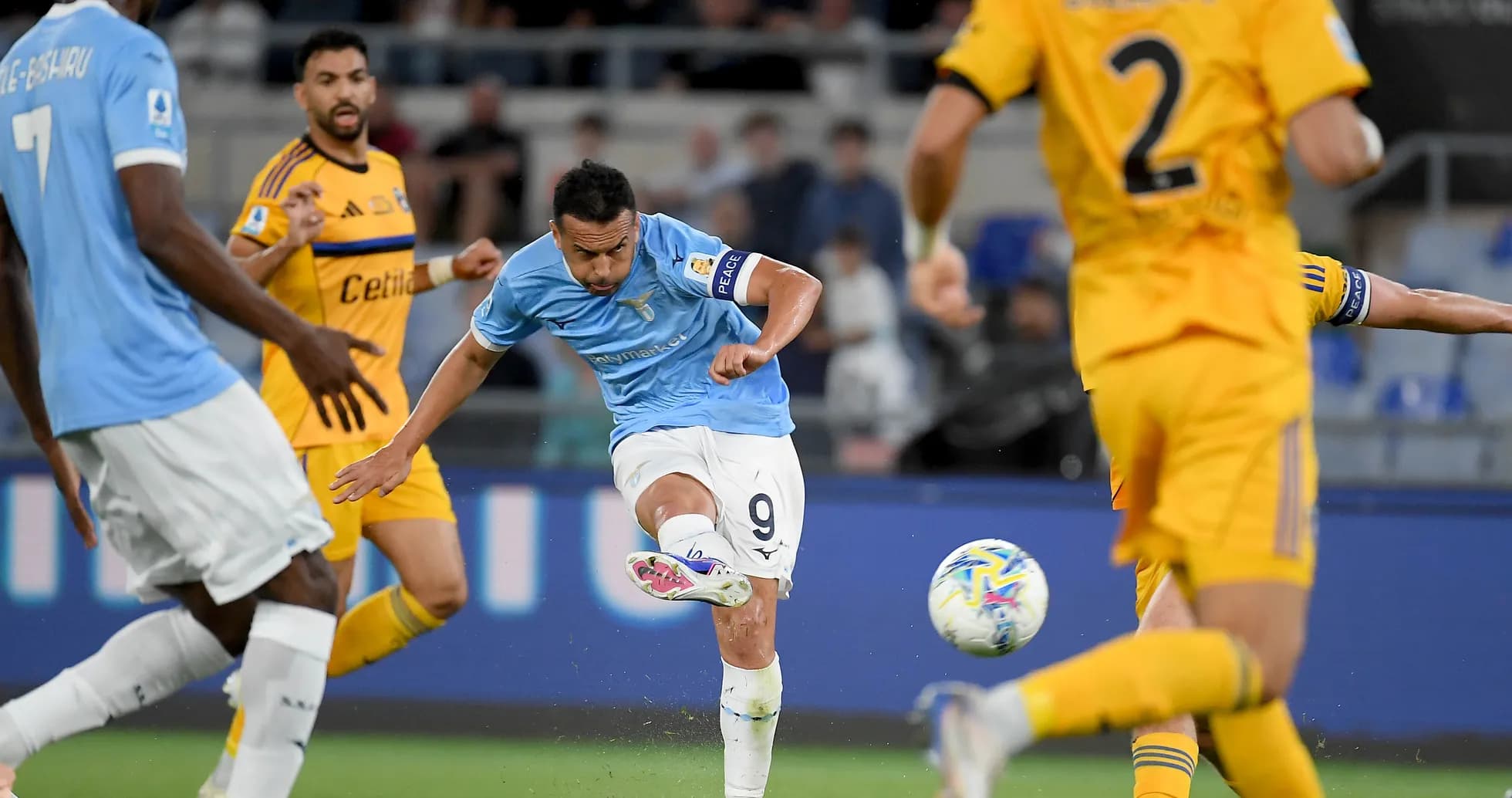
For Lazio, the list was long and meaningful. First‑choice goalkeeper I. Provedel missed out with a shoulder injury, handing the gloves to A. Furlanetto. In front of him, the absence of N. Rovella (suspended after a red card) removed a key controller from the base of midfield, while N. Tavares and K. Taylor were also sidelined through yellow‑card suspensions. Perhaps most symbolically, M. Zaccagni – a red‑carded, high‑impact wide attacker with 3 league goals and a penalty miss on his record – was unavailable with a knee injury. That forced Maurizio Sarri to lean on a front three of M. Cancellieri, T. Noslin and Pedro, supported by a midfield trio of F. Dele‑Bashiru, T. Basic and R. Belahyane.
Despite those voids, Lazio’s 4‑3‑3 remained intact. The back four of A. Marusic, Mario Gila, A. Romagnoli and L. Pellegrini preserved continuity, and with Lazio having kept 15 clean sheets overall (6 at home, 9 away), the defensive core still carried authority.
Pisa’s absentees were fewer in number but heavy in influence. A. Caracciolo, their leading yellow‑card magnet with 10 bookings, missed out through suspension. His profile – 71 tackles, 24 successful blocks and 50 interceptions across the season – speaks to a defender who lives in the line of fire. Without him, Oscar Hiljemark’s 3‑5‑2 lost its most battle‑hardened organiser at the back. Injuries to F. Coppola, D. Denoon, M. Marin and M. Tramoni further thinned the spine and the creative bench, while Lorran was left out by coach’s decision.
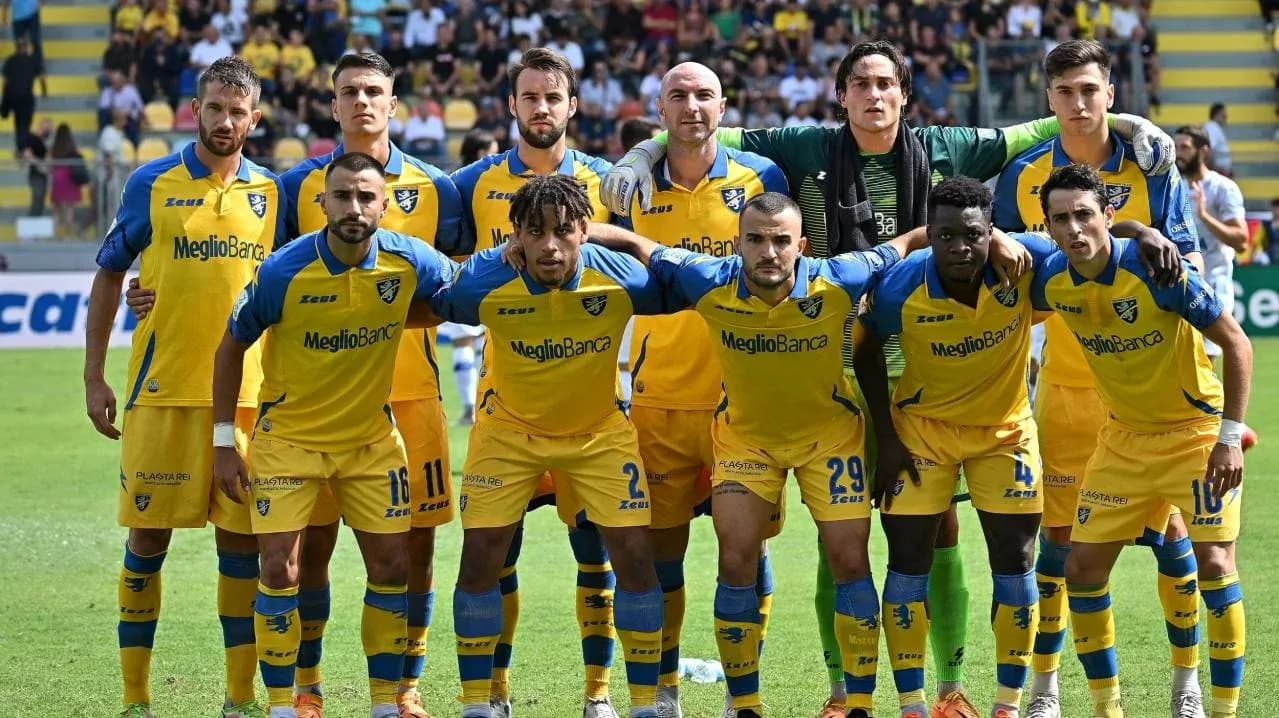
The result was a Pisa XI that looked lighter in both leadership and resistance: A. Semper behind a back three of A. Calabresi, S. Canestrelli and R. Bozhinov, with a midfield five that had to cover huge lateral spaces against Lazio’s wide front line.
III. Key Matchups – Hunter vs Shield, Engine Room vs Enforcer
Without official top‑scorer data, the “Hunter vs Shield” duel in this match was more collective than individual. Lazio’s attacking unit, averaging 1.4 goals per game at home, confronted a Pisa defence that, on their travels, leaked 2.4 per match and had already suffered a worst away defeat of 5–0. The 2–1 scoreline is almost conservative relative to those season‑long trends; Lazio hit their typical home output, while Pisa conceded fewer than their away average yet still lost.
The real theatre of conflict lay in the “Engine Room” zone. Lazio’s trio of Dele‑Bashiru, Basic and Belahyane were tasked with dictating tempo against a Pisa midfield that included M. Aebischer and E. Akinsanmiro centrally, flanked by M. Leris and S. Angori with I. Vural operating between lines. Aebischer’s season numbers underline his importance: 35 appearances, 34 key passes and 65 tackles, with 8 yellow cards reflecting a willingness to foul in order to disrupt.
Here, Lazio’s structure had an edge. All season they have been comfortable in a 4‑3‑3 – used 36 times – while Pisa’s identity has been more fragmented, cycling through multiple shapes despite favouring a 3‑5‑2 (21 matches) and a 3‑4‑2‑1 (12). That tactical instability has fed into Pisa’s disciplinary profile: overall, 71 goals conceded, only 5 clean sheets, and a card map that spikes late. Their yellow‑card distribution shows a pronounced peak in the 76–90’ window at 25.64%, while Lazio’s own bookings also surge late with 25.64% between 76–90’. Both sides, in other words, tend to fray as the finish line approaches.
That made the closing phase of this match particularly volatile on paper: tired legs, stretched lines, and two teams statistically prone to late cautions and, in Lazio’s case, late red cards (55.56% of their reds come between 76–90’). Yet Pisa, chasing the game, never fully transformed that chaos into control.
At the back, Mario Gila and A. Romagnoli embodied Lazio’s “Shield”. Across the season, Romagnoli’s 20 successful blocks and 32 interceptions, plus a red card that testifies to his edge, have anchored a defence that, despite disciplinary scares, rarely collapses. Gila’s own profile – 46 tackles, 17 blocked shots and 25 interceptions – adds a proactive layer. Against a Pisa front two of S. Moreo and F. Stojilkovic, who were starved of consistent service throughout a campaign in which Pisa failed to score in 21 matches overall, Lazio’s central pairing again looked closer to the Serie A standard.
IV. Statistical Prognosis – xG in Disguise and the Logic of the Scoreline
No explicit xG data is available, but the season‑long metrics function as a proxy for expected patterns. Heading into this game, a Lazio home attack at 1.4 goals per match against a Pisa away defence conceding 2.4 suggested a home side likely to create the better chances and to score at least twice. Conversely, Pisa’s away scoring average of 0.9 against a Lazio defence conceding 1.3 at home hinted at the possibility of a single consolation rather than a sustained onslaught.
The 2–1 final score at the Olimpico fits that probabilistic script almost perfectly. Lazio hit the median of their home attacking profile, Pisa found a goal consistent with their away average, and the defensive gap – Lazio’s overall goal difference of +1 versus Pisa’s -45 – was reflected not in a rout, but in a controlled, slightly nervy home win.
In narrative terms, this match closed the loop on two very different seasons. Lazio, disciplined yet occasionally combustible, end as a side whose numbers and performances align: solid, flawed, mid‑table. Pisa, brave but structurally broken, bow out of Serie A with one last glimpse of what might have been, undone again by the same defensive fissures that defined their year.