AC Milan’s Season Ends with Cagliari Upset: A Tactical Analysis
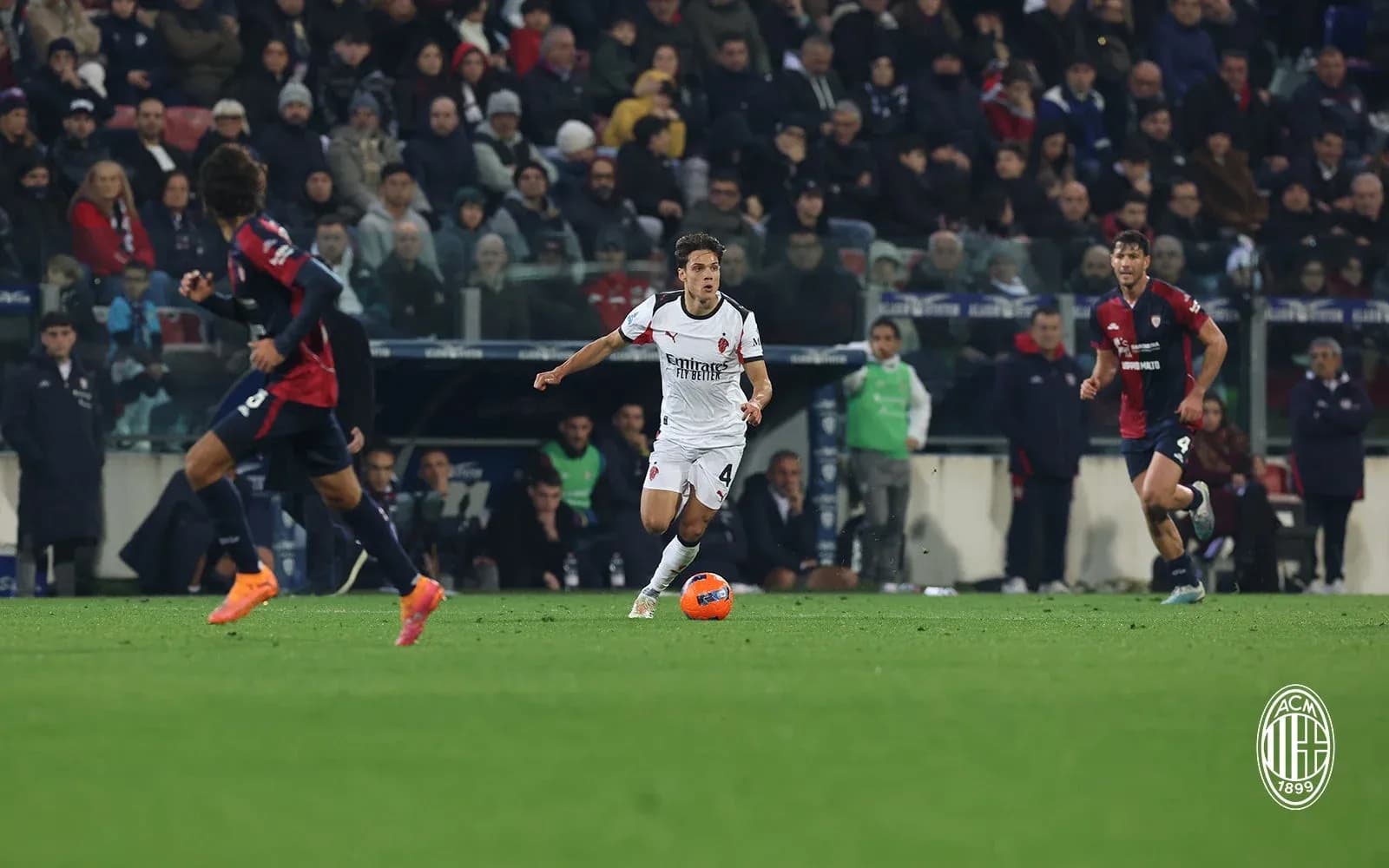
Under the grey evening sky at Stadio Giuseppe Meazza, AC Milan’s season-long identity met its final, jarring twist. In a match that finished 1-2 to Cagliari, the narrative was less about a single upset and more about how two contrasting squads distilled their entire Serie A campaigns into ninety minutes.
I. The Big Picture – Season DNA in One Game
Following this result, the table tells a stark story. Milan close the 2025 Serie A season in 5th place on 70 points, with a goal difference of 18, built overall on 53 goals scored and 35 conceded. At home they have been solid rather than ruthless: 9 wins, 5 draws, 5 defeats, with 25 goals for and 21 against. A team that, heading into this game, averaged 1.3 goals at home and conceded 1.1, again showed that slim margin for error; one goal was not enough, and defensive lapses cost them.
Cagliari, by contrast, finish 14th on 43 points with a goal difference of -13, their 40 goals for dwarfed by 53 against. On their travels they end with 4 wins, 6 draws and 9 defeats, scoring 18 and conceding 30 – a fragile away side on paper, but one that here found a rare blend of resilience and incision.
Both coaches mirrored each other structurally in a 3-5-2, but the context was very different. For Massimiliano Allegri, this was about consolidating European-level standards. For Fabio Pisacane, it was about validating a survival campaign with an away scalp at one of Italy’s giants.
II. Tactical Voids and the Discipline Underbelly
Cagliari arrived in Milan carrying a heavy list of absentees. M. Folorunsho (muscle injury), R. Idrissi (knee injury), S. Kilicsoy (personal reasons), J. Liteta (thigh injury) and L. Pavoletti (knee injury) were all ruled out. That stripped Pisacane of rotation options in the attacking and midfield thirds, putting extra responsibility on Sebastiano Esposito and the front line that did travel.
The visitors’ season-long discipline trends framed the risk of this approach. Overall, their yellow-card distribution shows a tendency to heat up after the break, with 23.46% of cautions arriving between 46-60 minutes and a late spike of 27.16% between 76-90. Red cards have been rare but dramatic: both overall dismissals came in the 76-90 window, meaning Cagliari’s aggression often teeters on the edge just when legs are heavy and decisions get frantic.
Milan’s disciplinary curve is not dissimilar, though slightly more controlled. Across the season, 25.00% of their yellows arrived between 76-90, with notable clusters also between 46-60 and 61-75 (both 18.75%). Red cards have been scattered – one each in the 16-30, 46-60 and 91-105 ranges – hinting at occasional emotional spikes rather than a systematic lack of control.
In a tight game that finished with a single-goal margin, these patterns mattered. Cagliari’s ability to push the physical line without seeing red, and Milan’s inability to turn late pressure into clean, composed dominance, underpinned the final scoreline.
III. Key Matchups – Hunter vs Shield, Engine Room vs Enforcer
The “Hunter vs Shield” storyline was inverted from expectations. On paper, Milan’s attack is spearheaded by the league form of Rafael Leão and Christian Pulisic, both on the bench at kick-off but central to the club’s offensive profile.
Leão, with 9 league goals and 3 assists from 29 appearances, represents Milan’s chaos agent: 45 shots (24 on target), 23 key passes, and 56 dribble attempts with 26 successes. His presence stretches back lines and forces mistakes. Pulisic adds a more surgical edge: 8 goals, 4 assists, 41 shots (25 on target) and 38 key passes, with a passing accuracy of 85%. His season also carries a blemish from the spot – 1 penalty missed – a reminder that even Milan’s most polished weapons have occasional cracks.
Yet Allegri’s starting front two were Santiago Gimenez and Christopher Nkunku. In a 3-5-2 built on controlled possession, they were supposed to probe the weaknesses of a Cagliari defence that, on their travels, has conceded an average of 1.6 goals per game. But Cagliari’s back three – J. Pedro, Yerry Mina and J. Rodriguez – held firm, protected by a midfield that refused to be pulled apart.
At the heart of that resistance was Adam Obert. Officially listed as a midfielder in this match but a defender by trade, Obert’s season explains why he tops the yellow-card charts: 9 yellows and 1 yellow-red from 35 appearances, 68 tackles, 18 blocked shots and 42 interceptions. He is the embodiment of Cagliari’s “Shield”: aggressive, front-foot defending that rides the line. Against Milan’s fluid midfield five, his positioning and timing were crucial in clogging the half-spaces where Nkunku likes to receive.
The “Engine Room” battle set Milan’s central trio of Y. Fofana, A. Jashari and Adrien Rabiot against Cagliari’s M. Adopo, G. Gaetano and A. Deiola, with Esposito stepping in as the creative axis from the front line. Esposito’s season numbers are those of a complete modern creator: 7 goals, 5 assists, 71 key passes and 1003 total passes at 75% accuracy, plus 56 drawn fouls and 56 tackles. He is both playmaker and disruptor.
Here, Esposito’s ability to drop off the front line and overload midfield lanes exposed the limits of Milan’s 3-5-2 when out of possession. With wing-backs A. Saelemaekers and D. Bartesaghi pushed high, Milan’s back three were repeatedly asked to step into spaces they dislike, opening channels for runs from G. Borrelli and Esposito himself.
IV. Statistical Prognosis – xG Logic vs Scoreboard Reality
If we translate the season’s statistical profiles into an Expected Goals lens, the outcome – a narrow Cagliari win – sits on the edge of plausibility but not impossibility.
Heading into this game, Milan’s overall scoring average of 1.4 goals per match, combined with Cagliari’s overall concession rate of 1.4 and away rate of 1.6, would typically project a Milan xG edge at home, something in the region of a 1.5–2.0 xG expectation versus Cagliari’s 0.8–1.2. Milan’s defensive record – just 0.9 goals conceded per game overall and 0.7 on their travels – usually underpins a low-xG profile for opponents, but at home they do allow 1.1 on average, suggesting vulnerability to well-timed counters and set plays.
Cagliari’s own attacking averages – 1.1 goals overall, 0.9 on their travels – rarely forecast multi-goal away wins. Yet their clean-sheet count of 8, including 2 away, hints at a team capable of compressing games into narrow margins. Combine that with Esposito’s creative volume and Obert’s disruptive presence, and you get a model where Cagliari’s path to victory is narrow but clear: survive waves of pressure, weaponise transitions, and lean into Milan’s occasional home bluntness.
Following this result, the numbers and the narrative align on one point: Milan remain a high-floor, European-level side whose 3-5-2 offers control but not always ruthlessness. Cagliari, meanwhile, close the season as a flawed but dangerous opponent, especially when Esposito dictates and Obert anchors. On this night in Milan, the scoreboard sided with the underdog, but it did so along fault lines that have been visible in the data all year.