Hellas Verona vs AS Roma: Tactical Analysis of the Season Finale
Under the Verona dusk at Stadio Marcantonio Bentegodi, the season closed with a result that felt entirely in keeping with the campaign both sides had just lived through. Following this result, Hellas Verona’s 2-0 home defeat to AS Roma crystallised a gulf that had been written across the Serie A table for months: Verona anchored in 19th with 21 points and a goal difference of -36, Roma finishing third on 73 points with a goal difference of 28 and a Champions League place secured.
I. The Big Picture – Structures that tell the story
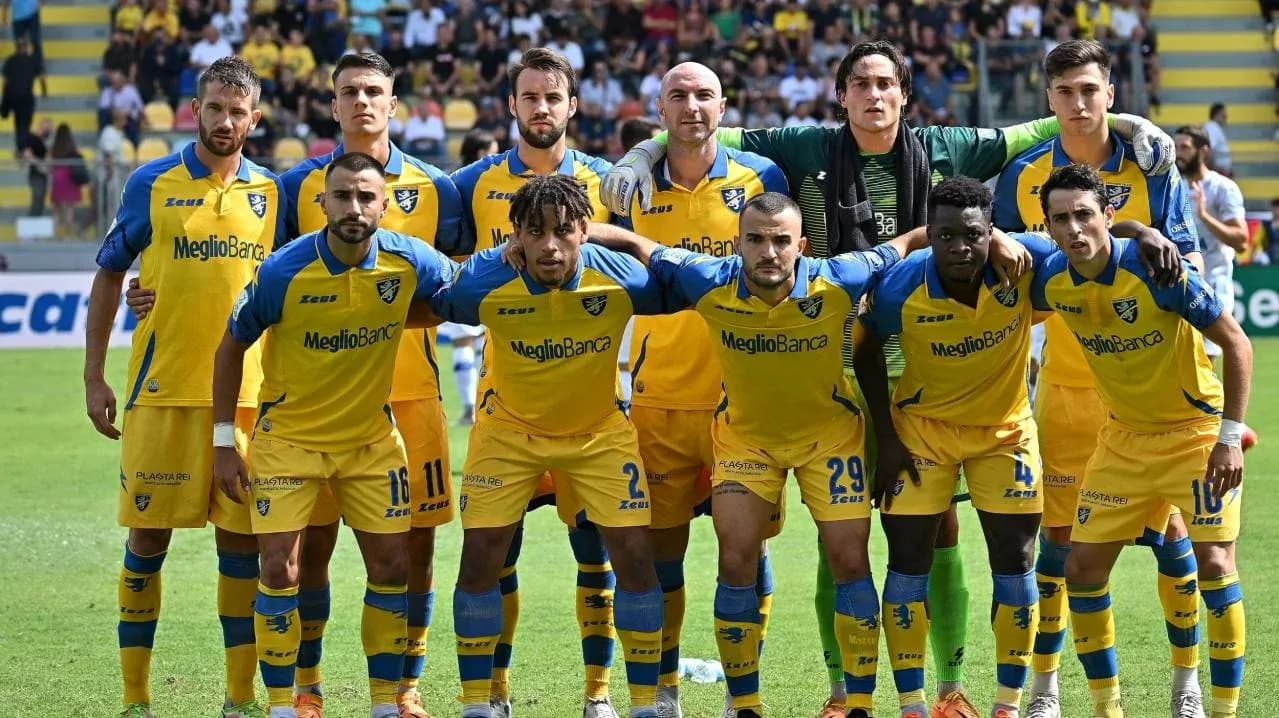
Paolo Sammarco sent Verona out in a 3-5-2, a shape that has been their default all season, used in 26 league matches. It is a system designed to crowd the centre, protect a fragile back line and offer counter-attacking width through wing-backs. Yet the season’s numbers show how thin that protection has been. Overall, Verona conceded 61 goals in 38 matches, an average of 1.6 per game; at home they allowed 28, an average of 1.5. With only 25 goals scored overall – 12 at home, just 0.6 on average at Bentegodi – every concession feels fatal.
Across from them, Piero Gasperini Gian’s Roma lined up in a 3-4-2-1, the structure that has underpinned their rise, deployed 30 times this campaign. It is a system of controlled aggression: three centre-backs, wing-backs high and wide, and a fluid band of three attackers. Overall, Roma scored 59 goals (1.6 per game) and conceded just 31 (0.8 on average), with 26 goals scored on their travels and 21 conceded away – a profile of a side that trusts its structure even outside the Olimpico.
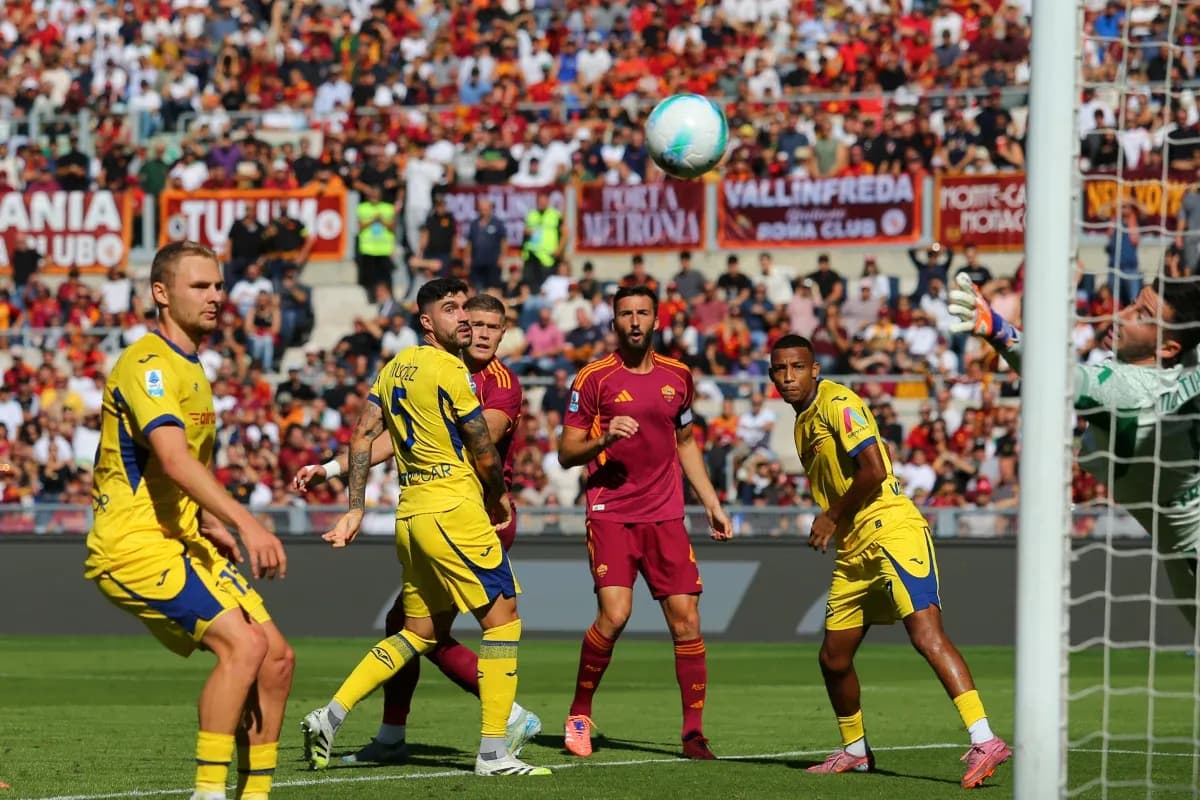
The final scoreline – Verona 0, Roma 2 – mirrored the broader season. Roma, on their travels, carried enough offensive weight and defensive control to impose themselves; Verona, at home, again failed to score, one of 11 such blanks at Bentegodi across the campaign.
II. Tactical Voids – Absences and discipline shaping the night
Verona’s squad was thinned in all the wrong places. Roberto Gagliardini, their card-magnet and primary ball-winner, was suspended for yellow cards. Over 29 appearances he accumulated 10 yellows, committing 45 fouls and winning 169 of 285 duels; his absence stripped Sammarco’s 3-5-2 of its most reliable screen. Without him, the responsibility for disrupting Roma’s rhythm fell heavily on Jean-Daniel Akpa Akpro and Sandi Lovric. Akpa Akpro, who has 44 tackles and 7 successful blocks this season, brings energy but not quite the same positional discipline. Lovric, more of a connector, was forced deeper, blunting Verona’s already limited attacking transitions.
In defence, the trio of V. Nelsson, A. Edmundsson and N. Valentini had to cope without the option of rotating with A. Bella-Kotchap or the suspended G. Orban, whose season has been as volatile as it was vital: 7 goals, 2 assists, 61 shots and a red card that helped land him on the red-card leaderboard. With Orban missing as an outlet and penalty-box reference, Verona’s front line of T. Suslov and K. Bowie looked more like runners than true threats.
Roma’s absentees were high-profile but better absorbed. L. Pellegrini’s thigh injury removed a creative midfielder, while E. Ndicka’s thigh problem and Wesley Franca’s suspension (after a campaign with 6 yellows, 1 yellow-red and 1 straight red) deprived Gasperini of two aggressive presences. Yet the depth showed: Mario Hermoso, who has 36 tackles, 6 successful blocks and 29 interceptions this season, anchored the left of the back three, while Bryan Cristante and N. Pisilli patrolled central spaces.
Disciplinary trends framed the risk profiles. Verona’s season-long yellow-card timing shows a spike between 46-60 minutes (24.72%) and 31-45 (21.35%), underlining how often they lose control around half-time. Their red cards cluster in the 46-60 and 76-90 windows (40.00% each), a portrait of a side that frays under pressure. Roma, by contrast, concentrate their yellows between 46-75 and 76-90 minutes (a combined 69.12%), but with fewer reds and a better handle on game states.
III. Key Matchups – Hunter vs Shield, Engine Room vs Enforcer
The “Hunter vs Shield” duel was embodied by Donyell Malen against Verona’s makeshift back three. Malen arrived as one of Serie A’s deadliest forwards: 14 goals and 2 assists in 18 appearances, with 49 shots (31 on target) and a 7.23 average rating. His threat is multi-dimensional – 43 dribble attempts, 16 successful, and 3 penalties scored out of 4, meaning there is one penalty miss on his ledger that slightly tempers his otherwise ruthless profile.
Against him, Verona’s defence came from a unit that has conceded 61 overall and 33 on their travels, but 28 at home – numbers that tell of structural frailty rather than individual calamity. Martin Sønder Frese, one of Verona’s more robust defenders, has 84 tackles, 10 successful blocks and 29 interceptions, yet even his aggression (46 fouls committed, 8 yellows) has not been enough to stabilise a back line that spends too long under siege.
Behind Malen, Roma’s creative web is woven by P. Dybala and M. Soule. Dybala, with 6 assists and 55 key passes in 22 appearances, operates as the primary chance architect, drawing 40 fouls and threading passes into the channels. He has, however, missed a penalty this season, a reminder that even his left foot is not infallible from the spot. Soule complements him with 6 goals and 5 assists, 46 key passes and 95 dribble attempts (35 successful), repeatedly attacking half-spaces and full-backs.
Their opposite numbers in Verona’s “engine room” – Akpa Akpro, Lovric and A. Harroui – were set up more as breakers than makers. Akpa Akpro’s 44 tackles and 23 successful dribbles mark him as a transitional player, but without Gagliardini’s 73 tackles, 13 successful blocks and 54 interceptions, the midfield lacked a true enforcer to stand between Dybala/Soule and the back three. The result was a predictable pattern: Roma’s double “10s” receiving between the lines, Verona’s midfield collapsing backwards, and the wing-backs M. Frese and R. Belghali forced into ever-deeper positions.
IV. Statistical Prognosis – Why 2-0 felt inevitable
Heading into this game, the statistical currents all pulled in Roma’s direction. On their travels they averaged 1.4 goals scored and 1.1 conceded, with 7 away clean sheets. Verona, at home, averaged 0.6 goals for and 1.5 against, failing to score in 11 of 19 matches at Bentegodi. The overall goal difference figures underline the structural gap: Verona’s -36 (25 for, 61 against) versus Roma’s 28 (59 for, 31 against).
In xG terms – even without explicit values – the patterns are clear. Roma’s shooting volume and quality, channelled through Malen’s 49 shots and Soule’s 37, plus Dybala’s 29, suggest a side that consistently generates high-probability chances. Their defensive record, with 18 clean sheets overall and only 31 goals conceded, points to a unit that suppresses opponent xG effectively, especially once they establish control.
Verona, by contrast, have failed to score in 20 matches overall. Their 0.7 overall goals-for average and 1.6 against reflect a side that spends most of its time defending low, rarely strings together enough passes to create high-quality chances, and relies heavily on moments rather than sustained pressure.
Following this result, the 2-0 scoreline feels less like a single match narrative and more like the season condensed into 90 minutes: Roma’s 3-4-2-1 again proving balanced and ruthless, Verona’s 3-5-2 again exposed by the absence of its key destroyer and its chronic lack of punch. The tactical preview written by the numbers played out on the pitch almost to the letter.