Derby della Mole Ends in Draw: Torino vs Juventus Match Analysis
The Derby della Mole closed its Serie A season under Turin’s evening lights with a match that felt like a snapshot of both clubs’ campaigns: Torino’s volatility against Juventus’ structure, ending in a 2–2 draw at the Stadio Olimpico Grande Torino.
I. The Big Picture – context and identities
Following this result, Torino finish 12th on 45 points, their goal difference locked at -19 from 44 goals scored and 63 conceded overall. It is the profile of a side that lives on narrow margins: at home they scored 27 and conceded 29, averaging 1.4 goals for and 1.5 against. Juventus, by contrast, close in 6th place on 69 points, with a far healthier overall goal difference of 27 (61 for, 34 against). Their season-long numbers underline a Europa League-level heavyweight: on their travels they scored 26 and conceded just 18, averaging 1.4 goals for and 0.9 against away from home.
On the night, Juventus led 1–0 at half-time before being dragged into a second‑half storm, only to rescue a point at the death. The scoreline mirrored their broader pattern: resilient, rarely blown away, but not ruthless enough to turn control into victory.
II. Tactical Voids – absences and discipline
Both coaches had to redraw their defensive maps. Leonardo Colucci’s Torino were without G. Maripan, suspended for yellow cards, and missed the vertical threat of Z. Aboukhlal and creativity of F. Anjorin, both out injured alongside L. Marianucci. That forced a back three of S. Coco, A. Ismajli and E. Ebosse in front of A. Paleari, with width provided by M. Pedersen and R. Obrador.
For Luciano Spalletti, the most significant absence was Bremer, also suspended for yellow cards. The Brazilian’s dominance in duels and box defending has been central to a Juventus side that kept 16 clean sheets overall (8 at home, 8 away). In his place, F. Gatti anchored a back three with P. Kalulu and L. Kelly, a combination that inevitably lacked Bremer’s authority in the air and in penalty‑area timing.
Across the season, discipline has shaped both teams’ risk profiles. Torino’s card distribution shows a late‑game edge: 21.13% of their yellow cards came between 76–90 minutes and another 21.13% between 91–105, a sign of a side that often defends on the limit when fatigue and game state bite. Juventus, meanwhile, concentrate their cautions in the 61–75 window (23.08%), with another 21.15% in 76–90, suggesting that their aggression spikes as they try to protect or chase results in the final half hour.
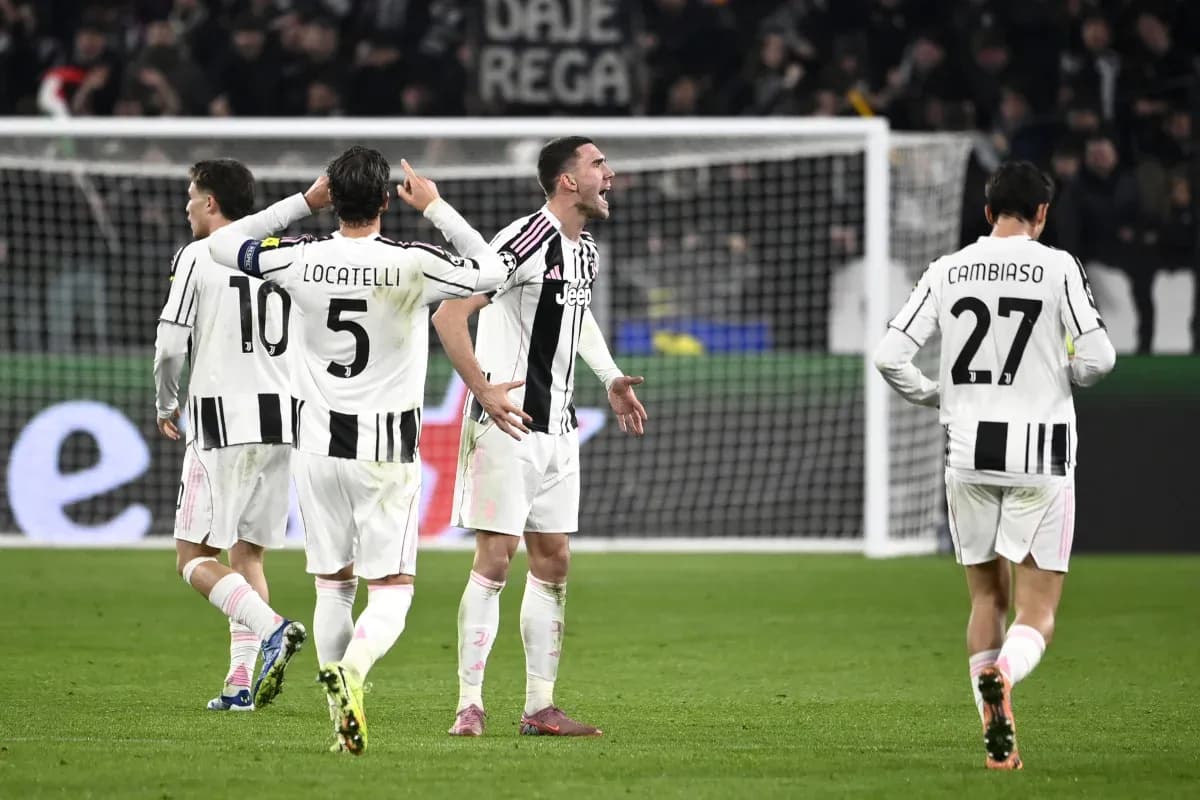
Red cards have been rarer but telling. Torino’s single dismissal this season came between 46–60 minutes, a reminder of how quickly their structure can unravel after half-time. Juventus saw reds in the 31–45 and 76–90 ranges, and in this context Andrea Cambiaso’s profile matters: across the campaign he collected 3 yellows and 1 red, underlining why his role on the flank always walks the line between intensity and risk.
III. Key Matchups – Hunter vs Shield, Engine Room battles
The “Hunter vs Shield” narrative began with G. Simeone and D. Vlahovic. Simeone arrived as Torino’s primary finisher: 11 goals in total this campaign from 32 appearances, with 59 shots and 28 on target. He is a penalty‑box striker who thrives on quick service and broken plays. Juventus’ shield, on their travels, had been formidable: only 18 goals conceded away, 0.9 per game, with their biggest away defeat just 2–0.
Without Bremer, though, that shield was thinner. Gatti, typically a front‑foot defender, was asked to marshal space and timing rather than simply attack the ball. Simeone’s movement between Kelly and Gatti, especially when D. Zapata pinned one centre‑back, created the sort of chaos that Juventus’ season‑long numbers rarely allowed.
For Juventus, the Hunter lived mostly in the half‑spaces: K. Yıldız, even though he started on the bench here, has defined their attacking identity across the season. With 10 goals and 6 assists, 64 shots (40 on target) and 76 key passes, he has been both finisher and creator. His penalty record is a microcosm of that duality: he scored 1 but also missed 1, so any future spot‑kick is framed by that small but significant blemish.
In the Engine Room, the duel was between Torino’s young midfield band – E. Ilkhan and G. Gineitis in the core – and Juventus’ axis of M. Locatelli, W. McKennie and K. Thuram. Locatelli’s season has been immense: 2805 passes at 88% accuracy, 47 key passes, 102 tackles and 23 blocked shots. He is the metronome and the first line of protection. McKennie adds verticality and chaos – 5 goals, 5 assists, 48 key passes, 40 tackles and 8 blocked shots – while Thuram provides the carrying power.
Torino’s shape, a 3‑4‑1‑2 with N. Vlasic as the link, asked Ilkhan and Gineitis to screen and spring. Their task was to disrupt Locatelli’s rhythm while feeding early balls into Simeone and Zapata. With Torino averaging 1.2 goals in total per game but conceding 1.7, the plan was always to lean into attacking transition rather than slow control.
Out wide, Cambiaso and McKennie on one flank, and Francisco Conceição higher up, squared off against Pedersen and Obrador. Conceição’s numbers – 5 assists, 42 key passes, 102 dribble attempts with 54 successful – show a winger who relentlessly tests full‑backs. Torino’s wing‑backs had to choose between stepping out to him or tucking in against Vlahovic’s presence; any hesitation opened the corridor for cut‑backs and low crosses.
IV. Statistical Prognosis – what this draw says about both sides
From a season‑long statistical lens, a 2–2 feels like a meeting point between Torino’s volatility and Juventus’ controlled aggression. Torino’s overall goal difference of -19 comes from a side that scores enough to scare anyone but concedes too often to sustain European pushes. Their 12 clean sheets overall are offset by 11 games where they failed to score, a portrait of inconsistency.
Juventus, by contrast, close with a goal difference of 27, underpinned by that away average of 0.9 goals conceded and 8 away clean sheets. Their attack, at 1.6 goals in total per game, is efficient rather than explosive, often relying on structure, set patterns and the individual quality of Yıldız, McKennie and Conceição.
In an xG‑framed reading, Juventus would typically be favoured: their defensive solidity and controlled chance creation usually tilt the underlying numbers in their direction, especially away. Yet this derby underlined the limits of models in rivalry contexts. Torino’s capacity to spike – embodied by Simeone’s penalty‑box instincts and Vlasic’s between‑lines craft – means that even against a statistically superior opponent, they can bend the script.
Following this result, the narrative is clear. Juventus remain the better machine, their season defined by balance and defensive reliability. Torino, however, walk away with a point and a performance that hints at a more daring future: if Colucci can graft this derby’s intensity onto a campaign‑long plan, the raw numbers suggest there is room to climb beyond mid‑table and turn the Derby della Mole into more than a single‑night revolt.