Arsenal Defeats Sporting CP 1–0 in Champions League Quarter-Finals
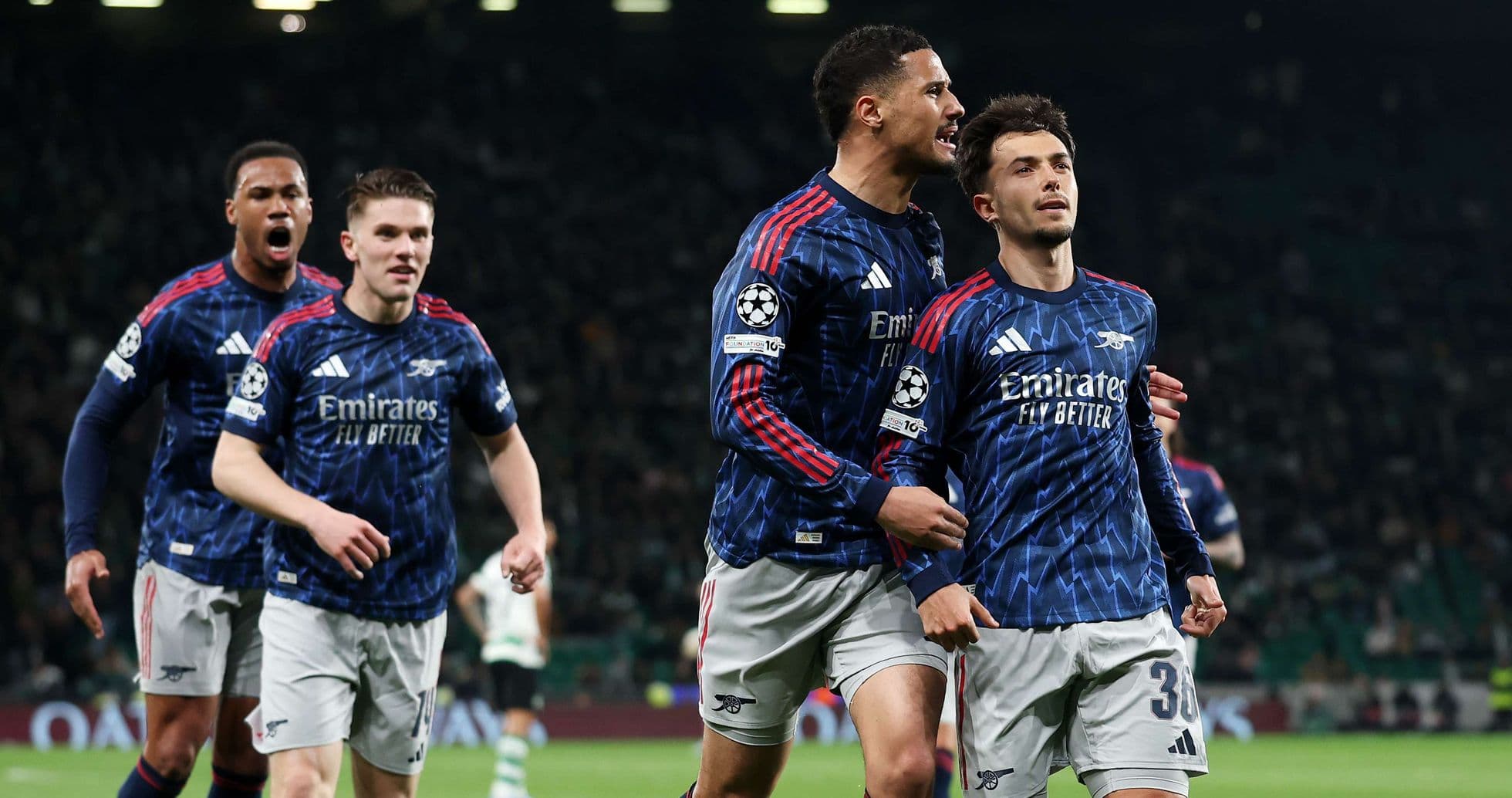
The lights had barely cooled at Estádio José Alvalade when the numbers told the story as clearly as the scoreboard: Sporting CP 0–1 Arsenal, a quarter-final tie decided by a single away punch from Europe’s most ruthless machine.
This was a clash between a home juggernaut and the competition’s benchmark. Sporting arrived with a flawless Champions League home record in this campaign’s broader sample: six home fixtures played across the season’s run, five wins, one defeat, 16 goals scored and only four conceded, averaging 2.7 goals per home game. Rui Borges stayed loyal to the 4-2-3-1 that has underpinned nine of their European lineups, trusting that structure to stand up against the continent’s most efficient side.
Arsenal, though, came in as the undisputed reference point. Top of the Champions League standings with 24 points from eight matches, Mikel Arteta’s team had been perfect in the group and 1/8-final phases: eight wins from eight, 23 goals scored and only four conceded. Zoom out to the season-long Champions League sample and the pattern only hardens: 11 fixtures, 10 wins, one draw, zero defeats, 27 goals for and just five against, with an away defensive average of 0.3 goals conceded per game and four away clean sheets to date. This was an away side built to travel, absorb, and dismantle.
The 4-3-3 Arteta selected in Lisbon was a statement of continuity. David Raya behind a back four of Ben White, William Saliba, Gabriel and Riccardo Calafiori; a midfield triangle of Martin Ødegaard, Martín Zubimendi and Declan Rice; and a front three of Noni Madueke, Viktor Gyökeres and Leandro Trossard. Against that, Sporting’s 4-2-3-1 – R. Silva in goal, a back line of I. Fresneda, Ousmane Diomande, Gonçalo Inácio and Matheus Araújo, a double pivot of Hidemasa Morita and J. Simoes, with G. Catamo, Trincão and Pote (P. Gonçalves) supporting Luis Suárez – looked designed to combine compactness with enough attacking width to stretch Arsenal’s full-backs.
Yet the first major twist came before a ball was kicked. The absences list carved a clear tactical void, especially for Sporting. Morten Hjulmand, ranked third in the competition for yellow cards and their primary enforcer, was suspended for accumulated bookings. His Champions League body of work this season – 598 passes at 92% accuracy, 18 tackles, 5 blocked opponent attempts, 17 interceptions and 55 duels won from 85 – underlines what Borges lost: a high-volume distributor who also dictates the defensive tempo. Without him, Morita and Simoes were asked to replicate that blend of control and bite.
Further up the pitch, Sporting were also without F. Ioannidis (knee injury), Luis Guilherme (ankle), G. Quenda (foot) and Nuno Santos (injury). That stripped depth from both flanks and the No. 9 role, pushing Suárez into a heavy-lifting job as the lone forward and leaving Borges reliant on bench options like S. Faye, R. Nel and F. Gonçalves as potential late-game disruptors rather than like-for-like replacements.
Arsenal’s absences were high-profile but better cushioned. Bukayo Saka, Mikel Merino, Piero Hincapié, Eberechi Eze and Jurrien Timber all missed out, yet Arteta could still call on a bench featuring Gabriel Jesus, Kai Havertz and Gabriel Martinelli – the latter one of the Champions League’s most dangerous attackers so far, with six goals and two assists from 10 appearances, 16 shots (eight on target), 15 key passes and 31 attempted dribbles, 16 of them successful. In a tie likely to tighten in the final half-hour, that kind of bench firepower is a structural advantage.
The disciplinary landscape also shaped the tone. Sporting’s season-long yellow-card profile in Europe shows a pronounced spike between 61–75 minutes (21.74% of their cautions), with additional peaks in the 31–45, 46–60 and 91–105 ranges (each at 17.39%). That suggests a side whose aggression ramps up either side of half-time and again as fatigue and urgency set in. Arsenal, by contrast, concentrate their bookings even more sharply in the 61–75 window (33.33%), with secondary peaks late on (19.05% between 76–90 and 14.29% in 91–105). Both sides therefore tend to live on the disciplinary edge in the exact period when knockout ties usually become stretched.
In that context, the midfield duel was always going to be decisive. Without Hjulmand, Sporting’s “engine room” had to improvise. Morita’s role tilted more towards screening, while Simoes was asked to progress play. Across the season, Sporting’s European identity has been that of a front-foot home side: 11 Champions League fixtures overall, six wins, one draw, four defeats, 22 goals scored and 15 conceded, with only two clean sheets (both at home) and just one home match in which they failed to score. Arsenal’s shield, meanwhile, is systemic rather than individual: only five goals conceded in 11 continental games, and they have yet to fail to score themselves.
That is where the “Hunter vs. Shield” narrative crystallised. Arsenal’s attacking threat in Lisbon was less about a single volume scorer and more about relentless collective pressure. Gyökeres offered depth running against his former club’s defensive line, Madueke provided 1v1 threat, and Trossard’s movement between the lines asked constant questions of Diomande and Inácio. On the other side, Sporting’s attacking quartet needed to exploit the one statistical chink in Arsenal’s armour: the fact that, across the season, the English side have conceded slightly more at home (0.6 per game) than away. But here, in Lisbon, Arsenal’s away identity – four clean sheets in six road games in this Champions League run – ultimately dictated the rhythm.
The benches underlined the difference in game-changing potential. Borges had defensive reinforcements in Eduardo Quaresma, R. Mangas, G. Vagiannidis and Z. Debast, plus young forwards like Faye, Nel and F. Gonçalves as wildcards. Arteta, in contrast, could escalate the threat curve: [IN] Martinelli, Havertz or Gabriel Jesus coming on for any of the front three would immediately alter the pressing intensity and penalty-box presence, particularly against a Sporting side whose goals-against average jumps to 2.2 away from home but is a far more manageable 0.7 in Lisbon. That home solidity held for long spells, but Arsenal’s ability to rotate quality ultimately tilted the balance.
Statistically, the prognosis before a ball was kicked pointed to a narrow Arsenal edge: a side averaging 2.5 goals per Champions League game while conceding just 0.5, against a Sporting team scoring 2.0 and conceding 1.4. The final 0–1 reflects that gap in efficiency more than any gulf in courage. The decisive factor was twofold: Arsenal’s collective defensive structure, anchored by Saliba and Gabriel in front of Raya, and the absence of Hjulmand, which removed Sporting’s best tool for disrupting Arsenal’s passing lanes and launching transitions.
Over two legs, that away goal and clean sheet give Arsenal a commanding statistical and tactical platform. Sporting’s home fortress has finally been breached; to turn the tie around in London, Borges’ side will need to lean on their attacking averages and find a way to dictate the high-risk period around the hour mark where both teams historically flirt with disciplinary trouble. For now, though, this quarter-final feels like it has tilted decisively towards the competition’s most complete side.