PSG Dominates Liverpool in Champions League Quarter-Final
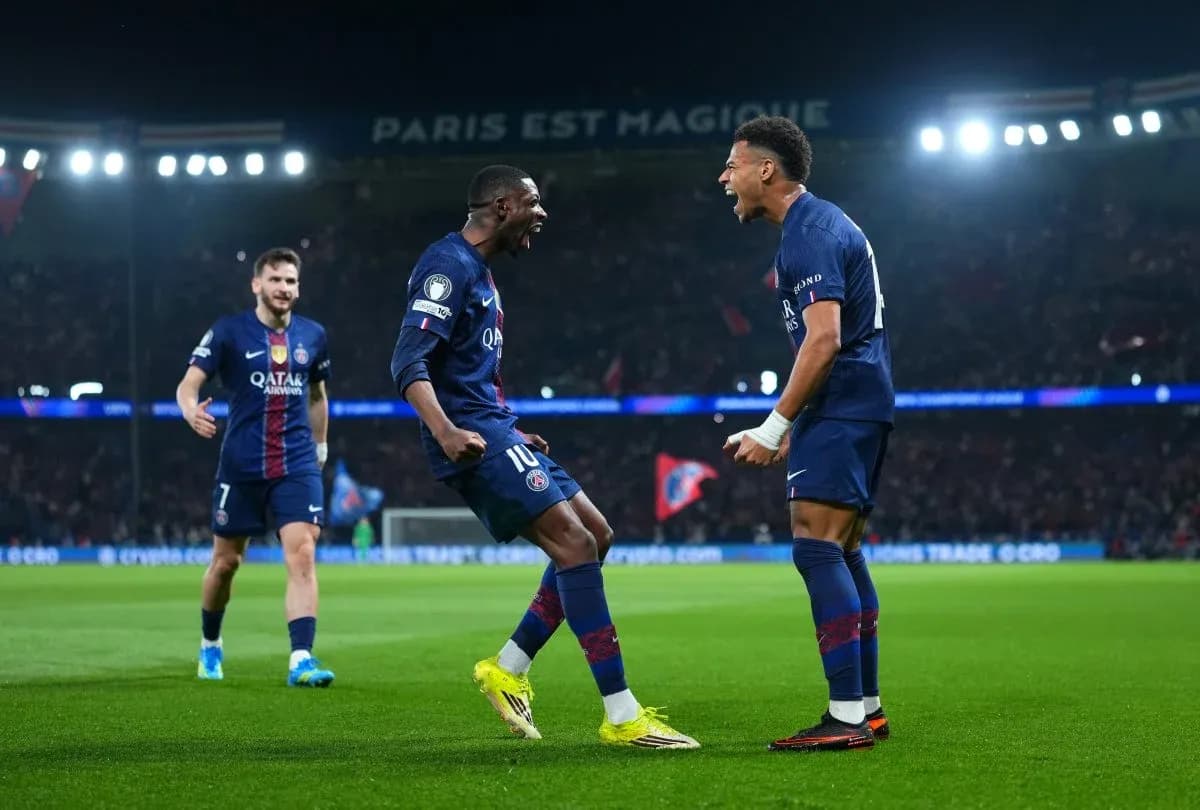
Paris Saint Germain imposed near-total control at Parc des Princes, beating Liverpool 2–0 in this UEFA Champions League quarter-final first leg. The hosts built their advantage through an early strike from Désiré Doué and a second-half finish from Khvicha Kvaratskhelia, while denying Liverpool a single shot on target. With 74% possession and a 2.2–0.18 xG edge, PSG translated structural dominance into scoreboard security. Liverpool’s 3-5-2, designed for transition and wing-back thrust, was suffocated by PSG’s 4-3-3 positional play and aggressive counter-press, leaving Arne Slot’s side pinned deep and reliant on last-line defending and Giorgi Mamardashvili’s interventions to keep the tie alive.
First Half
PSG’s first breakthrough at 11' set the tone. Operating from the right of the front three, Désiré Doué exploited the space created by Ousmane Dembélé’s width and Warren Zaïre-Emery’s inside movements. With Liverpool’s back three stretched horizontally, Doué found a seam between Joe Gomez and Virgil van Dijk, attacking the channel as PSG’s midfield rotated to draw out Liverpool’s central block. The goal underlined PSG’s plan: overload central zones with Vitinha and João Neves, then punch into the half-spaces once Liverpool’s midfield line was dislocated.
Defensively, PSG’s 4-3-3 became a 4-1-4-1 out of possession, with Neves often anchoring behind Vitinha and Zaïre-Emery. This prevented Liverpool from accessing Alexis Mac Allister between the lines. With Ryan Gravenberch and Dominik Szoboszlai squeezed, Liverpool’s build-up defaulted to direct balls toward Florian Wirtz and Hugo Ekitiké. Willian Pacho and Marquinhos handled those duels aggressively, stepping in front of the forwards and using the touchline as an extra defender. The result: Liverpool managed only three total shots, one off target and two blocked, and never constructed a sustained attacking phase in PSG’s third.
The two Liverpool bookings – Joe Gomez at 28' and Alexis Mac Allister at 31', both for fouls – reflected growing strain in their mid-block. Gomez’s yellow came as he was forced to step out wide to contain a PSG ball-carrier after the home side had again rotated to isolate him on the flank. Mac Allister’s caution followed shortly after, another late intervention as PSG’s midfield circulation pulled him into reactive defending rather than proactive screening. These cards subtly constrained Liverpool’s physicality in duels, making it harder to disrupt PSG’s rhythm without risk.
Second Half
PSG’s second goal at 65' was a direct consequence of their territorial and positional superiority. With Liverpool increasingly compact and deep, Neves advanced more aggressively from the base of midfield. He received in the right half-space, facing play, after a spell of circulation that dragged Liverpool’s midfield to one side. His line-breaking pass found Kvaratskhelia attacking the inside-left channel, exploiting the gap between van Dijk and Ibrahima Konaté. Kvaratskhelia’s finish consolidated the pattern: PSG using patient possession to manipulate Liverpool’s shape, then accelerating decisively once a vertical lane opened.
The 71' VAR intervention – a cancelled penalty for PSG involving Warren Zaïre-Emery – underscored how often the hosts reached the Liverpool box. Even though the spot-kick was overturned, the incident came from another layered attack, with Zaïre-Emery arriving from midfield into the area. Tactically, it highlighted Liverpool’s recurring problem: their midfield line was repeatedly late tracking PSG’s third-man runners.
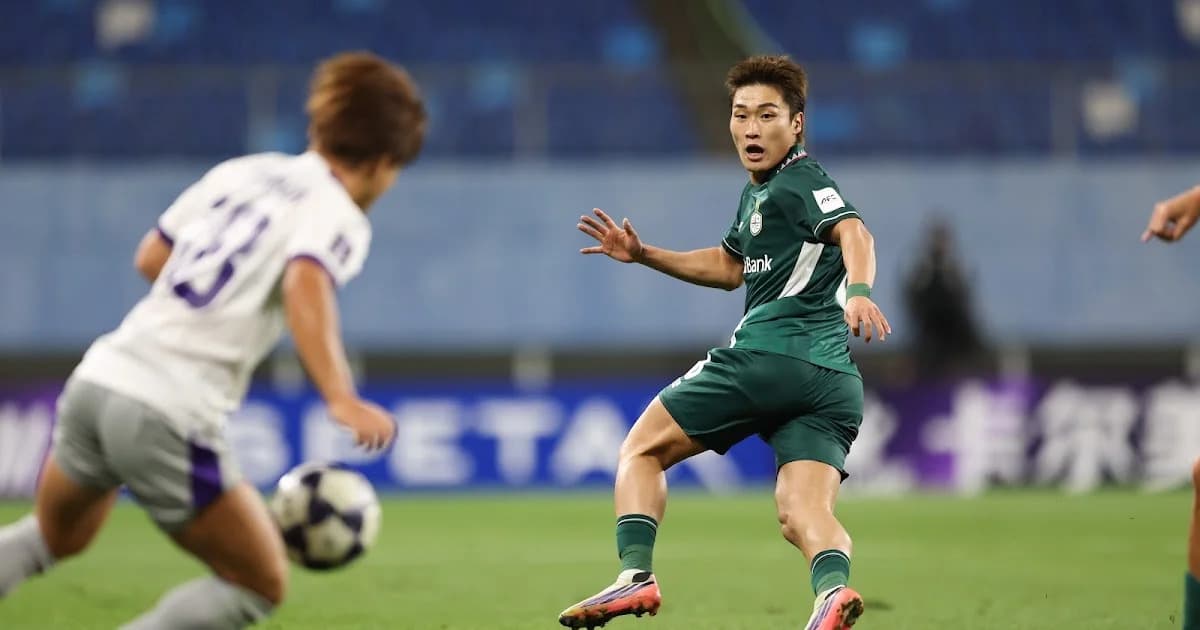
Substitutions from 78' onward were largely about energy and damage limitation. For PSG, Lee Kang-in (IN) came on for Désiré Doué (OUT) at 78', a like-for-like switch that preserved the right-sided creative role while adding fresh pressing intensity against Liverpool’s build-up. Later, at 88', Lucas Hernández (IN) came on for Ousmane Dembélé (OUT), shifting PSG toward a more conservative posture: Hernández tucked in as a left-sided defender, allowing Nuno Mendes to manage his lane with more security and effectively moving PSG toward a back five in the final minutes when defending deeper phases.
Liverpool’s quadruple change at 78' was a structural attempt to salvage attacking presence. Cody Gakpo (IN) came on for Hugo Ekitiké (OUT), Curtis Jones (IN) for Dominik Szoboszlai (OUT), Andrew Robertson (IN) for Miloš Kerkez (OUT), and Alexander Isak (IN) for Florian Wirtz (OUT). The idea was to add fresher legs and more direct threat up front (Isak and Gakpo) while injecting ball-carrying and pressing from Jones and natural width from Robertson. In practice, PSG’s control of possession – 744 passes at 92% accuracy – starved these substitutes of meaningful platforms. Liverpool’s final change at 90+1', Trey Nyoni (IN) for Jeremie Frimpong (OUT), further tilted them toward central congestion rather than wide overloads, but came too late to alter the dynamic.
In goal, Matvey Safonov’s statistical line – zero saves – is telling. PSG’s Defensive Index for this match is defined by prevention rather than reaction: Liverpool’s xG of 0.18 and absence of shots on target show that Safonov was protected by structure and proactive defending. By contrast, Giorgi Mamardashvili made four saves, a key part of Liverpool’s Defensive Index. Despite conceding twice, he limited the damage relative to PSG’s 2.2 xG, especially during spells when PSG’s front three and advancing midfielders generated high-quality looks inside the box (12 shots from inside the area).
From a statistical verdict perspective, the numbers mirror the tactical story. PSG’s 18 total shots (6 on target, 6 blocked) against Liverpool’s 3 underline a one-sided chance creation profile. The 74–26 possession split and 744–253 pass count reflect PSG’s sustained territorial control and circulation superiority. Liverpool’s higher foul count (12 vs 8) and two yellow cards, with PSG receiving none, align with a side chasing, breaking up play, and increasingly stretched. Overall Form for PSG in this tie is that of a dominant home side translating a strong game plan into both control and a two-goal cushion, while Liverpool’s Overall Form is that of a team whose transition-based 3-5-2 was neutralized, leaving their Defensive Index – last-line defending and goalkeeping – as the only real positive in an otherwise subdued performance.