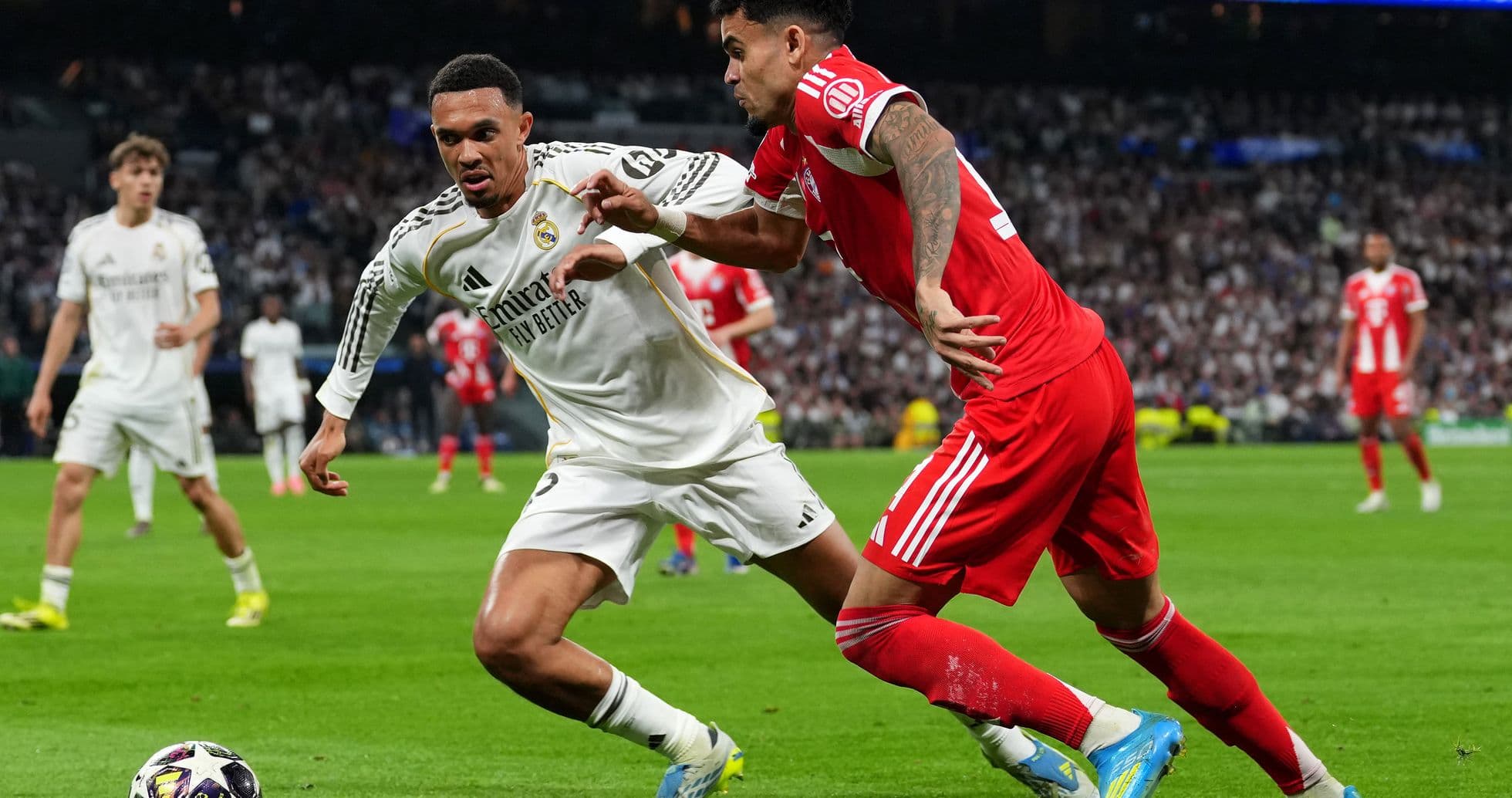
Bayern München Defeats Real Madrid in Quarter-Final Clash
Under the Bernabéu lights, this quarter-final second act was billed as a clash of attacking superpowers. It delivered a different kind of verdict: Bayern München’s structure and efficiency dismantled Real Madrid’s volatility, 2–1 on the night, and asserted the Bundesliga side’s status as the competition’s form juggernaut.
Coming in, the statistical DNA was clear. Bayern had been a 3.1 goals-per-game machine across 11 Champions League fixtures, winning 10 and losing only once. Even away from Munich, they were averaging 3.0 goals while conceding 1.3, with three wins from four on the road. Real Madrid, by contrast, were more erratic: nine wins and four defeats in 13, with no draws and an identical 2.3 goals scored per game home and away. At the Bernabéu they had been productive (16 goals in seven home matches) but less secure, allowing 1.0 goal per home game.
That dynamic played out over 90 tense minutes. Bayern leaned on their familiar 4-2-3-1, the only shape they have used in Europe this season, while Alvaro Arbeloa doubled down on the 4-4-2 that has been his most-used structure (six appearances in this campaign). The visitors’ consistency told: they managed the key phases more coldly, particularly around half-time, where Real’s season-long card spikes between 46-60 minutes (25.00% of their yellows) and 91-105 minutes (21.43%) hint at emotional surges and late-game strain. Bayern, by contrast, tend to live on the disciplinary edge late in normal time – 39.13% of their yellows arrive between 76-90 minutes – but they again walked that tightrope without a meltdown.
The absences framed the tactical voids. Real were without Thibaut Courtois, Ferland Mendy and Rodrygo, all listed as missing this fixture. Courtois’ long-term thigh injury has already forced a structural shift: Andriy Lunin’s emergence is one thing, but it also changes how high Real can push their line, and how aggressively full-backs can gamble. Without Mendy, Arbeloa turned to Álvaro Fernández Carreras at left-back, a defender who leads Real’s squad in Champions League yellow cards (four so far) and has been heavily involved defensively – 24 tackles, nine interceptions and five blocked opponent attempts. His aggression gives Real bite on that flank but also risk, particularly against Bayern’s right-sided creators.
Rodrygo’s absence removed a key vertical runner and finisher from the front line. It pushed even more responsibility onto Kylian Mbappé and Vinícius Júnior, and forced Real to lean on Arda Güler as a creative midfielder rather than having another wide scorer. On Bayern’s side, the missing names – C. Kiala, W. Mike, B. Ndiaye and backup goalkeeper Sven Ulreich – barely touched the core of Vincent Kompany’s plan. His first-choice spine, from Manuel Neuer through Jonathan Tah and Dayot Upamecano to Joshua Kimmich and Harry Kane, was intact.
Discipline hovered over the tie without fully detonating. Real’s campaign red-card profile – one dismissal between 61-75 minutes and two more in the 91-105 window – underlines how often they have flirted with chaos in the latter stages. Bayern’s two reds this season have both arrived between 46-75 minutes, a warning about post-interval intensity. Yet here, both sides stayed just this side of self-destruction, despite the expected flashpoints.
The headline duel was always going to be The Hunter vs. The Shield: Mbappé, the competition’s leading scorer and top-rated player (ratingPosition 1), against a Bayern defence that had conceded only 11 goals in 11 matches before this tie. Mbappé’s numbers coming in were obscene – 14 goals from 10 appearances, 28 shots on target from 41 attempts, plus a flawless penalty record (three scored from three). Bayern’s back four, though, were built for this kind of storm. Tah and Upamecano anchor a unit that has allowed just 1.0 goal per game in Europe, with only three conceded in five home fixtures and eight away. Here, they narrowed Mbappé’s channels, forcing him wide and into traffic, and relied on Neuer’s positioning rather than exposing him to clear one-on-ones.
If Mbappé was the spear, Bayern’s answer at the other end was Harry Kane, ranked second in the Champions League scoring charts. Kane arrived with 11 goals, four defensive blocks and four interceptions – a centre-forward who not only finishes but also helps Bayern defend from the front. His penalty record mattered in the psychological battle: three converted but one missed, proof that Real could not simply assume inevitability from the spot. His presence pinned Antonio Rüdiger and Dean Huijsen, limiting Real’s ability to step out and compress space on Bayern’s playmakers.
The engine-room duel was just as decisive. Real’s creative triangle of Fede Valverde, Güler and Vinícius against Bayern’s double pivot of Kimmich and Aleksandar Pavlović, with Michael Olise drifting inside. Valverde has been among the most influential midfielders in this Champions League run – four assists, 21 key passes, 633 completed passes at 89% accuracy, plus 20 tackles, 12 interceptions and four blocked opponent attempts. Güler, quietly ranked 18th in the assists chart, had contributed four assists and 34 key passes, while Vinícius combined five goals with four assists and 22 key passes.
Yet Bayern’s answer was elite. Kimmich and Pavlović controlled tempo, while Olise – the competition’s leading assist provider (six, ratingPosition 1 among playmakers) – dictated the half-spaces. With 29 key passes and 51 dribble attempts (32 successful), he repeatedly dragged Real’s midfield line out of shape. On the opposite flank, Serge Gnabry, ranked fourth for assists with five, provided the secondary creative threat, forcing Real’s full-backs to defend rather than join attacks.
Depth tilted subtly toward Bayern in terms of specialist roles. Arbeloa’s bench carried high-ceiling game-changers – Jude Bellingham, Brahim Díaz, Eduardo Camavinga, Dani Carvajal and the young forward G. Garcia – but the structure was already stretched by absences. Kompany, meanwhile, could call on Leon Goretzka for added control, Alphonso Davies and Raphaël Guerreiro for fresh thrust at full-back, and Jamal Musiala as a late-line breaker. Each substitution vector – [IN] came on for [OUT] – was used to reinforce Bayern’s control rather than chase chaos.
The statistical prognosis before kick-off pointed to a high-scoring contest, but the deciding factor was always going to be which side could bend its attacking identity without breaking its defensive shape. Bayern, with their flawless penalty record to date (three from three), their relentless scoring rate and their single, trusted formation, arrived as the more coherent project. Real, with four clean sheets split evenly between home and away and only one match all season where they failed to score, brought threat but also fragility.
Over 90 minutes at the Bernabéu, that balance held. Bayern neutralized Mbappé just enough, exploited the spaces behind Real’s aggressive full-backs, and trusted Kane and Olise to punish the key moments. Real’s late surges, in the very windows where their yellow-card percentages spike, produced pressure but not salvation. In a tie defined by fine margins, Bayern’s structural stability and their superiority between the lines dictated the night – and, on this evidence, they will be the side no one wants to draw in the semi-finals.