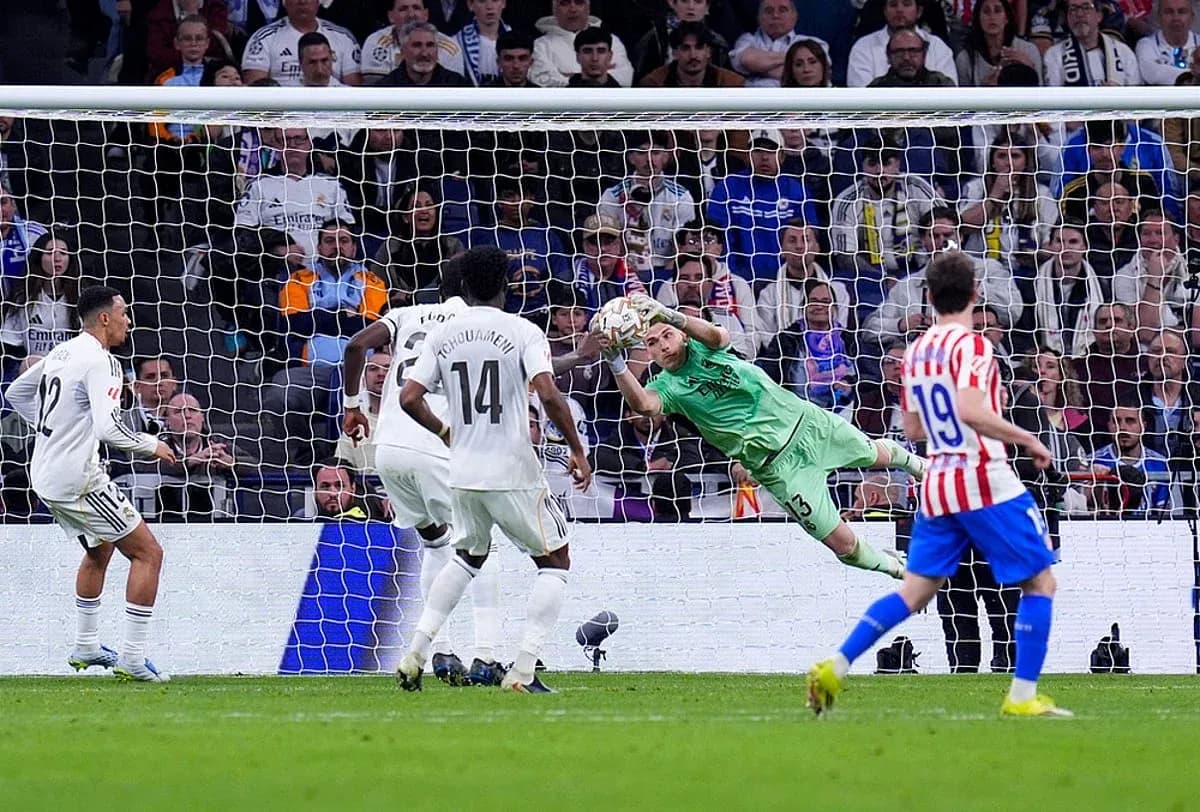
Barcelona vs Real Betis: A Tactical Breakdown of the 3–1 Victory
Under the Camp Nou lights, this was billed as a meeting of contrasting certainties: Barcelona, already shaping the league in their image, and a Real Betis side whose season has been built on stubborn resistance and clever counterpunching. By the final whistle, a 3–1 home win felt less like a surprise and more like the logical extension of each team’s seasonal DNA.
Following this result, the table tells a clear story. Barcelona sit 1st on 94 points after 37 matches, their overall goal difference of +61 carved from 94 goals for and 33 against. At home they have been flawless: 19 wins from 19, 57 goals scored and just 10 conceded. Real Betis remain a high-functioning disruptor rather than a true title challenger, 5th with 57 points and an overall goal difference of +10 (57 for, 47 against). Away, they are hard to beat but rarely dominant: 5 wins, 9 draws, 5 defeats, 25 goals scored and 29 conceded on their travels.
I. The Big Picture: Flick’s statement, Pellegrini’s gamble
Hansi Flick leaned into Barcelona’s attacking identity with a 4-3-3, but it was a version shaped by absences. With Lamine Yamal (thigh injury), Ferran Torres (muscle injury) and Frenkie de Jong (rest) all missing, he trusted youth and internal creativity. J. Garcia started in goal, shielded by a back four of J. Cancelo, G. Martin, E. Garcia and J. Kounde. In midfield, Gavi, M. Bernal and Pedri formed a fluid trio, while the front line of Raphinha, R. Lewandowski and Fermín promised goals and movement rather than pure wing play.
Manuel Pellegrini responded with a 4-1-4-1 that revealed both ambition and necessity. A. Valles was protected by H. Bellerin, Natan, V. Gomez and J. Firpo, with S. Amrabat as the single pivot. Ahead of him, Antony, N. Deossa, A. Fidalgo and A. Ezzalzouli flanked G. Lo Celso, nominally the centre-forward but really a roaming false nine. It was a structure designed to congest Barcelona’s central lanes and break with pace down the flanks.
The scoreline – 1–0 at half-time, 3–1 by full-time – reflected the season-long patterns. Heading into this game, Barcelona’s home attack averaged 3.0 goals per match, with only 0.5 conceded. Real Betis, away from home, averaged 1.3 goals for and 1.5 against. The match settled neatly into those statistical grooves.
II. Tactical Voids: Absences and disciplinary shadows
Barcelona’s missing trio forced a reimagining of their attacking hierarchy. Lamine Yamal, with 16 league goals and 11 assists and a relentless dribbling output (244 attempts, 135 successful), is usually the chaos agent on the right. Without him, Raphinha became the primary wide threat. His 13 goals and 3 assists this season, plus 43 key passes, meant the right flank still carried menace, but less of the one-v-one volume that pins full-backs deep.
Ferran Torres’ absence removed another 16-goal outlet, pushing even more responsibility onto Lewandowski and the midfield runners. De Jong’s rest shifted the creative burden onto Pedri and Gavi. Pedri, with 9 assists and 64 key passes, became the metronome and scalpel rolled into one, dropping deep to help build and then stepping between the lines to connect with Lewandowski.
For Real Betis, the absences were concentrated in the spine and edge of their attack. Cucho Hernández (11 goals, 3 assists) was suspended, robbing them of a direct, vertical runner who thrives on limited touches and quick finishes. At the back, M. Bartra’s heel injury and A. Ortiz’s hamstring issue restricted Pellegrini’s options for rotating his defensive line, while S. Altimira and A. Ruibal further thinned the depth.
Disciplinarily, both sides came in with a clear pattern of late-card risk. Barcelona’s yellow-card peak sits between 46–60 minutes with 27.87% of their cautions, and another 21.31% between 76–90. Real Betis are even more volatile late on: 26.39% of their yellows arrive from 76–90 and 18.06% from 91–105. It was no surprise that as the match stretched in the second half, the duel intensity and tactical fouling increased, with Betis particularly vulnerable to losing control in the closing phases.
III. Key Matchups: Hunter vs Shield, Engine Room vs Enforcer
The headline duel was always going to be R. Lewandowski against a Betis defence that concedes 1.5 goals per game away. Lewandowski’s league line – 13 goals from 30 appearances, 47 shots with 28 on target – paints him as a volume finisher who thrives on service. Against a back line where the away goals-against column stands at 29 from 19 matches, his penalty-box craft was a constant threat.
But the real edge came from the supply line. Pedri, with his 91% pass accuracy and 2055 passes, and Fermín, who couples 9 assists with 48 tackles and 120 duels won, gave Barcelona an “engine room” that could both dictate and counter-press. They faced S. Amrabat at the base of Betis’ midfield – a single shield asked to screen central zones against one of Europe’s most fluid interiors. Around him, A. Fidalgo and N. Deossa worked to compress space, but the numbers and quality favoured Barcelona.
On the flanks, Raphinha against J. Firpo and Antony against G. Martin produced a fascinating symmetry. Raphinha’s 21 successful dribbles and 49 duels won meant Firpo was repeatedly forced into recovery runs and last-ditch positioning. On the other side, Antony’s 8 goals, 6 assists and 53 key passes, plus 23 successful dribbles, were Betis’ primary outlet. His combination play with A. Ezzalzouli – 9 goals, 8 assists and 190 duels won – was the visitors’ best route to unsettling Barcelona’s high line.
Yet Barcelona’s defensive platform at home has been elite all season: just 10 goals conceded in 19 matches, backed by 10 home clean sheets. Even when stretched, E. Garcia and J. Kounde had the structure of a team that rarely panics in its own stadium.
IV. Statistical Prognosis: Why 3–1 felt inevitable
Without explicit xG numbers, the season-long metrics serve as a proxy. Barcelona’s overall scoring rate of 2.5 goals per match, rising to 3.0 at home, against a Betis defence conceding 1.3 overall and 1.5 away, pointed towards a multi-goal home performance. Conversely, Betis’ 1.3 away goals per game, facing a defence that allows only 0.5 at Camp Nou, suggested they would need exceptional efficiency to stay level.
Add in the penalty context and psychological layers. Barcelona have taken 7 penalties this season and converted all 7, a 100.00% record that reinforces their composure in decisive moments. Real Betis also stand at 100.00% from the spot (3 scored from 3), but without Cucho Hernández and under sustained pressure, their chances of even reaching those high-leverage situations were reduced.
Following this result, the narrative crystallises: Barcelona’s depth, even without Lamine Yamal, Ferran Torres and Frenkie de Jong, proved too rich. Flick’s 4-3-3 morphed into a suffocating positional play machine, with Pedri and Fermín orchestrating and Raphinha and Lewandowski finishing the job. Betis, brave and intermittently dangerous through Antony and A. Ezzalzouli, were ultimately dragged back to the mean of their away numbers.
A 3–1 scoreline at Camp Nou was not just a reflection of 90 minutes; it was the season, distilled.