Cagliari vs Torino: Serie A Late-Season Clash Preview
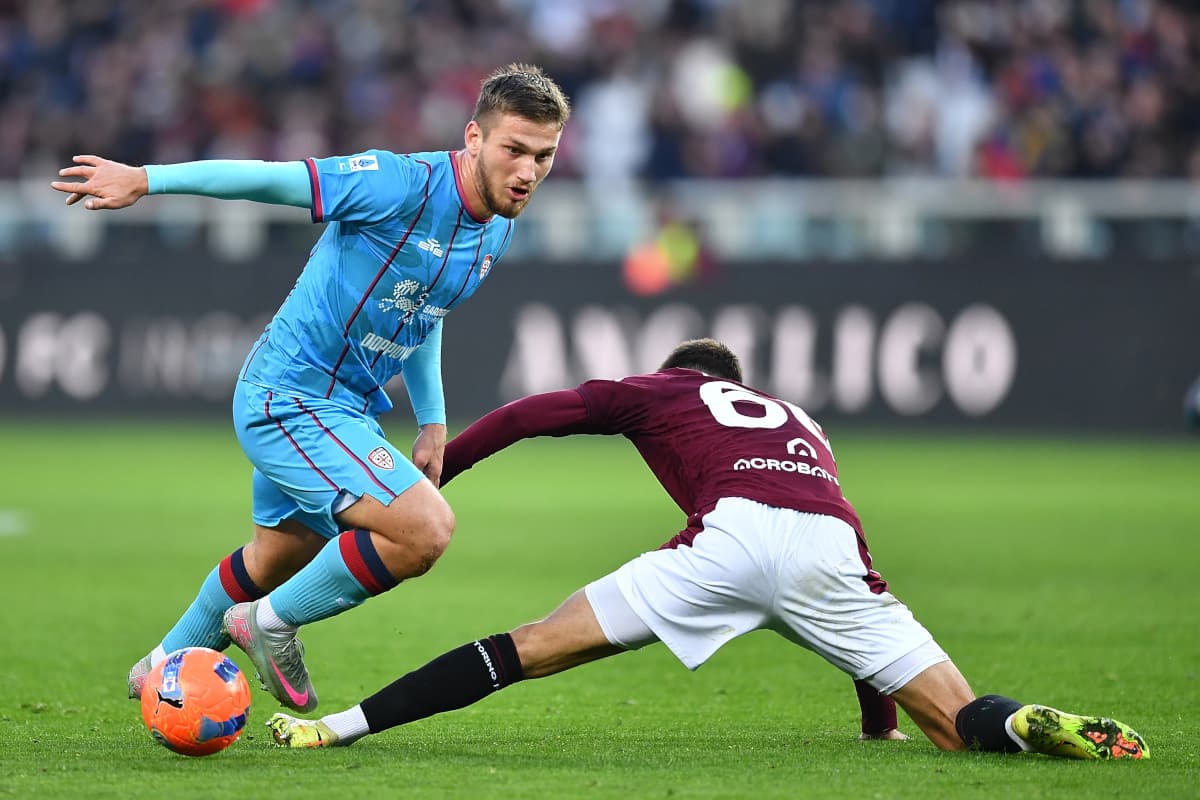
Unipol Domus hosts a tense late-season Serie A meeting on 17 May 2026 as Cagliari welcome Torino in Round 37. With the league campaign almost at its conclusion, the stakes are very different but equally clear: Cagliari, 16th with 37 points, are still looking over their shoulder, while 12th-placed Torino (44 points) are chasing a top-half finish and a strong end to an erratic season.
Context and stakes
In the league, Cagliari’s position is fragile. They sit 16th with a goal difference of -15, having taken 37 points from 36 games (9 wins, 10 draws, 17 defeats). Their recent form line of “LDWLW” underlines a season of swings, and with only two matches left, every point still matters in the battle to stay clear of the drop zone.
Torino arrive in Sardinia in a more comfortable, but hardly serene, mid-table spot. Twelfth with 44 points and a goal difference of -18, they have been wildly inconsistent across the campaign. Their current form of “WLDDW” suggests a side that has stabilised somewhat, but defensive issues remain a persistent theme.
Tactical outlook: shapes and styles
Across all phases this season, Cagliari have been one of Serie A’s more tactically flexible sides, but with a clear lean towards three-at-the-back systems. Their most used shape is 3-5-2 (17 matches), supported by occasional switches to 3-5-1-1 and a range of back-four systems (4-5-1, 4-3-1-2, 4-3-2-1, 4-3-3, 4-4-2, 4-2-3-1) plus a defensive 5-3-2 and 5-4-1.
At home, where they have 6 wins, 4 draws and 8 defeats from 18, Cagliari average 1.1 goals scored and 1.2 conceded per game. That hints at a team that is marginally more solid in front of its own fans, yet still vulnerable. Eight home clean sheets across all phases (6 at home, 2 away) show that when the defensive structure clicks, they can shut opponents out – but 7 home matches without scoring underline their struggle to consistently create and convert chances.
Torino, by contrast, are also wedded to a back three, but with more attacking variations. Their primary formation is 3-5-2 (16 matches), but they have also used 3-4-1-2 (8), 3-4-2-1 (3), 3-4-3 (2), 3-1-4-2 (2) and 5-3-2 (2), plus the occasional 4-3-3. That tactical profile points to a team comfortable with wing-backs and flexible attacking lines behind a central striker.
Away from home, Torino’s record is modest: 4 wins, 5 draws and 9 defeats from 18 away games, with 16 goals scored and 32 conceded (0.9 for, 1.8 against per game). Interestingly, they have managed 7 away clean sheets across all phases, which suggests a boom-or-bust defensive profile: when the structure holds, it holds well, but when it collapses, it can be heavy – their biggest away loss is 6-0.
Given those numbers, the tactical battle at Unipol Domus is likely to hinge on which back three can better control transitions and protect the space behind the wing-backs. Cagliari’s variety of systems gives them the option to mirror Torino’s 3-5-2 or to add an extra midfielder in a 3-5-1-1 to congest the central lanes and limit service into Torino’s forwards.
Key players and attacking threats
The standout individual in the data is Torino striker G. Simeone. Across all phases in Serie A 2025, he has 11 goals in 30 appearances, with 25 starts and 2,065 minutes played. His volume of 56 shots (28 on target) shows he is a consistent shooting outlet, and 19 key passes suggest he also links play rather than simply finishing moves.
Simeone’s duel numbers (271 duels, 106 won) and 46 dribble attempts (22 successful) paint the picture of a hard-working, combative forward who can occupy centre-backs and open space for second-line runners. Torino will likely structure their attack to get him central service from the half-spaces, whether in a 3-5-2 with a partner or a 3-4-2-1 with two creators behind him.
Cagliari’s attacking data is more collective than individual in this dataset: 36 goals in 36 games (1.0 per match) with their biggest home win being 4-0 and their best away result 1-2. The absence of a named top scorer in the provided stats hints at a spread of goals across multiple players. That can be a strength – harder to predict and mark – but also a weakness when they need a single reference point to drag them through tense fixtures like this.
Discipline, intensity and set-piece edges
Both sides have notable disciplinary profiles that could influence the rhythm of the match. Cagliari’s yellow cards spike in the final quarter of games: 26.92% of their bookings arrive between minutes 76-90, and they have also received 2 red cards in that window. That suggests fatigue or desperation late on, which could be crucial if they are protecting or chasing a result.
Torino’s yellow cards are more evenly spread but also rise towards the end, with 18.84% between 76-90 and a remarkable 21.74% in added time (91-105). They have one red card in the 46-60 range. A match with both teams prone to late cards could become fragmented in the closing stages, suiting the side that manages their emotions and game management better.
From the spot, both teams are efficient across all phases: Cagliari have scored 2 of 2 penalties, Torino 5 of 5, with no misses recorded at team level. That raises the importance of penalty-box duels and VAR-era marginal calls – especially with combative forwards like Simeone and defenders who are not shy of physical contact.
Team news and selection headaches
Cagliari are heavily hit by absences. Confirmed missing are M. Felici (knee injury), R. Idrissi (knee injury), J. Liteta (thigh injury) and experienced striker L. Pavoletti (knee injury), along with key attacking figure J. Pedro, suspended due to yellow cards. On top of that, G. Borrelli (thigh), L. Mazzitelli (calf) and Y. Mina (calf) are all listed as questionable.
The loss of Pavoletti and J. Pedro in particular strips Cagliari of aerial presence and creative leadership in the final third. It may force a more cautious, compact shape and greater reliance on counter-attacks rather than sustained pressure.
Torino’s list is shorter but not negligible. G. Gineitis is suspended (yellow cards), while Z. Aboukhlal (muscle injury), F. Anjorin (hip injury) and A. Ismajli (muscle injury) are all doubtful. Gineitis’ absence could affect Torino’s midfield balance, potentially requiring a reshuffle in the central trio of their 3-5-2 or 3-4-1-2.
Head-to-head: recent competitive meetings
The last five competitive Serie A meetings between these sides show a finely balanced rivalry:
- On 27 December 2025, at Stadio Olimpico di Torino, Cagliari won 1-2.
- On 24 January 2025, at Stadio Olimpico Grande Torino, Torino won 2-0.
- On 20 October 2024, at Unipol Domus, Cagliari won 3-2.
- On 26 January 2024, at Unipol Domus, Torino won 1-2.
- On 21 August 2023, at Stadio Olimpico Grande Torino, the match finished 0-0.
Across those five matches, Cagliari have 2 wins, Torino have 2 wins, and there has been 1 draw. Home advantage has not been decisive: each side has won both home and away in this mini-series, and the only draw came in Turin.
That pattern underlines how tactically and physically well-matched these clubs have been in recent years, with tight scorelines and both capable of taking points on the road.
The verdict
Data and context point towards a tight, nervy contest. Cagliari’s home record (6-4-8) and Torino’s away form (4-5-9) are almost mirror images in terms of balance between resilience and fragility. Torino score slightly more across all phases (41 goals to Cagliari’s 36) but concede significantly more (59 vs 51), suggesting an open game if Cagliari can exploit transitions.
However, Cagliari’s injury and suspension list – especially the absence of J. Pedro and Pavoletti – may blunt their attacking edge at exactly the moment they need it most. Torino, with Simeone in double figures and a flexible back-three structure, look marginally better equipped to control key moments, particularly if they can draw Cagliari into late, card-prone phases of the match.
Expect a cautious start, with Cagliari prioritising defensive solidity and Torino probing through Simeone and their wing-backs. Over 90 minutes, Torino’s extra firepower and Cagliari’s depleted frontline tilt the balance slightly towards the visitors, but the stakes for the hosts and their solid home defensive numbers keep the probability of a low-scoring draw firmly in play.