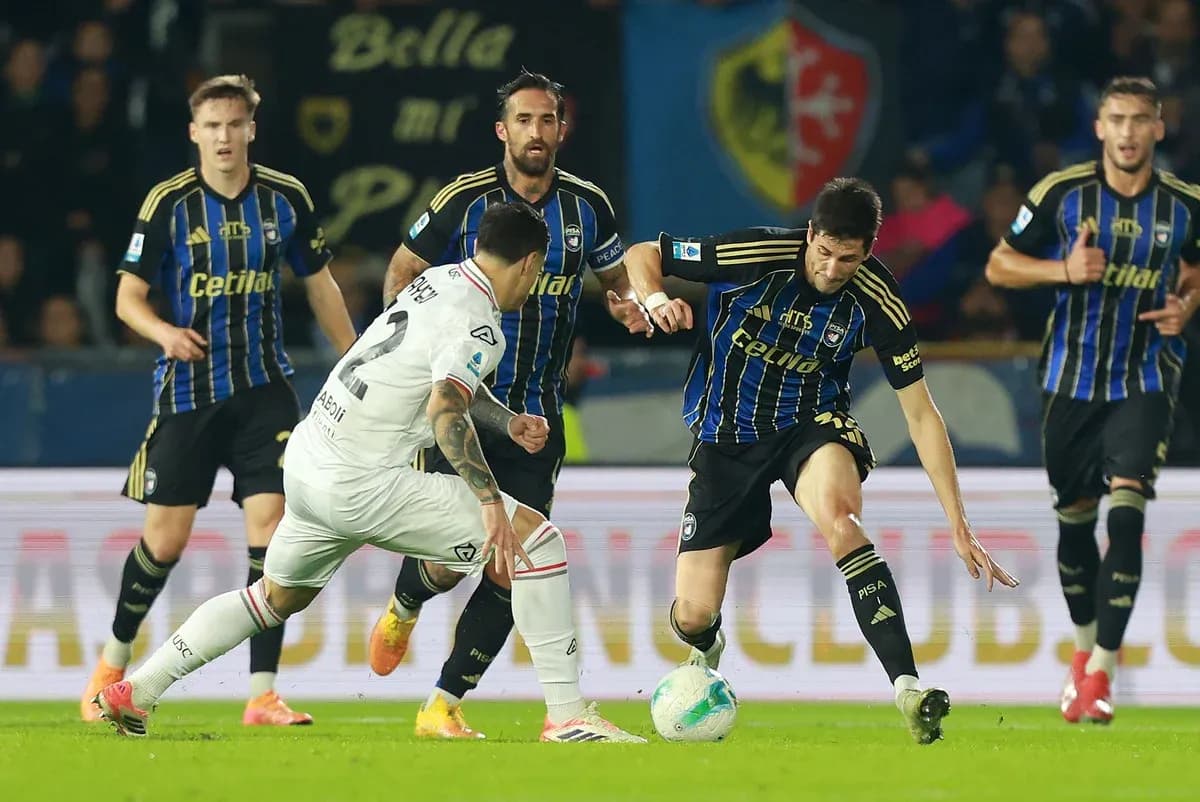
Cremonese's Statement Win Over Pisa in Serie A
Under a grey May sky at Stadio Giovanni Zini, a relegation fight turned into a statement. In a Serie A campaign defined by struggle, Cremonese finally played like a side that believed it still belonged at this level, dismantling Pisa 3-0 and briefly silencing the anxiety that has stalked their season.
I. The Big Picture – Survival instincts and structural shifts
Following this result, the table still tells a harsh story. Cremonese sit 18th with 31 points, locked in the relegation zone with a goal difference of -23, the mathematical echo of a season where they have scored 30 and conceded 53 overall. Pisa are even deeper in the mire: 20th with 18 points, their goal difference a brutal -41 from 25 goals for and 66 against.
Yet for one afternoon in Round 36, the numbers bent to Cremonese’s will. A side that had averaged just 0.9 goals at home and 0.8 overall suddenly hit their seasonal home ceiling, matching their biggest home win of 3-0. Pisa, who on their travels concede an average of 2.4 goals and have yet to win away (0 wins, 8 draws, 10 defeats), once again played to type: fragile under pressure, unable to turn possession into resistance.
Marco Giampaolo’s choice of a 4-4-2 was more than a line on a teamsheet; it was a declaration. Cremonese have lived most of this season in a back-three world – their most-used shape is 3-5-2, deployed 24 times – but here they stretched the pitch horizontally, trusting their wide players to both protect and punish. Pisa, under Oscar Hiljemark, stayed loyal to a 3-4-2-1, a system they have leaned on for 12 matches this season, trying to find balance between a back three and an extra body in the half-spaces. Instead, they found themselves outflanked and outmuscled.
II. Tactical Voids – Absences and disciplinary shadows
Both squads arrived carrying scars. Cremonese were without F. Baschirotto (thigh injury), R. Floriani and F. Moumbagna (muscle injuries), and M. Payero (knock). None are in this matchday squad, forcing Giampaolo to double down on those who have carried the load all year: Giuseppe Pezzella at left-back, Jari Vandeputte on the flank, and Federico Bonazzoli up front.
Pisa’s absentees cut through their attacking depth and rotation options. F. Coppola and M. Tramoni (muscle injuries), D. Denoon (ankle injury), and C. Stengs (inactive) all missed out, trimming Hiljemark’s ability to change the game from the bench.
The disciplinary backdrop to this fixture was vivid even without a card-by-card match log. Heading into this game, Cremonese were already a late-game flashpoint side: 27.27% of their yellow cards arrive between 76-90 minutes, and their rare red cards spike deep into stoppage time, with 66.67% of their reds shown between 91-105 minutes. Pisa are cut from similar cloth: 25.33% of their yellows also land in the 76-90 window, and their reds are scattered across the first hour and added time. This is not a fixture for calm endings; it is one where tired legs and frayed nerves usually dictate the final chapters.
III. Key Matchups – Hunter vs Shield, and the battle for the engine room
Hunter vs Shield
If this season has given Cremonese one reliable weapon, it is Federico Bonazzoli. Heading into this game, he had 9 total league goals and 1 assist, a rare bright light in a team that has managed just 30 overall. His shot profile – 54 attempts, 30 on target – speaks of a forward who keeps asking the question, even when the team around him struggles.
Against him stood not a single “shield” but an entire Pisa defensive unit that has been statistically porous. On their travels, Pisa have conceded 43 goals, averaging 2.4 per away match. Antonio Aldo Caracciolo, the heartbeat of that back line and one of Serie A’s leading yellow-card collectors with 9 bookings, embodies the dilemma: aggressive, combative, but constantly walking the disciplinary tightrope. His 71 tackles, 24 successful blocks and 45 interceptions underline his importance, but the volume of fouls (39 committed) and cards tells you how often Pisa’s last line is forced into emergency defending.
In Cremona, that imbalance played out brutally. Bonazzoli thrived in the spaces between Caracciolo and his fellow centre-backs, supported by the clever movement of J. Vardy and the steady supply from wide areas. A Pisa back three that has already suffered a 5-0 away defeat this season once again found itself stretched and exposed.
The Engine Room – Creator vs Enforcer
The heart of this match, though, lay in midfield. For Cremonese, Jari Vandeputte is the quiet architect of their survival bid. Heading into this game, he had 5 assists, 53 key passes and 887 total passes at 77% accuracy. He is not a luxury playmaker; he works – 37 tackles, 2 blocked shots, 18 interceptions – and then he creates.
Opposite him, Pisa leaned on a pair of combative presences: Idrissa Touré and Michel Aebischer. Touré, one of the league’s top red-carded players, arrived with 42 tackles, 8 successful blocks and 24 interceptions, plus 402 total duels with 219 won – numbers that scream “enforcer.” Aebischer adds structure and progression: 1,466 passes at 85% accuracy, 31 key passes, and 62 tackles. Together, they were supposed to smother Vandeputte’s influence and deny Cremonese the chance to turn pressure into chances.
Instead, the pattern inverted. With T. Barbieri and Y. Maleh tucking in from the flanks, Cremonese often formed a narrow box in midfield, giving Vandeputte pockets to receive and turn. A. Grassi’s positional discipline allowed the Belgian to drift into the left half-space, combining with Pezzella’s overlapping runs. Pisa’s wing-backs, M. Leris and F. Loyola, were forced to constantly decide between stepping out to press or dropping to support their back line; too often they were caught in between.
IV. Statistical Prognosis – xG logic and defensive realities
Even without explicit xG values, the season-long numbers offer a clear lens. Heading into this game, Cremonese’s attack was modest but structured: 0.9 goals at home on average, 17 scored and 25 conceded at Zini. Pisa’s away profile was far more chaotic: 16 scored, 43 conceded, with only 1 away clean sheet and 9 away matches where they failed to score.
Cremonese’s 10 clean sheets overall this season hinted at a side that, when compact and focused, can lock games down. Pisa, with just 5 clean sheets in total and 20 matches where they failed to score, came in as a team more likely to collapse than to control.
In that light, a 3-0 home win does not feel like an anomaly but the logical extreme of existing trends. Cremonese maximised their limited attacking firepower, leaning heavily on Bonazzoli’s penalty-box instincts and Vandeputte’s delivery. Pisa’s defensive frailty – especially on their travels – once again dictated the script.
Following this result, the broader prognosis remains harsh for both. The table still points toward Serie B for Cremonese and Pisa alike. But tactically, this match offered a glimpse of what Cremonese can be when their structure, their creators and their hunter up front all align: a side that can bend the numbers, if only for ninety minutes, back in their favour.