Fiorentina and Genoa Play to a Tactical Stalemate
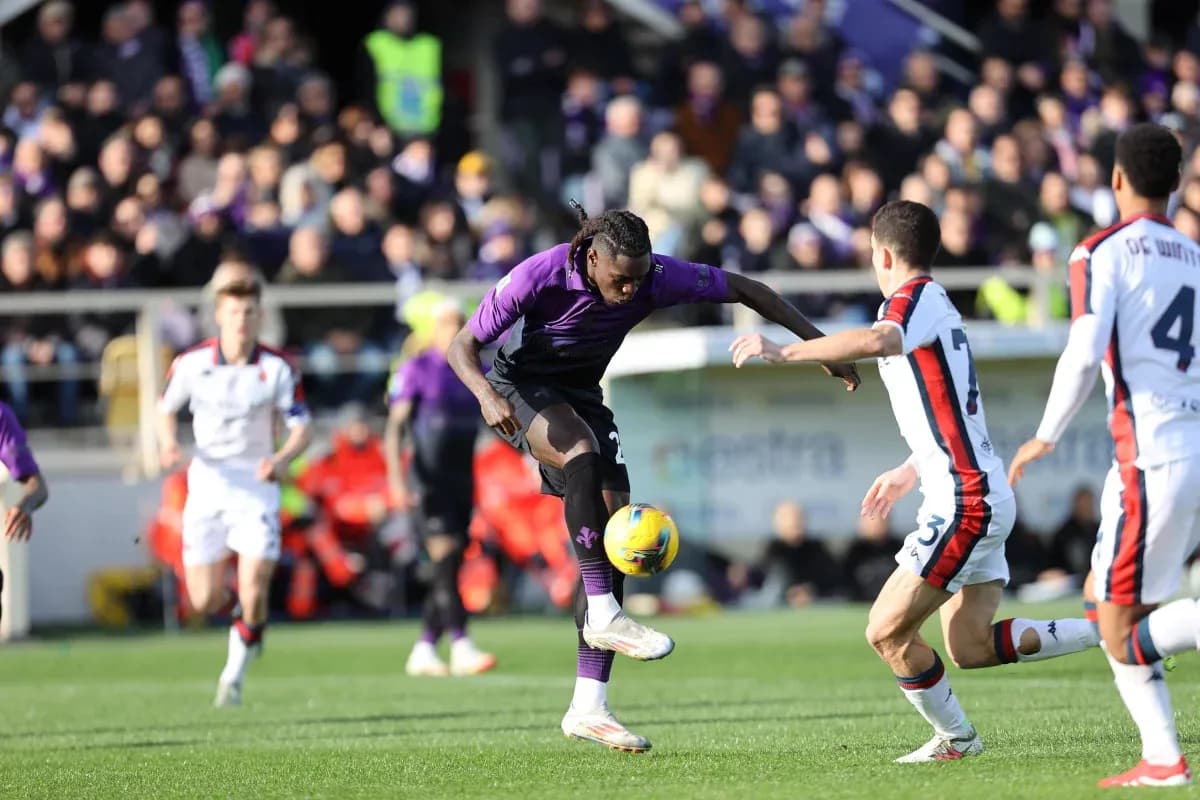
Stadio Artemio Franchi felt like a stage built for chaos, yet the story that unfolded between Fiorentina and Genoa was one of restraint: a 0-0 that said as much about these two sides’ seasonal DNA as any high‑scoring thriller.
Heading into this game, the table had them almost mirroring each other. Genoa sat 14th on 41 points with a goal difference of -8, Fiorentina 15th on 38 points with a goal difference of -11. Both had played 36 matches, both built on industry more than inspiration. Overall this campaign, Fiorentina had scored 38 and conceded 49; Genoa 40 for and 48 against. Two teams living on the margins, trying to make sure the season faded out quietly rather than dramatically.
The tactical shapes told their own story. Paolo Vanoli doubled down on Fiorentina’s most-used structure, the 4-3-3 that has started 13 league games. D. de Gea anchored a back four of Dodo, M. Pongračić, L. Ranieri and R. Gosens. In front of them, R. Mandragora, N. Fagioli and C. Ndour formed a compact midfield trio, with a youthful, slightly improvised front line: F. Parisi wide, R. Braschi central and M. Solomon cutting in from the opposite flank.
Across from them, Daniele De Rossi leaned into Genoa’s three‑at‑the‑back identity, rolling out a 3-4-2-1 that has underpinned their season. J. Bijlow stood behind a trio of A. Marcandalli, L. Ostigard and N. Zatterstrom. The wing‑backs and midfield line – M. E. Ellertsson, Amorim, M. Frendrup and A. Martin – were tasked with stretching Fiorentina horizontally while keeping the central block dense. Ahead of them, J. Ekhator and Vitinha floated around L. Colombo, the nominal spearhead.
Yet both squads came into this fixture carrying important absences that shaped the narrative. Fiorentina were without their leading scorer M. Kean, ruled out with a calf injury. His 8 goals overall in Serie A and penalty reliability (2 scored from 2, no misses) had been central to their ability to turn tight games. Without him, Vanoli was forced into a more collective, less incisive front line, relying on Solomon’s 1v1 work and the movement of Braschi rather than a proven finisher.
On the opposite side, Genoa were stripped of creativity and depth in the final third. T. Baldanzi (thigh injury), Junior Messias (muscle injury) and M. Cornet were all missing, along with B. Norton‑Cuffy and S. Otoa. De Rossi’s bench still carried threats – R. Malinovskyi, C. Ekuban and the versatile P. Masini – but his starting XI lacked a true, consistent chance‑creator between the lines, forcing Genoa to lean heavily on structure, set‑pieces and wide overloads.
Discipline, too, hung over the fixture like a quiet warning. Fiorentina’s season card profile is stark: yellow cards peak late, with 25.00% of their bookings coming between 76-90 minutes, and both of their red cards arriving in that same 76-90 window. Genoa’s pattern is more scattered but equally dangerous: 24.59% of their yellows between 61-75, and red cards split between 0-15, 46-60 and 91-105. With high‑stakes minutes historically turning ragged for both, the expectation was a combustible finale that never quite arrived, but clearly influenced the caution in both camps.
Within that disciplinary framework, individual profiles stand out. M. Pongračić is the league’s top yellow card collector, with 11 yellows overall, yet his numbers underline why Vanoli trusts him: 23 blocked shots and 34 interceptions this season, plus 1855 completed passes at 91% accuracy. He is both shield and distributor, and in this match his role was to step aggressively into Vitinha’s feet while ensuring Genoa could not spring transitions into the channels behind Dodo and Gosens.
Alongside him, L. Ranieri – 8 yellows overall – adds another layer of controlled aggression, with 34 tackles, 11 blocked shots and 24 interceptions across the campaign. Together, they embody Fiorentina’s defensive identity: not spectacular, but combative enough to hold the line. At home this season, Fiorentina have conceded 20 and scored 20, averaging 1.1 goals for and 1.1 against; the Franchi has been a place of balance, not dominance, and the 0-0 here fits that pattern almost too neatly.
Genoa’s “Engine Room” answer lies partly on the bench: R. Malinovskyi, a player with 6 goals, 3 assists and 37 key passes overall, but also 10 yellow cards. He is their high‑risk, high‑reward conduit, capable of unlocking a low block but perpetually walking the disciplinary tightrope. In his absence from the starting XI, much of the creative burden fell on A. Martin, whose season numbers – 5 assists overall, 60 key passes and 11 blocked shots – mark him as both creator and defender. On their travels, Genoa’s attack averages 1.1 goals per game (19 scored in 18 away matches), with 24 conceded away at 1.3 per match; they are marginally more resilient than Fiorentina, but not by enough to tilt a cagey contest.
The “Hunter vs Shield” dynamic, usually defined by a clear striker vs defence narrative, was blurred here by absences. Fiorentina’s most reliable finisher, Kean, was watching from the stands; Genoa’s best long‑range threat, Malinovskyi, started as a tactical card in reserve. Instead, the duel became structural: Fiorentina’s 4-3-3, which has delivered 6 home clean sheets overall and failed to score at home only 4 times, against Genoa’s away block that has already kept 5 clean sheets on their travels but failed to score away in 6 games.
In the end, the statistical prognosis played out almost to script. Two teams whose overall goals for and against sit around the 1.1–1.4 range, both with 9 clean sheets across the season, both missing key offensive pieces, converged on a match defined by risk management rather than ambition. Following this result, the numbers will barely shift the narrative: mid‑table, negative goal differences, seasons built on narrow margins.
What this stalemate really underlined is that, for both Fiorentina and Genoa, structure is currently stronger than inspiration. The blocks, the cards, the absences and the formations all pointed in the same direction: a night where the defenders and organisers won the argument, and the scoreboard stayed frozen in quiet, logical symmetry.