Fulham vs Aston Villa: Tactical Insights and Match Analysis
Craven Cottage, on a cool April lunchtime, staged a meeting of contrasting ambitions. Fulham, 10th in the Premier League with 48 points and a goal difference of -2 (44 scored, 46 conceded in total), are shaping a solid mid-table identity under Marco Silva. Aston Villa arrived in west London sitting 5th with 58 points and a goal difference of 5 (47 for, 42 against in total), chasing Champions League qualification.
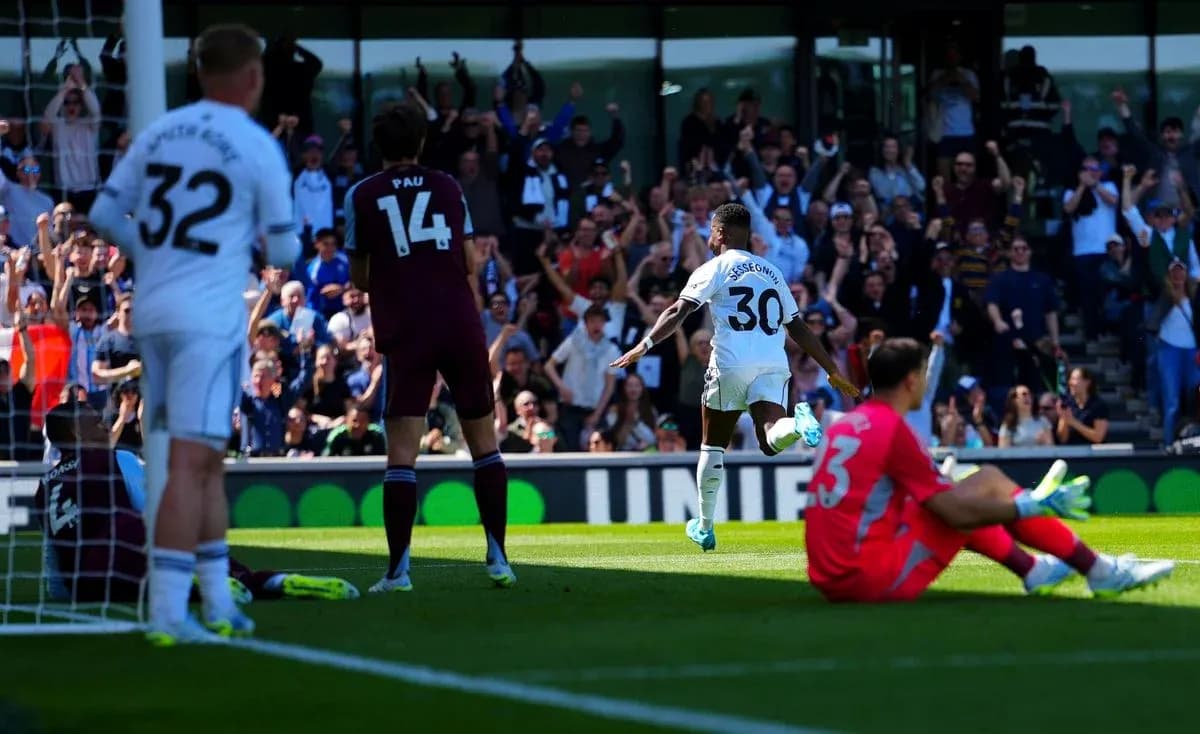
Following this result, the 1-0 home win underlined Fulham’s growing authority on the banks of the Thames. At home this season they have been quietly formidable: 10 wins from 17, scoring 28 and conceding 19, an attacking average of 1.6 goals for and 1.1 against at Craven Cottage. Villa, meanwhile, have been good but not dominant on their travels, with 6 away wins from 17, 20 goals scored and 24 conceded away, averaging 1.2 for and 1.4 against.
Both coaches mirrored each other structurally in a 4-2-3-1, but the personalities within those shapes told very different stories. Fulham’s version was about technical control and vertical surges; Villa’s about orchestrated pressing and quick channel runs for Ollie Watkins. Over 90 minutes, it was Silva’s blueprint that proved sharper and more cohesive.
Tactical Voids and Selection Choices
The absences framed the tactical chessboard before a ball was kicked. Fulham were without A. Iwobi, Kevin and K. Tete, all listed as “Missing Fixture”, with Iwobi and Kevin carrying injuries and Tete sidelined by a foot injury. That stripped Silva of a natural right-back rotation and a creative, press-resistant option between the lines.
The response was telling: Timothy Castagne at right-back and R. Sessegnon at left-back gave Fulham energy on both flanks, while the double pivot of S. Lukic and S. Berge offered height and security in central zones. Ahead of them, H. Wilson, E. Smith Rowe and S. Chukwueze operated as a fluid band of three, constantly rotating behind R. Jimenez.
Aston Villa had their own voids. Alysson and B. Kamara missed out, with Kamara’s knee injury particularly significant. Without him, Unai Emery turned to L. Bogarde alongside Y. Tielemans at the base of midfield. That pairing promised passing range but lacked Kamara’s blend of aggression and positional sense, a weakness Fulham’s 10 and wingers could probe.
Discipline has been a season-long subplot for both teams. Heading into this game, Fulham’s yellow-card profile showed a pronounced late-game spike: 25.00% of their yellows arriving between 91-105 minutes, with another 19.12% between 76-90. Villa’s pattern was different but equally telling: a high-intensity block just after the interval, with 26.92% of their yellows between 46-60 minutes and 19.23% between 91-105. Those numbers hinted at a contest where the middle and closing phases would be attritional, with tired legs and tactical fouls shaping the rhythm.
Key Matchups
Hunter vs Shield
Ollie Watkins came in as Villa’s leading scorer in the league with 11 goals and 2 assists. His profile is that of a complete forward: 50 total shots, 30 on target, and 21 key passes, working tirelessly across the front line. Up against him were Fulham’s centre-backs J. Andersen and C. Bassey, shielded by Lukic and Berge.
Fulham’s defensive record at home – 19 conceded in 17, an average of 1.1 – suggested a unit comfortable absorbing pressure at Craven Cottage. The 1-0 scoreline confirmed that the “shield” won the duel: Watkins was forced to work in wider and deeper zones, with Andersen’s aggression in duels and Bassey’s recovery pace preventing the kind of penalty-box chaos where the Villa striker thrives.
On the other side, Fulham’s own “hunter” was more collective than individual. Wilson, with 10 goals and 6 assists in total this season, is their attacking reference point. His 716 passes with 34 key passes and 80% accuracy speak to a creator who also finishes. Alongside him, Jimenez has 9 goals and 3 assists, with 49 shots and 19 on target, and a notable penalty record: 4 scored from 4 taken in total, with no misses. That reliability from the spot adds an undercurrent of threat whenever Fulham enter the box.
Against a Villa defence that concedes 1.4 goals away on average, Wilson’s drifting from the right half-space into central pockets was a constant problem. With Lucas Digne and Pau Torres often drawn out to deal with Chukwueze’s direct running and Smith Rowe’s clever positioning, Wilson repeatedly found pockets where he could either shoot or slip Jimenez in. The single goal was the statistical embodiment of those structural cracks.
Engine Room: Playmaker vs Enforcer
In midfield, the duel between creators and stoppers defined the game’s tempo. For Fulham, Berge and Lukic formed a double pivot that combined aerial strength with calm distribution. Berge, in particular, acted as the metronome, recycling possession to the advanced trio and protecting transitions.
Villa’s response hinged on Y. Tielemans and L. Bogarde. Tielemans, a natural playmaker, was tasked with both progressing the ball and screening spaces. But without Kamara, the balance tilted too far towards finesse and not enough towards destruction. That left gaps between Villa’s midfield and back four, especially when Morgan Rogers and John McGinn pushed high to press.
Rogers himself is one of the league’s more complete attacking midfielders this season: 9 goals, 5 assists, 56 shots (31 on target), and 42 key passes from 977 total passes at 75% accuracy. He attempted 110 dribbles with 38 successes, underlining his role as the carrier who breaks lines. Yet in this match, Fulham’s compact 4-2-3-1 limited his ability to receive on the half-turn between lines. Lukic tracked him diligently, while Smith Rowe dropped intelligently to form a situational 4-3-3 out of possession.
The result was that Villa’s engine room never quite found its rhythm. Tielemans was often forced into safer passes, and Rogers’ influence was pushed towards the flanks rather than through the dangerous central corridors.
Statistical Prognosis and Tactical Verdict
From a season-long perspective, this 1-0 fits the underlying numbers. Overall, Fulham average 1.3 goals for and 1.4 against per game; Villa sit at 1.4 for and 1.2 against in total. At Craven Cottage, Fulham’s attacking average of 1.6 goals for meets Villa’s away concession rate of 1.4 – a narrow Fulham edge that materialised on the day.
Defensively, Villa’s away record of 24 conceded in 17 hints at vulnerability when forced to defend sustained phases rather than quick, structured blocks. Fulham’s home comfort, combined with Wilson’s creative influence and Jimenez’s penalty threat (4 scored, 0 missed in total), meant that even a low-xG contest always carried a sense that the hosts could nick it.
Emery’s 4-2-3-1, used 30 times this season, remains a high-ceiling structure, but without Kamara and with Rogers squeezed out of central zones, Villa lacked their usual vertical punch. Fulham, whose own 4-2-3-1 has been deployed 31 times, looked like the more rehearsed side within the shared system: full-backs advancing in tandem, wingers narrowing to overload the half-spaces, and a double pivot that understood when to hold and when to step.
Following this result, the narrative is clear. Fulham continue to turn Craven Cottage into a difficult away day, their mid-table security built on a strong home platform and the star quality of Wilson and Jimenez. Villa, still well placed in 5th, are reminded that on their travels they remain a very good side, but not yet an impervious one – especially when key enforcers like Kamara are missing and the hunter, Watkins, is kept on the fringes of the fight.