Iran and New Zealand's World Cup 2026 Opener Ends in 2–2 Draw
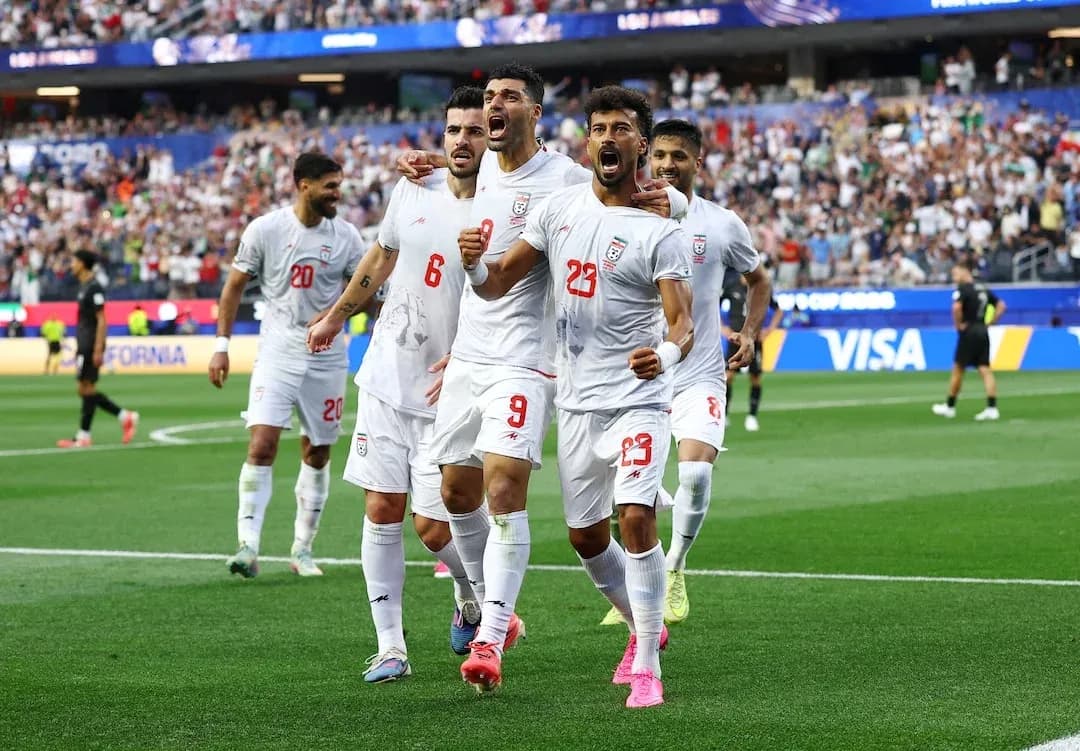
Under the California lights of SoFi Stadium, Iran and New Zealand opened their World Cup 2026 journeys with a 2–2 draw that felt less like a settling of accounts and more like the start of a running argument. Following this result, both sides sit on 1 point in Group G, New Zealand top on goal difference procedures, Iran second, but the table barely scratches the surface of what these 90 minutes revealed about their identities and the battles to come.
I. The Big Picture – Two Systems, One Standoff
Iran arrived with a familiar 4-4-2 under Amir Ghalenoei, a structure that prizes compactness and vertical surges. Alireza Beiranvand anchored a back four of Ramin Rezaeian, Shoja Khalilzadeh, Ali Nemati, and Milad Mohammadi. Ahead of them, a flat but flexible midfield line of Mohammad Mohebi, Saman Ghoddos, Saeid Ezatolahi, and Aria Yousefi tried to knit control with creativity, feeding a front pair of Shahriar Moghanlou and Mehdi Taremi.
New Zealand countered with a 4-2-3-1 that leaned heavily on technical security and the intelligence of its attacking band. Max Crocombe started in goal behind a defence of Tim Payne, Finn Surman, Michael Boxall, and Liberato Cacace. Joe Bell and Marko Stamenic formed the double pivot, while Callum McCowatt, Sarpreet Singh, and Elijah Just supported lone striker Chris Wood.
Statistically, both teams walk away with mirrored profiles: overall this campaign, Iran have scored 2 and conceded 2, while New Zealand have also scored 2 and conceded 2. The goal difference for each side is 0. The symmetry of the 2–2 is no accident; it reflects two teams whose strengths are sharply defined but whose weaknesses are just as visible.
II. Tactical Voids – Discipline, Edges, and the Bench
If there was one figure who embodied Iran’s emotional edge, it was Ehsan Hajsafi. The defender began on the bench but entered the fray to add experience and aggression, logging 25 minutes, winning 2 of his 3 duels and completing all 7 of his passes. Yet his cameo came with a cost: he collected a yellow card and features in both the top yellow and red card listings for the tournament so far, a statistical quirk rooted in the early sample size but still a warning sign. Team-wise, Iran’s card distribution shows a stark late-game spike: 100.00% of their yellow cards have come in the 76–90' window. This late surge in bookings hints at a side that can tilt toward desperation as the clock ticks down.
New Zealand, by contrast, emerge from this opener with a clean disciplinary slate. No yellows, no reds, and no recorded card peaks across any time segment. That calmness under pressure is a subtle but significant advantage in a group stage where suspensions can swing a campaign.
Injury-wise, the data offers no confirmed absences; both squads were near full strength. The more interesting “voids” were tactical: Iran’s bench carried attacking variety—Mehdi Ghayedi, Ali Alipour, Alireza Jahanbakhsh, and Dennis Eckert Ayensa—yet Ghalenoei trusted his starting shape and rhythm for long stretches, choosing to adjust through selective defensive and midfield changes rather than a wholesale attacking reshuffle. New Zealand, with forwards like Ben Waine, Kosta Barbarouses, and Jesse Randall in reserve, kept their most dangerous creators—Just and Wood—on the pitch for the full 90, signalling how central they are to this side’s identity.
III. Key Matchups – Hunter vs Shield, Engine Room vs Enforcer
The standout duel of the night was not a direct one-on-one, but a conceptual clash: Elijah Just versus Iran’s defensive structure. Just’s performance was devastatingly efficient. In total this campaign, he has 2 goals from 2 shots, both on target, and a rating of 9. He completed 26 passes at 84% accuracy, contributed 1 key pass, and won 5 of 11 duels. Operating from the left side of the New Zealand attacking trio, he repeatedly exploited pockets between Iran’s full-backs and centre-backs, especially when Rezaeian pushed forward.
Yet Iran’s own “hunter” emerged from the back line. Ramin Rezaeian, listed as a defender, produced one of the games of his life. In total this campaign, he has 1 goal and 1 assist, converting his only shot on target. His 41 passes included 3 key passes, and he won 7 of 8 duels while successfully completing his only dribble. He did not receive a card, reinforcing the image of a controlled aggressor who can hurt you both in buildup and at the back post. As a top scorer and top assist contributor for Iran so far, he is less full-back and more playmaker from deep, the conduit through which Iran can overload flanks and whip early service into Taremi and Moghanlou.
In midfield, the “Engine Room” battle pitted Iran’s Saeid Ezatolahi and Saman Ghoddos against Joe Bell and Marko Stamenic. While the raw numbers in the dataset focus more on headline attackers, the tactical pattern was clear: Bell and Stamenic sought to create a stable passing platform for New Zealand’s front four, while Ezatolahi tried to shield his centre-backs and Ghoddos drifted into half-spaces to link play. When New Zealand managed to pin Iran back, it was usually because Bell and Stamenic had time to face forward and connect with Singh and McCowatt between the lines.
Up front, Chris Wood’s role was less about finishing and more about orchestration. Overall, he has 0 goals but 2 assists, with 16 passes at 87% accuracy and 4 key passes. His 3 shots (2 on target) kept Beiranvand honest, but it was his ability to drop, receive, and slip runners like Just into space that turned New Zealand’s 4-2-3-1 into a fluid, almost 4-4-2 in possession.
IV. Statistical Prognosis – What This Draw Really Says
Following this result, both teams share eerily similar statistical profiles. Iran at home have averaged 2.0 goals for and 2.0 against, with no clean sheets and no failures to score. New Zealand, on their travels, have averaged 2.0 goals scored and 2.0 conceded, also without a clean sheet or a blank. The symmetry suggests that in terms of Expected Goals, both sides are likely operating around parity: enough firepower to trouble anyone, but defensive structures that can be bent and broken.
The late-game card spike for Iran (100.00% of yellows in the 76–90' window) hints at a vulnerability under scoreboard or time pressure; in tight group games, that could invite dangerous free-kicks or even a decisive second booking. New Zealand’s discipline and their reliance on the Wood–Just axis, meanwhile, point to a team that will live or die by the sharpness of its attacking combinations rather than sheer volume of chances.
Tactically, the next steps are clear. Iran must decide whether to lean even harder into Rezaeian’s attacking influence—risking space behind him—or to protect their flanks and trust Taremi and Moghanlou to make more from less service. New Zealand will look to preserve the chemistry that gave Just his platform while tightening the spaces in front of their centre-backs, where Ghoddos and Mohebi occasionally found room to turn.
This 2–2 was not just an opening statement; it was a blueprint. Iran and New Zealand have announced themselves as high-event, high-risk sides in Group G. The numbers say they are equals. The tactics suggest that whichever team better balances ambition with control in the next fixtures will be the one that turns this entertaining equilibrium into genuine progression to the Round of 32.