Saudi Arabia vs Uruguay: World Cup 2026 Draw Analysis
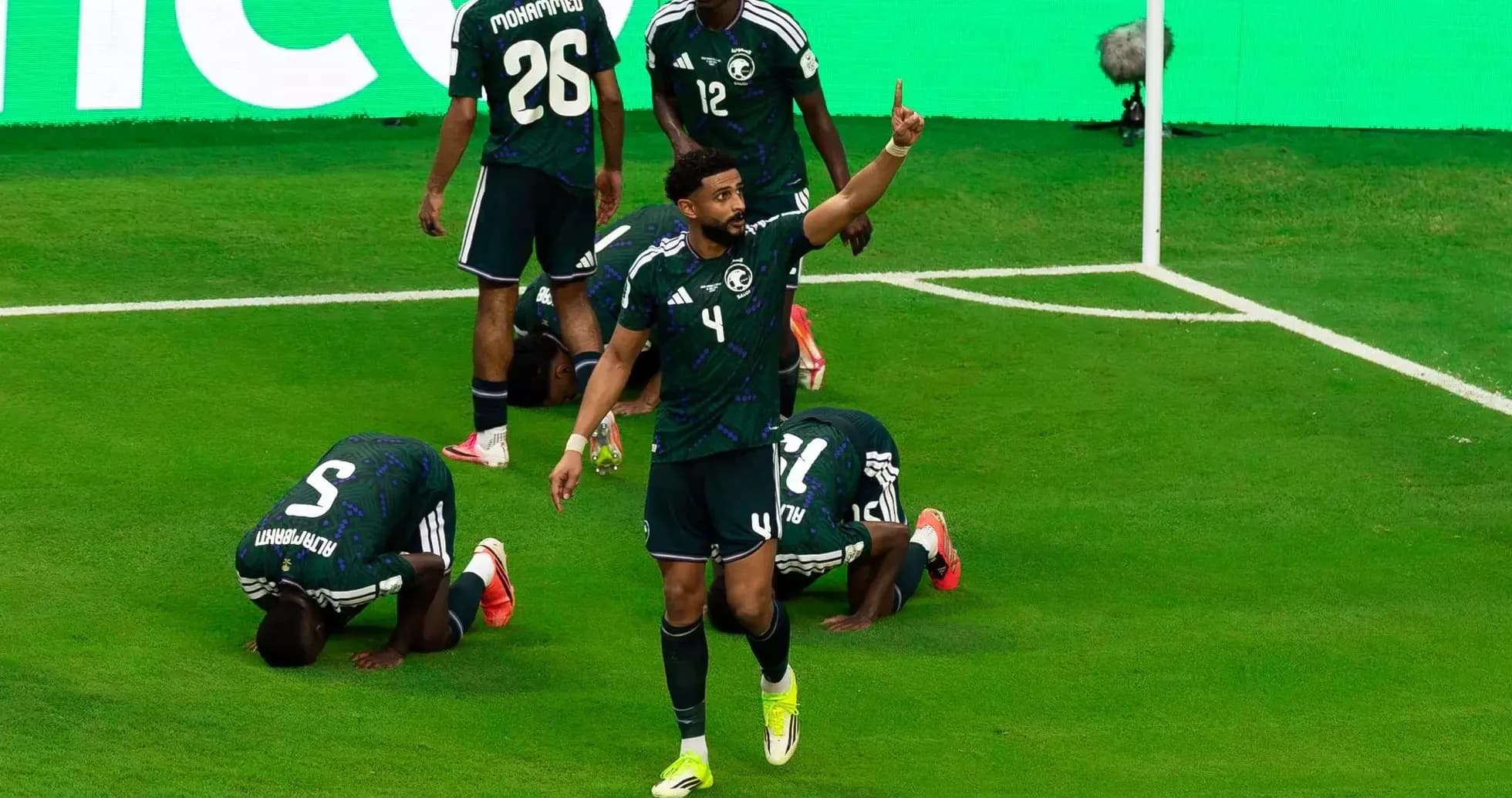
Under the humid Miami Gardens night, Saudi Arabia and Uruguay opened their World Cup 2026 campaigns with a 1–1 draw at Hard Rock Stadium, a result that leaves Group H delicately poised and both managers with as many questions as answers.
I. The Big Picture – contrasting blueprints in Group H
Following this result, Uruguay sit 1st in Group H and Saudi Arabia 2nd, both on 1 point with a goal difference of 0, their overall records identical: 1 match played, 0 wins, 1 draw, 0 defeats, 1 goal for and 1 against. The symmetry in the standings, however, hides two very different tactical identities.
Saudi Arabia, under Georgios Donis, have leaned fully into a compact 4-4-2. Heading into this game, their World Cup numbers were entirely built on this match: at home they have played 1, drawn 1, with 1.0 goals scored and 1.0 conceded on average. No clean sheets, but also no failure to score – a sign of balance more than brilliance. Their biggest home output so far is exactly what we saw here: 1 goal for, 1 against.
Marcelo Bielsa’s Uruguay, officially the “away” side here, arrived with a 4-2-3-1 that promised vertical aggression. On their travels they have played 1, drawn 1, with 1.0 away goals for and 1.0 away goals against on average. Like Saudi Arabia, they have yet to keep a clean sheet or fire a blank, but the structure behind those numbers is more expansive and risk‑accepting.
II. Tactical Voids – discipline, risk and what’s missing
Injury and suspension data are unavailable in this snapshot, so the tactical voids here are less about absentees and more about structural gaps.
For Saudi Arabia, the clearest hole is between their double pivot and the forward line. The midfield four of M. Abu Al Shamat, M. Kanno, A. Al Khaibari and S. Al Dawsari had to shuttle enormous distances to connect with the front pairing of F. Al Buraikan and M. Al Juwayr. When the block dropped deep, the two strikers were often isolated, turning transitions into long, hopeful balls rather than orchestrated counters.
Disciplinary data underlines a second concern. Heading into this game, Saudi Arabia’s only yellow card of the tournament had come in the 31–45 minute window, a 100.00% concentration of their cautions in that period. That suggests a recurring pattern: as the first half wears on, their intensity tips into rashness. In a group-stage context, this trend could become costly if it leads to suspensions later in the round.
Uruguay’s card profile is blank so far – no yellow or red cards recorded in any time band. That hints at a side that can play aggressively in structure without tipping into individual indiscipline, a critical asset for a Bielsa team that presses in waves. The flip side is that they may sometimes lack the “tactical foul” instinct when transitions break against them.
III. Key Matchups – Hunter vs Shield, and the Engine Room
Hunter vs Shield
For Saudi Arabia, the “hunter” role is shared between F. Al Buraikan and M. Al Juwayr, but the real cutting edge often comes from the second line, particularly S. Al Dawsari drifting inside from the left. The 4-4-2 relies on those three to convert limited possession into high‑value chances.
Their challenge was to pierce a Uruguayan back four that, on their travels, concede 1.0 goals on average. The defensive spine of S. Caceres and M. Olivera, flanked by G. Varela and M. Vina, had to manage not only the penalty-box presence of Al Buraikan but also the late arrivals of Kanno and the diagonal darts of Al Dawsari. Uruguay’s away record – 1 goal conceded in 1 match – reflects a unit that can be breached but rarely collapses.
On the other side, the pure “hunter” is D. Nunez. As the lone forward at the tip of the 4-2-3-1, his runs behind the line are the detonator for everything Uruguay do. His duel was against a Saudi central pairing of A. Al Amri and H. Tambakti, shielded by the deep work of A. Al Khaibari. With Saudi Arabia conceding 1.0 goals at home on average, the centre-backs did not fold, but they were stretched repeatedly by Nunez’s movement and the late surges of the three behind him.
Engine Room – playmaker vs enforcer
The game’s true axis lay in midfield. For Saudi Arabia, M. Kanno is the metronome, the player who tries to turn second balls into structured attacks. Alongside him, A. Al Khaibari offers a more destructive, screening profile. Together they formed a double pivot that needed to be both shield and launchpad.
Uruguay’s answer was a formidable triangle: M. Ugarte and R. Bentancur as the double pivot, with F. Valverde stepping higher as the all‑court runner. Ugarte’s role as the enforcer was clear – break Saudi rhythm, win duels, and feed quick vertical passes into Valverde and the attacking trio of F. Vinas, M. Araujo and Nunez. Bentancur, more elegant in possession, provided the tempo and the line‑breaking passes that turned Saudi Arabia’s 4-4-2 into a reactive block.
In those central zones, Uruguay had the numerical and qualitative edge. Saudi Arabia’s wide men, Abu Al Shamat and Al Dawsari, were dragged deep to help their full-backs, leaving Kanno and Al Khaibari often outnumbered three‑on‑two against Ugarte, Bentancur and Valverde. That imbalance explains why Saudi Arabia’s 1.0 goals scored at home so far feel hard‑earned rather than the product of sustained pressure.
IV. Statistical Prognosis – where this draw points next
With both sides sitting on identical records – 1.0 goals for and 1.0 against on average overall, no penalties taken and none missed – the numbers portray equilibrium, but the tactical currents suggest divergence.
Saudi Arabia’s ceiling appears tied to their defensive discipline and the ability of S. Al Dawsari and F. Al Buraikan to overperform limited chance volume. Their early‑half yellow‑card spike (100.00% of their cautions arriving between 31–45 minutes) is a warning: if that pattern continues, it will erode the stability on which their 4-4-2 depends.
Uruguay, by contrast, project as a side whose xG profile is likely to grow as the tournament progresses. A 4-2-3-1 with Nunez up front, Valverde as a high‑energy connector, and creative width from F. Vinas and M. Araujo will typically generate more shots and higher‑quality chances than the raw 1.0 goals per game currently recorded on their travels. Their lack of cards so far suggests they can sustain Bielsa’s intensity without hemorrhaging suspensions.
Following this result, the draw feels like a point gained for Saudi Arabia and two half‑lost for Uruguay. If the underlying patterns hold, Uruguay’s more expansive structure and stronger engine room should, over the group, translate into superior expected goals and a better goal difference. Saudi Arabia, however, have shown enough resilience and clarity in their 4-4-2 to suggest that, in a tight group, they will remain very much in the qualification conversation.