Morocco Defeats Canada 3-0 to Reach World Cup Quarter-Finals
Canada 0-3 Morocco at NRG Stadium in Houston sends Morocco into the World Cup quarter-finals with authority, while Canada’s best-ever tournament run ends in the Round of 16. Morocco build on their strong group-stage platform to move from 7 to 10 points overall, now boasting 9 goals for and 3 against (goal difference +6), while Canada’s campaign closes on 4 points, 8 goals scored and 6 conceded (goal difference +2) after being outmanoeuvred in knockout football.
Match Report
The game opened with Canada trying to impose tempo but Morocco quickly showed their edge in duels. The first disciplinary flashpoint came on 20', when Redouane Halhal (Morocco) collected a yellow card for roughing after a late challenge on the flank, signalling Morocco’s willingness to defend aggressively.
On 22', Morocco made an early attacking adjustment: Soufiane Rahimi replaced Ismael Saibari (Morocco), adding more direct running to the front line and foreshadowing his later impact.
The contest grew increasingly spiky before half-time. On 40', Achraf Hakimi (Morocco) received a yellow card for unsportsmanlike conduct after a confrontation, and in the same minute Richie Laryea (Canada) was also booked for unsportsmanlike conduct as tempers flared on the touchline. Three minutes later, on 43', Jonathan David (Canada) was shown a yellow card for holding, punished for a tactical foul to halt a Moroccan break.
First-half stoppage time brought another caution for Morocco: on 45+6', Bilal El Khannouss (Morocco) was booked for roughing after a late tackle in midfield, leaving the North Africans with three yellow cards before the interval and underlining the intensity of their pressing game.
Canada emerged from the break looking to raise the tempo but their back line wobbled. On 49', Luc De Fougerolles (Canada) received a yellow card for tripping, a sign of Canada increasingly reacting rather than dictating in defensive phases.
Morocco struck immediately afterwards. On 50', Morocco goal — Azzedine Ounahi (assisted by Achraf Hakimi). Hakimi surged down the right and cut the ball back intelligently for Ounahi, who arrived on the edge of the box to finish, giving Morocco a 1-0 lead and tilting the tie towards their preferred counter-attacking script.
With control established, Morocco refreshed their midfield energy on 63'. Sofyan Amrabat replaced Ayyoub Bouaddi (Morocco), adding more positional discipline in front of the back four, while Chemsdine Talbi replaced Bilal El Khannouss (Morocco) to provide fresh legs between the lines. In the same minute, Canada made their first attacking roll of the dice: Cyle Larin replaced Tani Oluwaseyi (Canada), switching the profile of their centre-forward to a more penalty-box-focused target.
The substitution initially gave Canada a focal point but also brought immediate disciplinary risk. On 67', Cyle Larin (Canada) was shown a yellow card for a foul, reflecting Canada’s growing frustration as they chased the game.
On 78', Jesse Marsch turned to his bench again in search of more width and dynamism. Promise David replaced Ali Ahmed (Canada), and Jacob Shaffelburg replaced Richie Laryea (Canada), effectively pushing Canada into a more aggressive, wing-oriented shape in an attempt to stretch Morocco’s compact block.
Morocco, however, delivered the decisive second blow. On 82', Morocco goal — Azzedine Ounahi (assisted by Brahim Díaz). Díaz drifted into a central pocket and slipped a precise pass into Ounahi’s path, and the midfielder finished clinically to double Morocco’s advantage to 2-0, punishing Canada’s increasingly open structure.
Both coaches then moved to close out the contest and manage minutes. On 87', Marwane Saadane replaced Issa Diop (Morocco), shoring up the defensive line, while Samir El Mourabet replaced Azzedine Ounahi (Morocco), withdrawing the two-goal midfielder to protect him and add fresh legs in midfield. At the same moment for Canada, Jayden Nelson replaced Tajon Buchanan (Canada) to inject more pace in wide areas, and Jonathan Osorio replaced Niko Sigur (Canada) to offer additional creativity from central midfield.
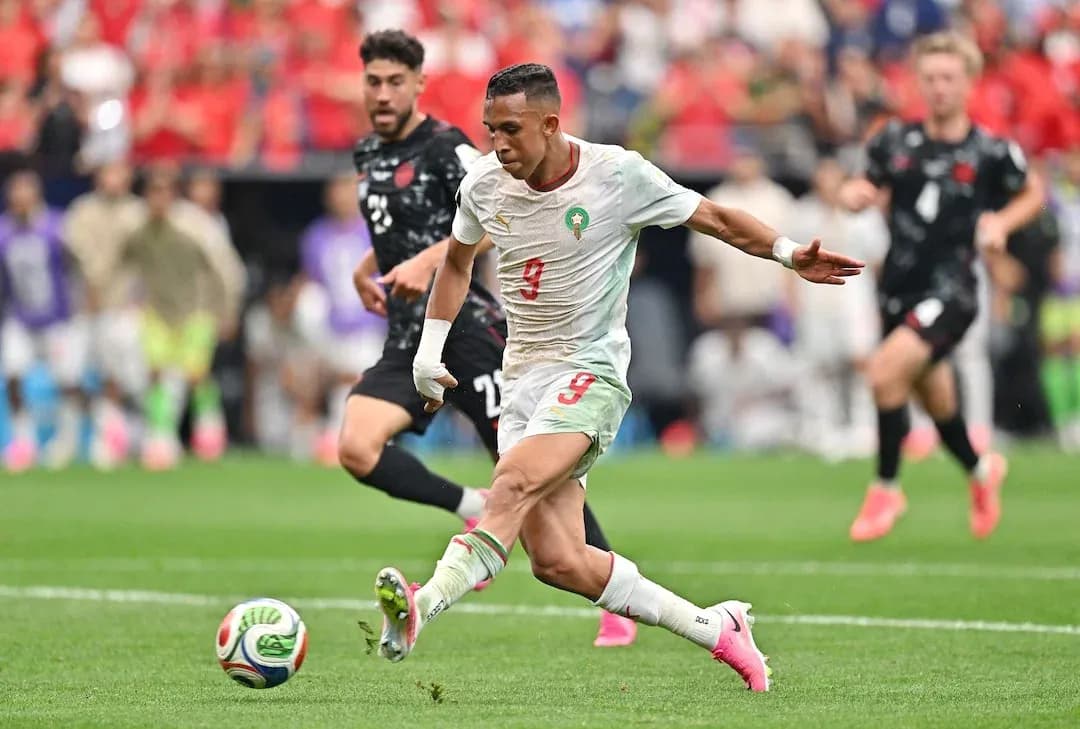
Deep into stoppage time, Morocco added a third to underline their superiority. On 90+8', Morocco goal — Soufiane Rahimi (assisted by Brahim Díaz). Díaz again found space between Canada’s lines and released Rahimi, who had been introduced early in the first half; the forward broke clear and finished to make it 3-0, sealing a comprehensive Moroccan victory and ending Canada’s World Cup journey.
Fixture Statistics & Tactical Audit
- xG: Canada 0.86 vs 0.78 Morocco
- Possession: Canada 45% vs 55% Morocco
- Shots on Target: Canada 3 vs 4 Morocco
- Goalkeeper Saves: Canada 1 vs 3 Morocco
- Blocked Shots: Canada 3 vs 0 Morocco
The underlying numbers suggest a closer contest than the 3-0 scoreline. Canada marginally edged xG (0.86 vs 0.78), reflecting that they did carve out some reasonable opportunities, particularly from set pieces and crosses. However, Morocco were clinical in exploiting transitional moments, converting three of their four shots on target, while Canada’s finishing and final ball lacked precision. Morocco’s higher share of possession (55%) and superior passing accuracy (82% vs 76%) underpinned a controlled approach: they were patient in circulation, then incisive when Canada overcommitted. Canada’s 11 corner kicks to Morocco’s 1 highlight territorial pressure, but Morocco’s compact box defending (0 blocked shots against them, compared to Canada’s 3) meant most of Canada’s efforts were either rushed or from sub-optimal angles. Yassine Bounou’s three saves, matching Canada’s three shots on target, ensured Morocco’s defensive platform remained intact, while Canada’s single save against four Moroccan efforts on goal underscores how efficiently Morocco turned limited volume into maximum damage.
Standings Update & Seasonal Impact
Canada exit the World Cup in the Round of 16 with their campaign closing on 4 points, 8 goals scored and 6 conceded, for a final goal difference of +2. Their group-stage form (one win, one draw, one loss) had showcased attacking promise, but the step up in knockout management and defensive robustness proved decisive.
Morocco, already through from Group C with 7 points, now move to 10 points overall after this Round of 16 victory, with their attacking tally rising from 6 to 9 goals and their defensive record tightening from 3 to 3 goals conceded, improving their goal difference from +3 to +6. They advance to the quarter-finals with one of the more balanced statistical profiles in the tournament so far: efficient in both boxes, resilient under pressure, and increasingly confident in controlling game states against higher-pressing opponents.
Lineups & Personnel
Canada Starting XI
- GK: Maxime Crépeau
- DF: Alistair Johnston, Moise Bombito, Luc De Fougerolles, Richie Laryea
- MF: Tajon Buchanan, Niko Sigur, Stephen Eustaquio, Ali Ahmed
- FW: Jonathan David, Tani Oluwaseyi
Morocco Starting XI
- GK: Yassine Bounou
- DF: Achraf Hakimi, Issa Diop, Redouane Halhal, Noussair Mazraoui
- MF: Ayyoub Bouaddi, Neil El Aynaoui, Brahim Díaz, Azzedine Ounahi, Bilal El Khannouss
- FW: Ismael Saibari
Post-Match Verdict
Morocco delivered a clinical performance (3 goals from 4 shots on target) built on structural discipline and high-quality decision-making in the final third. Their ability to turn marginal xG parity into a three-goal margin owed much to the timing and execution of their attacks: Hakimi’s assist for the opener, Díaz’s two line-breaking passes for the second and third goals, and Ounahi’s late surges from midfield all exploited the spaces Canada left as they chased the game.
Canada, by contrast, produced a vulnerable defensive display (conceding 3 goals from 0.78 xG) that betrayed their inexperience in knockout management. Despite a solid attacking platform in terms of volume — 11 total shots, 11 corners and a narrow xG edge — they were insufficiently ruthless in front of goal and too exposed in transition. Their four yellow cards and 24 fouls underline how often they were forced into recovery tackles rather than controlling duels on their own terms. Morocco’s more dominant passing structure (472 passes at 82% accuracy vs Canada’s 357 at 76%) and superior game management after going ahead ensured that once they broke the deadlock, the tie moved firmly into their tactical comfort zone, setting them up as a dangerous, well-balanced contender in the quarter-finals.