Parma Secures 1–0 Win Against Sassuolo in Season Finale
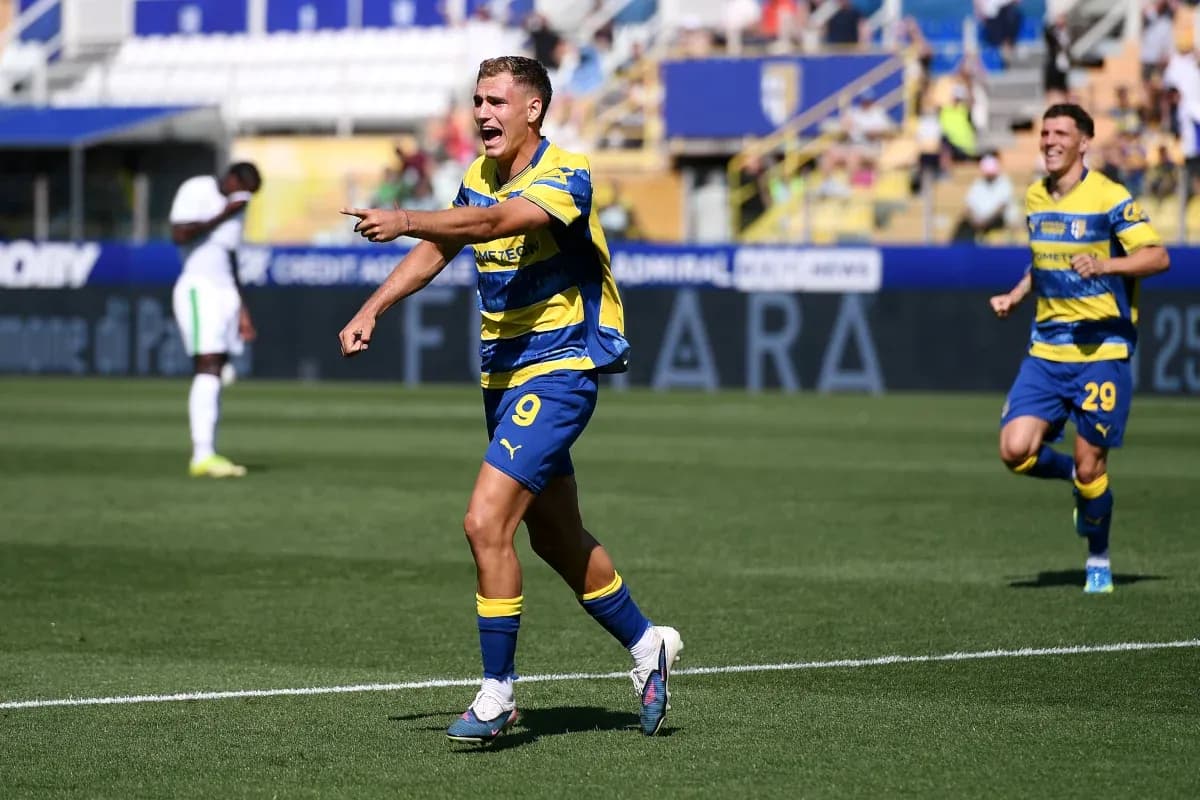
Stadio Ennio Tardini closed its Serie A season with a narrow, hard‑earned statement. Following this result, Parma’s 1–0 win over Sassuolo locked in a campaign defined by defensive grit and attacking scarcity, while underlining how fine the margins remain for a Sassuolo side that finished higher in the table but never fully solved its structural leaks.
I. The Big Picture – Two Mid‑Table Identities Collide
This was not a dead rubber so much as a mirror. Parma came into the final round 13th, finishing with 45 points and a goal difference of -18, built on just 28 goals scored and 46 conceded overall. At home they had been functional rather than fluent: 5 wins, 6 draws, 8 defeats, with 16 goals for and 25 against, an average of 0.8 goals scored and 1.3 conceded at Stadio Ennio Tardini.
Sassuolo, 11th with 49 points and a goal difference of -4 (46 scored, 50 conceded overall), arrived with a more expansive but volatile profile. On their travels they won 5, drew 5 and lost 9, scoring 21 and conceding 24 away, an average of 1.1 goals for and 1.3 against. In many ways, this fixture was the collision of Parma’s low‑scoring, control‑first approach with Sassuolo’s higher‑ceiling, higher‑risk model.
The formations captured that contrast. Carlos Cuesta doubled down on Parma’s season‑long backbone, rolling out the familiar 3‑5‑2: E. Corvi behind a back three of A. Circati, M. Troilo and L. Valenti, with a broad five‑man midfield and a hard‑working front two of M. Pellegrino and D. Mikolajewski. Fabio Grosso’s Sassuolo stayed loyal to their 4‑3‑3, with S. Turati in goal, a back four headed by J. Idzes, a midfield triangle anchored by K. Thorstvedt, and a front line of D. Berardi, A. Pinamonti and A. Lauriente.
II. Tactical Voids – What Was Missing
Both benches were shaped by absences that subtly redirected the game’s rhythm.
Parma were stripped of a whole tier of creative and rotational options: A. Bernabe (muscle injury), B. Cremaschi (knee), N. Elphege (thigh), M. Frigan (knee), J. Ondrejka (leg), G. Oristanio (knee) and G. Strefezza (ankle) were all listed as missing for this fixture. For a side that had already failed to score in 16 league games overall, losing so many ball‑carrying and final‑third profiles forced Cuesta to trust the structure rather than the spark. The 3‑5‑2 became about solidity, second balls and set‑piece threat, with Pellegrino’s physicality and foul‑drawing (71 fouls drawn this season) a key route to territory.
Sassuolo’s absences were more concentrated in depth and defensive rotation: D. Bakola and S. Walukiewicz (both leg or knee issues), D. Boloca and F. Cande, E. Pieragnolo, plus long‑term inactive defenders F. Romagna and A. Vranckx all sat out. Grosso still fielded his core attacking trident, but the missing defensive options reduced his ability to reshuffle if Parma’s front two started to pin the back line.
Disciplinary history also hung over the contest. Parma’s season card profile shows a team that lives on the edge late on: yellow cards spike between 46–60 minutes and 76–90 minutes, each with 21.21% of their total cautions, and they have seen red in multiple windows, including 31–45, 61–75, 76–90 and 91–105. M. Troilo himself arrived as Serie A’s top red‑carded player, with 1 straight red and 1 second yellow across the season. Sassuolo, meanwhile, are another side that tends to fray late, with 28.92% of their yellows coming from 76–90 minutes and red cards also clustering in the 46–60 and 76–90 windows. This was always likely to be a match where composure in the final quarter‑hour mattered as much as any tactical tweak.
III. Key Matchups – Hunter vs Shield, Engine Room vs Enforcer
The headline duel was clear: “Hunter vs Shield” pitted two of the league’s most influential forwards against back lines with contrasting profiles.
For Parma, Mateo Pellegrino has been their focal point all season. With 9 goals and 1 assist in 37 appearances, he is not a prolific scorer by elite standards, but he is a volume duelist (546 duels, 233 won) and a relentless outlet. His 5 yellow cards underline how combative he is, and his 5 blocked shots show a willingness to defend his own box. Against Sassuolo’s away defence that concedes 1.3 goals per game on their travels, Pellegrino’s job was to pin J. Idzes and T. Macchioni, turn hopeful clearances into platforms, and drag the visitors into uncomfortable, second‑ball territory.
On the other side, A. Pinamonti arrived with 9 league goals and 3 assists, backed by 57 shots (30 on target) and 17 key passes. Yet beneath those numbers lies inefficiency and volatility: he missed 1 penalty this season and collected both 2 yellow cards and 1 red. Up against Parma’s back three, who concede 1.2 goals per game overall and have kept 13 clean sheets in total, Pinamonti needed service and space that never fully materialised.
The creative axis tilted green and black. A. Lauriente has been one of Serie A’s premier creators this season, with 9 assists and 7 goals, plus 54 key passes and 80 attempted dribbles (29 successful). His duel with Parma’s wide midfielders, particularly E. Valeri and S. Britschgi, was the natural fault line: if Lauriente could isolate a defender, Sassuolo’s 4‑3‑3 could stretch Parma’s 3‑5‑2 into a back five and create lanes for cut‑backs to Berardi and Pinamonti.
In the “Engine Room”, K. Thorstvedt’s presence at the base of Sassuolo’s midfield was critical. He brings 4 goals, 4 assists, 1055 passes at 82% accuracy, and a disruptive edge with 44 tackles, 13 blocked shots and 32 interceptions. But he also carries disciplinary risk: 9 yellow cards across the campaign. Up against Parma’s central trio, anchored by H. Nicolussi Caviglia and flanked by C. Ordonez and M. Keita, Thorstvedt had to walk the line between breaking up counters and avoiding the kind of card that could tilt control.
Behind him, Nemanja Matic loomed as the archetypal “enforcer” option from the bench. With 1721 passes at 86% accuracy, 43 tackles, 10 blocks and 28 interceptions, plus 7 yellow cards and 1 red, he is both metronome and risk. His profile embodies Sassuolo’s season: technically assured, structurally useful, but always flirting with disciplinary turbulence.
IV. Statistical Prognosis – Why a 1–0 Made Sense
Following this result, the 1–0 scoreline felt like the logical intersection of both teams’ seasonal DNA.
Parma, who average just 0.7 goals scored overall but concede 1.2, are built for narrow margins. Their 13 clean sheets and 16 matches failing to score point to a side more comfortable in a chess match than a shootout. With Corvi protected by a settled back three and wing‑backs who naturally drop deep, their game plan was to compress space, frustrate Sassuolo’s wide threats, and trust that one moment – often via Pellegrino’s hold‑up play or a set piece – would be enough.
Sassuolo, with 1.2 goals scored and 1.3 conceded overall, came in as the more “xG‑friendly” side: they create more, but they also allow more. Their biggest away win (0–3) and heaviest away defeat (2–0) capture that volatility. In a match where Parma were content to cede certain zones and deny central combinations, Sassuolo’s attacking trio were forced into lower‑probability shots and crosses rather than the clean, cut‑back chances that usually inflate their Expected Goals.
Layer on the disciplinary tendencies – both teams prone to late yellow cards, both with key figures among the league’s top red‑card offenders – and a tight, attritional contest was always the likeliest outcome. Parma’s ability to keep 5 home clean sheets across the season, combined with Sassuolo’s 6 away games failing to score, tilted the statistical prognosis toward a low‑scoring home result rather than an open exchange.
In the end, Parma’s 3‑5‑2 did exactly what their season numbers said it would: it narrowed the game to a single decisive moment, protected the lead with a compact block, and leaned on the physical, combative presence of Pellegrino and the composure of Troilo and Valenti. Sassuolo’s 4‑3‑3, rich in talent but undermined by structural fragility and away inconsistency, once again found itself creating less than its frontline promised.
At Stadio Ennio Tardini, the final whistle confirmed more than just a 1–0. It confirmed that, for all the flair of Lauriente and Berardi and the industry of Pinamonti, this campaign’s last word between these two belonged to Parma’s system: austere, disciplined, and just sharp enough in both boxes to bend the margins their way.