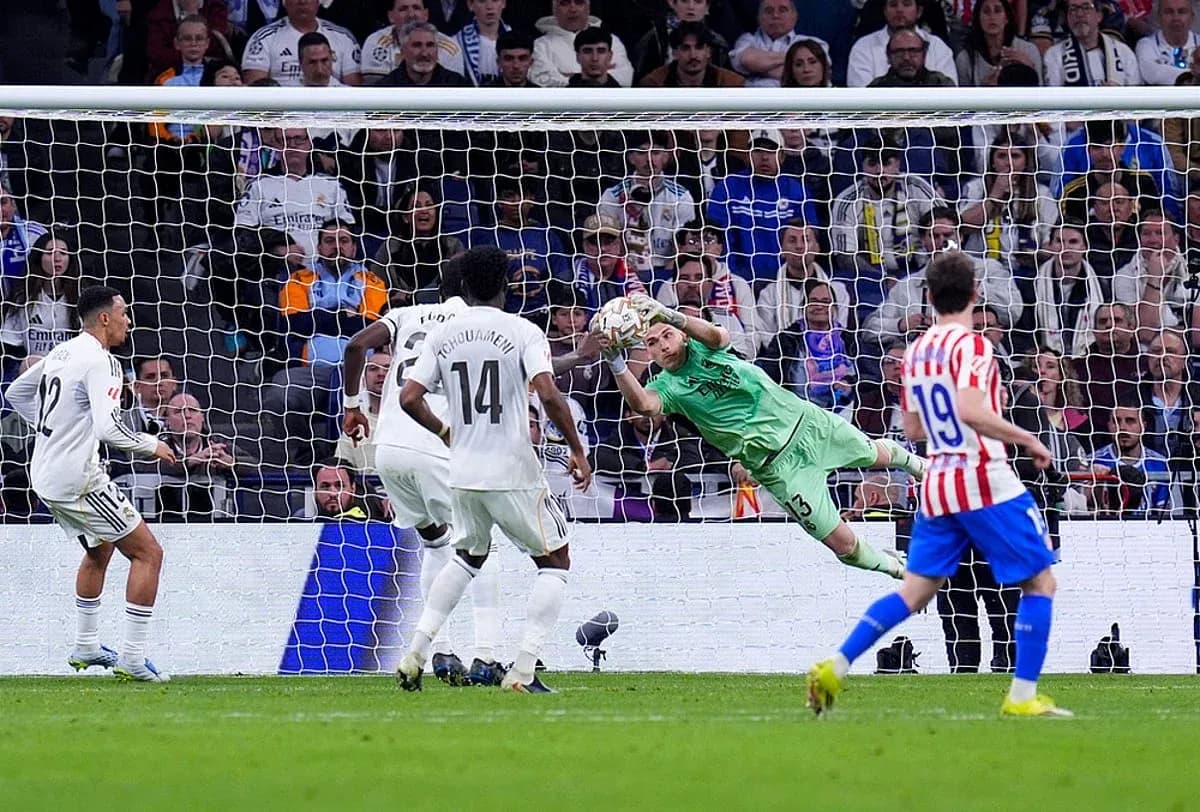
Sevilla vs Real Madrid: Late-Season Clash Highlights
The Ramón Sánchez Pizjuán felt like a stage for a late-season ambush, but the script stayed faithful to the league table. Following this result, Sevilla remain a mid-table side trying to redefine themselves, while Real Madrid, 1-0 winners on the night, continue to look every inch a Champions League-bound machine.
I. The Big Picture – contrasting seasonal DNA
This was Round 37 in La Liga, and the table framed the story even before kick-off. Sevilla sit 13th with 43 points, their goal difference at -13, a neat reflection of a season spent oscillating between survival concerns and brief surges of form. Overall they have 12 wins, 7 draws and 18 defeats from 37 matches, scoring 46 and conceding 59. At home, the numbers are modest: 7 wins, 4 draws and 8 losses from 19 games, with 24 goals for and 25 against. An average of 1.3 goals scored and 1.3 conceded at home underlines their status as neither fortress nor freefall.
Real Madrid arrive from a different universe. They are 2nd with 83 points, and their goal difference of 40 is built on 73 goals scored and just 33 conceded overall. Across 37 matches they have 26 wins, 5 draws and 6 defeats. On their travels they have been relentless: 11 away wins, 4 draws and only 4 losses, scoring 32 and conceding 19, with an away scoring average of 1.7 and only 1.0 against. This is a side that habitually imposes itself.
Those seasonal identities were mirrored in the lineups. Luis Garcia Plaza rolled out a pragmatic 4-4-2: O. Vlachodimos behind a back four of J. A. Carmona, Castrin, K. Salas and G. Suazo; a workmanlike midfield of R. Vargas, N. Gudelj, D. Sow and Oso; and a front two of A. Adams and N. Maupay. It was a shape built for compactness and counters.
Alvaro Arbeloa answered with Real Madrid’s 4-3-3, a statement of superiority. T. Courtois in goal; D. Carvajal, A. Rudiger, D. Huijsen and F. Garcia in defence; a midfield trio of T. Pitarch, A. Tchouameni and J. Bellingham; and a front line that reads like a threat in capital letters: B. Diaz, K. Mbappe and Vinicius Junior.
II. Tactical voids – absences and discipline shadows
Both squads were scarred by absences that shaped the tactical canvas. Sevilla were again without M. Bueno (knee injury) and Marcao (wrist injury), robbing Garcia Plaza of an extra layer of defensive rotation and height. It reinforced the decision to trust Castrin and K. Salas centrally, while leaning on J. A. Carmona’s aggression and G. Suazo’s energy wide.
Real Madrid’s missing list was longer and more nuanced. Eder Militao (muscle injury) and F. Mendy (muscle injury) forced a reconfiguration of the back line, with D. Huijsen stepping in as the left-sided centre-back and F. Garcia holding the left-back role. In midfield and attack, the absence of F. Valverde (head injury), A. Guler (muscle injury) and Rodrygo (knee injury) trimmed Arbeloa’s options between the lines, pushing more creative responsibility onto J. Bellingham and the wide forwards. A. Lunin’s illness mattered less on the night with Courtois fit, but it underlined how thin the margin of error in goal could have been.
From a disciplinary perspective, Sevilla entered with a clear edge of risk. Their season card profile shows a pronounced late-game spike: 19.81% of their yellow cards arrive between 76-90 minutes and another 20.75% between 91-105, part of a broader pattern of emotional matches. Red cards are spread across 16-30, 31-45, 61-75 and 76-90, each band at 20.00% of their total reds, with one more red in the undefined bucket. J. A. Carmona, the league’s top yellow-card collector with 13 bookings, and L. Agoume, on 11 yellows, embody that edge.
Real Madrid’s yellows peak slightly earlier, with 22.06% between 61-75 minutes and 19.12% between 31-45, but they also show a worrying habit of late reds: 28.57% of their red cards come between 91-105 minutes and another 28.57% in the undefined range, with further reds in 31-45, 61-75 and 76-90. D. Huijsen, who has already seen red once this season, carries that latent risk at the heart of their defence.
III. Key matchups – Hunter vs Shield, Engine Room battles
The headline duel was always going to be Kylian Mbappe against Sevilla’s defensive structure. Mbappe’s La Liga season is a catalogue of sustained menace: 24 goals and 5 assists in 30 appearances, from 105 shots (61 on target). His penalty record is potent but imperfect, with 8 scored and 1 missed, a reminder that even from the spot he is not automatic. On their travels, Real Madrid’s 1.7 goals per game meet a Sevilla home defence conceding 1.3 per match; in total, Madrid’s 73 goals against Sevilla’s 59 conceded tells you where the balance of power lies.
For Sevilla, A. Adams is their spear. With 10 league goals and 3 assists, plus 48 shots and 30 on target, he is the reference point for transitions. He has also scored 3 penalties from 3, a perfect record that contrasts with Mbappe’s single miss and offers Sevilla a rare area of parity. His physical profile and aerial presence, combined with N. Maupay’s movement, were designed to test A. Rudiger and D. Huijsen in duels.
The “Engine Room” confrontation ran through J. Bellingham and A. Tchouameni against Sevilla’s central trio of N. Gudelj and D. Sow, supported by Oso. Bellingham’s role as a high-running, late-arriving midfielder dovetailed with Real Madrid’s season-long trend of controlling central zones, while Tchouameni’s screening allowed full-backs Carvajal and F. Garcia to push on. Sevilla’s response was to compress space, with Gudelj anchoring and Sow shuttling, while R. Vargas drifted inside from the right to connect with Adams and Maupay.
On the flanks, Vinicius Junior and B. Diaz pinned back J. A. Carmona and G. Suazo. Vinicius’s 16 goals, 5 assists and 87 successful dribbles from 195 attempts this season illustrate the constant one‑v‑one threat. His penalty record – 4 scored, 1 missed – adds another layer of danger when he drives into the box. Carmona, who has made 64 tackles, 9 blocks and 38 interceptions, was asked to walk the tightrope between aggression and caution, knowing another yellow would not be a surprise.
IV. Statistical prognosis – xG logic and defensive steel
Even without explicit xG numbers, the season data sketches a clear expected-goals hierarchy. Real Madrid’s overall scoring average of 2.0 goals per game, backed by 14 clean sheets in total (6 at home, 8 away), points to a side that not only creates high-quality chances but also denies them. They have failed to score only 4 times all season, away and at home combined.
Sevilla, by contrast, average 1.2 goals overall, with 6 clean sheets and 9 matches where they have failed to score. Their home attack at 1.3 goals per game meets a Real Madrid away defence conceding just 1.0 on their travels, a matchup that statistically tilts heavily towards Madrid’s “Shield” winning most duels.
Following this result, the narrative fits the numbers: Real Madrid’s superior shot quality, depth of attacking talent and defensive solidity were always likely to grind out at least a one-goal margin, while Sevilla’s reliance on Adams, Vargas and set-pieces was never quite enough to bend the probabilities. In a season defined by data-backed dominance, a 1-0 away win in Sevilla feels less like a twist and more like the inevitable final chapter of a familiar story.