Spain vs Austria: World Cup Round of 32 Tactical Analysis
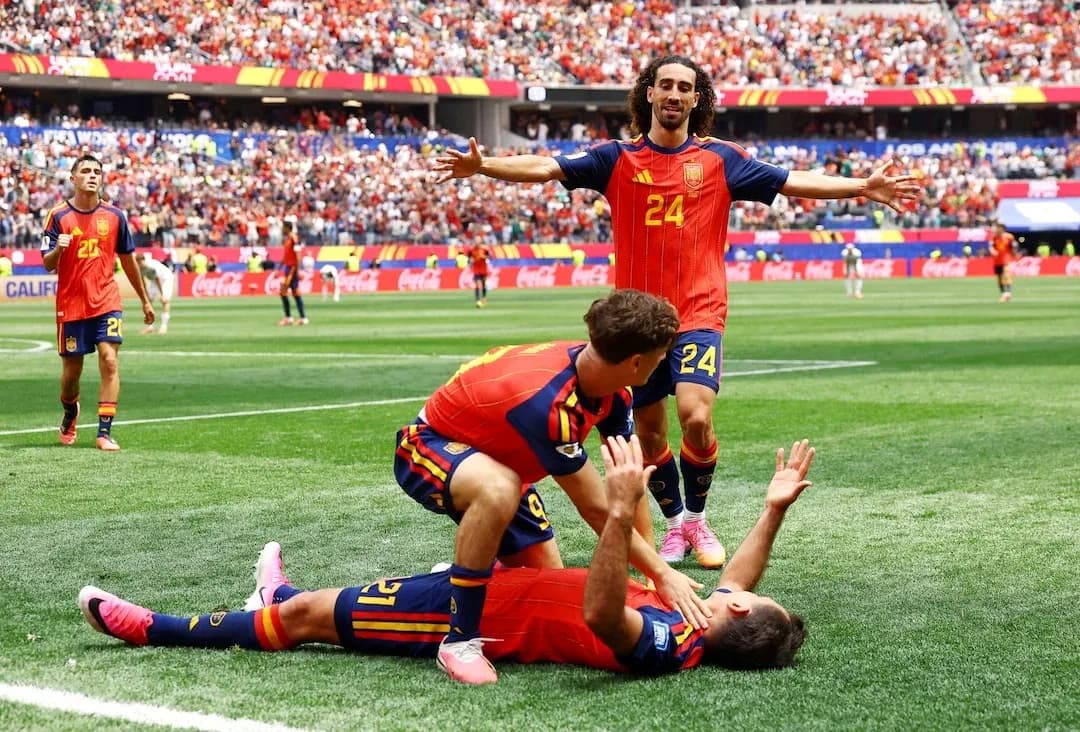
SoFi Stadium in Inglewood stages a World Cup Round of 32 clash that feels like a study in contrasts: Spain, all control and clean sheets, against an Austria side built on vertical chaos and emotional surges. The scoreboard already tells the story of the night – Spain 3, Austria 0 – but the squads and their seasonal arcs explain why this matchup tilted so decisively toward Luis de la Fuente’s team.
Spain arrive as the tournament’s metronome. Heading into this game they topped Group H with 7 points from 3 matches, scoring 5 and conceding none. Overall this campaign they had played 4 fixtures, winning 3 and drawing 1, with no defeats. At home they had played 3 times, winning 2 and drawing 1; away they had played once and won it. The attacking output was steady rather than spectacular: 8 goals in total, with 7 at home and 1 on their travels. The averages underscore their balance – 2.3 goals at home, 1.0 away, 2.0 overall – but the real headline is defensive: 0 goals conceded overall, 0 at home, 0 away. A perfect clean-sheet record across 4 matches, with 3 of those at home and 1 away, gave them an aura of inevitability.
De la Fuente doubled down on that identity with a 4-2-3-1 that looked like a hybrid of control and incision. Unai Simón anchored the back line behind a defence of Pedro Porro, Pau Cubarsí, Aymeric Laporte and Marc Cucurella. In front, Rodri and Pedri formed the double pivot, the brain and the metronome, while the line of three – Lamine Yamal on the right, Dani Olmo central, Álex Baena from the left – floated behind Mikel Oyarzabal as the nominal striker.
Oyarzabal’s presence at the tip of the structure is more than symbolic. Heading into this tie he was one of the World Cup’s most efficient forwards: 4 goals and 1 assist in total this campaign from 4 appearances, all as a starter, with 301 minutes played and an average rating of 7.7. Fifteen shots, 8 on target, show a player who finds good positions rather than spamming hopeful efforts. His 69 passes at 73% accuracy and 2 key passes hint at link play that fits Spain’s positional game. In a knockout setting, that blend of end product and intelligence turns him into the “Hunter” in this contest.
Behind him, the supporting cast is built to keep Spain’s defensive record intact while creating overloads. Rodri is the quiet axis, screening transitions and ensuring that Spain’s overall figure of 0.0 goals conceded per game remains more than a statistic – it is a structural choice. Pedri connects third-man runs and tempo changes, while Lamine Yamal offers width and one‑v‑one threat, and Olmo drifts between the lines to unbalance blocks. With Spain alternating between 4-3-3 and 4-2-3-1 this tournament (2 matches in each shape), this version leans slightly more aggressive without sacrificing control.
Austria, by contrast, come into the Round of 32 as a volatile proposition. They finished second in Group J with 4 points, a perfectly even goal difference of 0 – 6 scored, 6 conceded – from 3 group games. Overall this World Cup they had played 4 matches: 1 win, 1 draw, 2 defeats. At home they had played once and won it; on their travels they had played 3 times, drawing 1 and losing 2. The numbers sketch a side that can hurt you but is constantly exposed: 6 goals scored overall, split evenly with 3 at home and 3 away, with averages of 3.0 at home, 1.0 away, 1.5 overall. Against that, 9 conceded overall – 1 at home, 8 away – at an average of 1.0 at home, 2.7 on their travels, 2.3 overall. Clean sheets? None, home or away.
Ralf Rangnick keeps faith with his own 4-2-3-1, but its personality is very different. Alexander Schlager starts in goal behind a back four of Stefan Posch, Kevin Danso, David Alaba and Konrad Laimer. Nicolas Seiwald and Xaver Schlager form a double pivot that is more about aggression and pressing triggers than slow circulation. Ahead of them, Romano Schmid, Paul Wanner and Marcel Sabitzer support Michael Gregoritsch as the central forward.
The key tension in Austria’s squad lies in the defensive line. Posch, in particular, is a central figure in their disciplinary story. Across the tournament he has collected 2 yellow cards and also appears among the top red-card listings, underlining how often he walks the disciplinary tightrope. He has committed 7 fouls, drawn only 3, and yet remains central to their defensive work with 10 interceptions and 4 successful tackles. He is the “Shield” that must confront Oyarzabal’s movement and Spain’s intricate combinations down his flank – but a shield that often swings close to the edge of sanction.
Austria’s broader card profile reinforces that volatility. They have spread their yellows across the match, but 60.00% of them arrive between 76 and 90 minutes, a late-game surge of desperation and fatigue. Earlier, 20.00% come in each of the 0‑15 and 31‑45 windows, suggesting a team that can be over‑amped at kickoff and again as the half closes. Spain, by contrast, have only 2 yellow cards this campaign, both in extended phases: 50.00% between 46‑60 and 50.00% between 91‑105. It paints Spain as controlled and Austria as combustible.
In tactical terms, the “Hunter vs Shield” duel is clear. Oyarzabal, with 4 tournament goals, attacks a defensive unit that concedes 2.7 goals per game on their travels and has yet to keep a clean sheet anywhere. Spain’s home scoring rate of 2.3 per game meets an Austria away defence that has already suffered a 3-0 defeat on its travels – their heaviest loss of the campaign. The numerical intersection is brutal: a Spanish attack that is reliably productive against an Austrian back line that leaks, especially away from home.
The “Engine Room” matchup is subtler. Rodri and Pedri against Seiwald and Xaver Schlager is less about physical duels and more about rhythm. Spain’s overall form of DWWW suggests they are comfortable in tight games and in front; Austria’s WLDL form hints at swings of momentum. Austria have scored 3 at home and 3 away, but their inability to protect leads – with 9 conceded overall – means that if Spain establish their passing carousel, Rangnick’s midfield may be forced into the kind of late-game fouls that already define their yellow-card pattern.
From a statistical prognosis, the structural tilt was always toward Spain. A side that has not conceded in 4 matches, with 4 clean sheets overall and a defensive average of 0.0 goals against per game, facing an opponent that concedes 2.3 overall and has never kept a clean sheet, is heavily favoured over 90 minutes. Austria’s one bright spot is their perfect penalty record – 1 taken, 1 scored, 100.00% – but Spain’s discipline and control reduce the likelihood of this match being decided from the spot.
In the end, the 3-0 scoreline fits the underlying patterns. Spain’s squad is built for knockout control: a ruthless finisher in Oyarzabal, a stabilising axis in Rodri and Pedri, and a back four that has yet to be breached. Austria bring courage, verticality and flashes of quality, but their structural fragilities – especially on their travels – leave them exposed against a side as remorseless and balanced as Spain.