Vancouver Prepares for FIFA World Cup 2026: New Rules and Challenges
On Wednesday, Vancouver flips the switch.
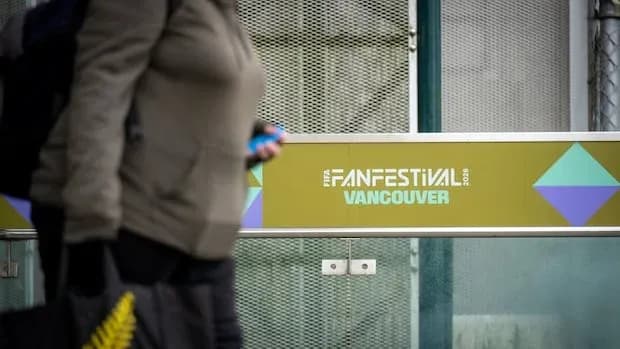
The city officially enters its FIFA World Cup 2026 “event period,” and with it comes a new playbook for how streets sound, look, and even who feels welcome in them. Temporary rules stretch from May 13 to July 20, 2026, reshaping daily life around B.C. Place and the FIFA Fan Festival site at Hastings Park.
At stake is a global showcase. Also at stake: who gets pushed aside to make room for it.
A City Rewritten for FIFA
The province expects roughly 350,000 visitors to pass through B.C. Place during the tournament. Vancouver is paying heavily to be on that stage, with total hosting costs projected between $532 million and $624 million for seven matches. The city’s share could climb as high as $281 million.
To protect that investment, city hall has armed itself with the FIFA World Cup 2026 Bylaw, a sweeping set of temporary powers over advertising, vending, noise, graffiti, and public space.
Inside a two-kilometre “controlled area” around B.C. Place and Hastings Park, the rules change.
Temporary event structures? Easier to build. Fan zones, stages, towers of signage, branded installations — the bylaw relaxes the usual red tape to get them up quickly.
Street vending and busking? Tightened. New restrictions clamp down on who can sell, perform, or advertise in the event zones. Unauthorized commercial signs that clash with FIFA’s branding can be stripped away at speed.
Noise? Expect more of it, and later. Extended allowances are designed to fit international broadcast windows and keep operations humming deep into the night.
Even trucks and delivery routes could be rerouted in parts of the downtown core, as security and logistics take priority over routine city rhythms.
For those who step out of line, bylaw officers have the ticket book ready: most common violations carry fines between $250 and $1,000. Enforcement will be shared between the City of Vancouver and the Vancouver Police Department.
On paper, it’s about creating a “clean, safe, and organized” experience for visitors and broadcasters. On the ground, it feels very different to those already living on the margins.
‘Privatization of Public Space’
Housing advocates and legal scholars see another story running beneath the bunting and broadcast trucks: a city being reordered around a private sports body, with the most vulnerable residents absorbing the shock.
“This is basically the privatization of public space,” said Penny Gurstein, professor emeritus at the University of British Columbia’s School of Community and Regional Planning. For people sleeping rough, she warned, the World Cup could mean being pushed from the few spaces they can still occupy.
“I think people should be worried, especially people who are experiencing homelessness, living on the streets,” she said.
The city rejects that reading. Officials insist the bylaw does not alter existing protections for unhoused residents. People experiencing unsheltered homelessness will still be allowed to put up temporary overnight shelters in parks where current bylaws already permit it, they say.
When it comes to “beautification,” a word that often rings alarm bells for displacement, the city stresses it is talking about infrastructure, not people: fixing sidewalks, sprucing up construction sites, tidying the visible bones of the city. That work, officials argue, has “no assessed impact on human rights.”
The concern from critics is less about the text of the bylaw and more about how it will be enforced once the eyes of the world arrive.
Celebration for Some, Disruption for Others
Margot Young, a constitutional law professor at UBC’s Allard School of Law, sees a deeply uneven tournament ahead.
“There will be disruption, but that disruption will be different for different groups in the city depending really upon their … social and economic status,” she said.
For wealthier residents, the World Cup lands as a festival. They can buy tickets, crowd into fan zones, and fold the disruption into a month-long party.
“For those with money, they maybe can go to games, they can take part in the parties,” Young said.
For residents at the bottom of the income ladder, the same event looks harsher. Street-level rules tighten. Public spaces are reordered to suit FIFA’s needs, not theirs.
“For individuals who are at the bottom of our ... income and wealth distribution … they will be moved around by the reordering of city space by FIFA,” Young said.
The city has promised “trauma-informed” enforcement — a softer, more aware approach to interactions with vulnerable people. Young is not convinced those assurances will hold once pressure mounts.
“There's no system in place to sort of monitor what is happening with respect to the vulnerable populations,” she said. No independent mechanism, no clear oversight, just a hope that good intentions survive contact with the realities of major-event security.
Services Stay, Scrutiny Builds
City officials insist that support will not disappear when the banners go up. Homelessness services and outreach programs, they say, will continue through the tournament.
Vancouver currently lists more than 1,500 shelter beds and about 8,100 supportive housing units, backed by outreach teams, hygiene facilities, and storage programs intended to give unhoused residents at least a foothold of stability.
Against that backdrop, the World Cup is being sold from city hall as a “once-in-a-generation opportunity” to showcase Vancouver — its skyline, its stadium, its ability to host the planet’s biggest sporting event.
The question now is what the rest of the world won’t see: who gets moved, who gets silenced, and who pays the hidden price for ninety minutes of football glory.