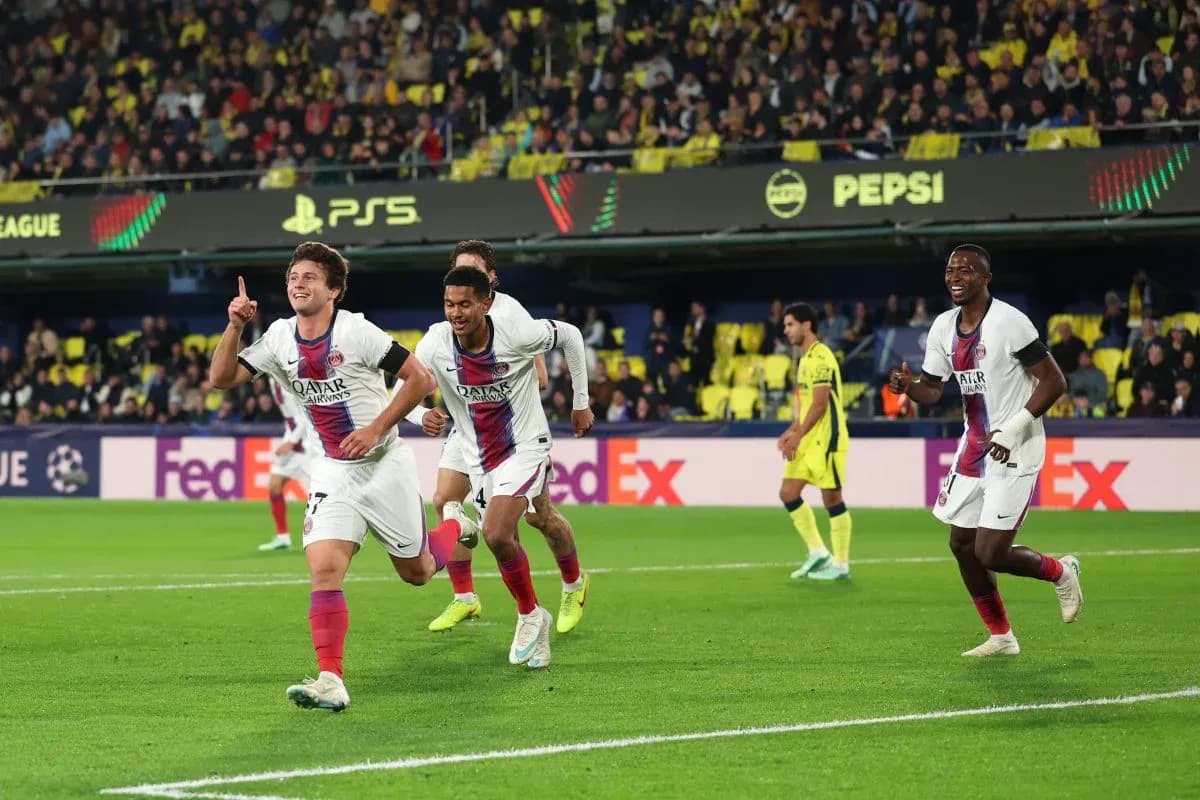
Villarreal vs PSG: A Clash of Continental Realities in UEFA Champions League
Under the floodlights of Estadio de la Cerámica, this League Stage - 4 clash in the UEFA Champions League brings together two clubs living very different continental realities. Villarreal arrive wounded and exposed, sitting 28th in the overall league table with 3 points from 4 matches, their goal difference a sobering -6 after scoring 8 and conceding 14. Paris Saint Germain, by contrast, travel as the competition’s early juggernaut: 1st in the standings, 12 points from 4, and a ruthless goal difference of +15 built on 20 goals for and just 5 against.
The numbers sketch a stark contrast in seasonal DNA. On their travels, Villarreal have lost both matches, scoring 5 and conceding 7, but at home they are paradoxically both more efficient and more fragile: 1 win and 1 defeat, 3 goals for and 7 against. Their overall attacking output – 2.0 goals per game – would be respectable in most campaigns, but it is undermined by a porous defence shipping 3.5 goals per game both at home and away. PSG, meanwhile, are operating at a different altitude entirely. They have won all 4 fixtures, scoring 10 at home and 10 away, with an identical attacking average of 5.0 goals per game in both dimensions. Defensively, they allow 1.5 goals per game at home and just 1.0 on their travels, a profile of a side that overwhelms opponents and rarely loses control.
Injuries, however, carve significant tactical voids into both squads. Villarreal are without I. Akhomach, J. Foyth and G. Moreno, all ruled out with muscle injuries. The absence of Moreno, in particular, strips Iñigo Pérez of his most proven penalty-box reference, forcing a reconfiguration of the front line. PSG’s list is even more star-studded: O. Dembélé (thigh), K. Kvaratskhelia (knee), Marquinhos (thigh) and N. Mendes (muscle) all miss out. That removes a senior centre-back leader, a dynamic left-back, and two of Luis Enrique’s most explosive one‑v‑one attackers. Yet the depth on display in the lineup suggests that while Villarreal lose irreplaceable focal points, PSG simply pivot to a different kind of menace.
Villarreal's Formation
Pérez answers the crisis with a 4-4-2 that leans on structure and work rate. P. Gulácsi anchors the side in goal, shielded by a back four of Carlos Romero, Renato Veiga, S. Mouriño and A. Freeman. In front of them, Santi Comesaña and C. Macia form the central hinge, with P. Gueye and T. Buchanan operating wider, tasked with doubling as auxiliary full-backs when PSG’s wide forwards drift inside. Up front, N. Pépé and Ayoze Pérez form a technically gifted but relatively lightweight pairing, better suited to counter-punching than to wrestling centre-backs in sustained aerial duels.
PSG's Formation
Luis Enrique stays loyal to his 4-3-3, even without some headline names. M. Safonov starts in goal, behind a back four of A. Hakimi, I. Zabarnyi, W. Pacho and L. Hernández – a blend of pace, aggression and ball-carrying that allows PSG to defend high and compress the pitch. The midfield triangle of João Neves, Vitinha and Fabián Ruiz is the engine room of this side: three press-resistant passers who can all dictate rhythm, break lines and counter-press immediately upon loss. Ahead of them, M. Akliouche and D. Doué flank Senny Mayulu in a fluid front three that can interchange, drop between the lines and attack the half-spaces.
The “Hunter vs Shield” battle here is almost inverted. Villarreal’s main hope of goals lies in the individual flashes of Pépé and Ayoze Pérez, but they are running into a PSG defence that, on their travels, concedes only 1.0 goal per game and has already produced a 0-6 away win as their biggest margin. Zabarnyi and Pacho, with Hernández tucking in aggressively from the left, will fancy their chances of squeezing the space for Villarreal’s forwards to turn, especially with Neves and Vitinha screening in front.
At the other end, the hunter is unmistakable: this PSG attack has produced 20 goals overall, and its most complete weapon so far has been Fabián Ruiz. With 4 goals and 1 assist in 4 appearances, 13 shots (7 on target) and 322 completed passes at 90% accuracy, he is not just a scorer but a metronome. D. Doué adds another layer of threat with 3 goals and 2 assists in just 218 minutes, plus a remarkable defensive contribution for an attacker: 6 tackles and 3 successful blocks. He is as likely to press and win the ball back as he is to finish the move. Akliouche, with 3 assists and 12 key passes, operates as the creative needle, stitching attacks together between the lines.
Engine Room Duel
The “Engine Room” duel will define how long Villarreal can stay afloat. Comesaña and Macia must contend with a PSG midfield that not only circulates the ball but also suffocates counter-attacks. Vitinha, with his constant movement, will look to drag Villarreal’s double pivot out of shape, opening corridors for Fabián Ruiz to step into shooting positions at the edge of the box. João Neves, tenacious and tidy, is the insurance policy: if Villarreal try to spring Pépé or Buchanan in transition, he will be the first line of counter-pressing resistance.
Discipline could play a subtle role. Villarreal’s yellow-card distribution shows a clear spike between 31 and 45 minutes, where 45.45% of their cautions arrive, and a further 36.36% between 61 and 90 minutes. That suggests a side that tends to lose composure as halves wear on, precisely when PSG’s ball circulation is most likely to stretch them. PSG themselves have picked up their only yellow cards late, between 61 and 75 minutes, but otherwise manage games with notable control. Importantly, PSG’s record from the spot is blemished: they have taken 1 penalty this campaign and missed it, a 0% conversion rate that underlines that, for all their dominance, they are not infallible in dead-ball pressure moments.
Statistically, the prognosis is brutal. Villarreal average 2.0 goals for but 3.5 against overall, with no clean sheets at home or away. PSG average 5.0 goals for and 1.3 against overall, with even their single clean sheet on their travels underscoring their capacity to dominate both ends of the pitch. Without Moreno, Villarreal’s attack loses its most natural finisher; without Dembélé and Kvaratskhelia, PSG simply shift responsibility onto Doué, Akliouche and Fabián Ruiz, all of whom are already among the league’s most productive players.
Tactically, Villarreal’s path to survival lies in compactness and verticality: the back four must stay narrow, the wide midfielders track PSG’s full-backs relentlessly, and Pépé must be ruthless on the break. Yet every statistical signpost points in the same direction: PSG’s superior structure, depth and form – 4 straight wins, a perfect 12 points, and a +15 goal difference – make them overwhelming favourites to dictate the narrative once more.