World Cup Portraits: A Look Behind the Lens
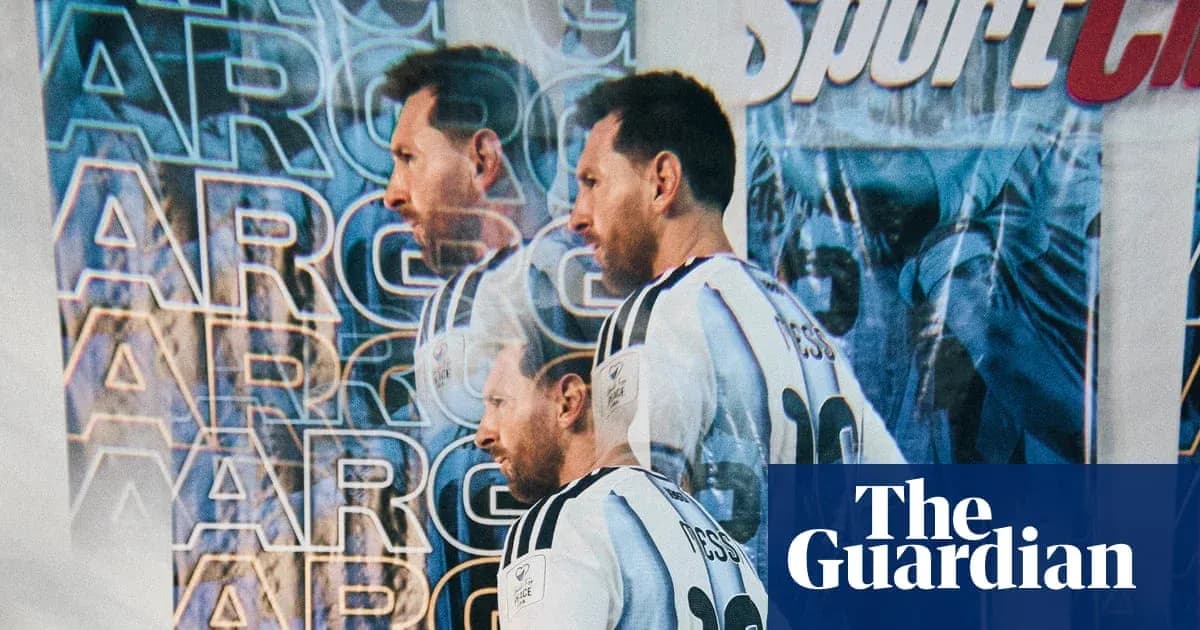
Lionel Messi doesn’t move. He fixes the lens with that familiar, unreadable stare, shoulders square, body locked, as if he’s bracing for a free-kick rather than a flash.
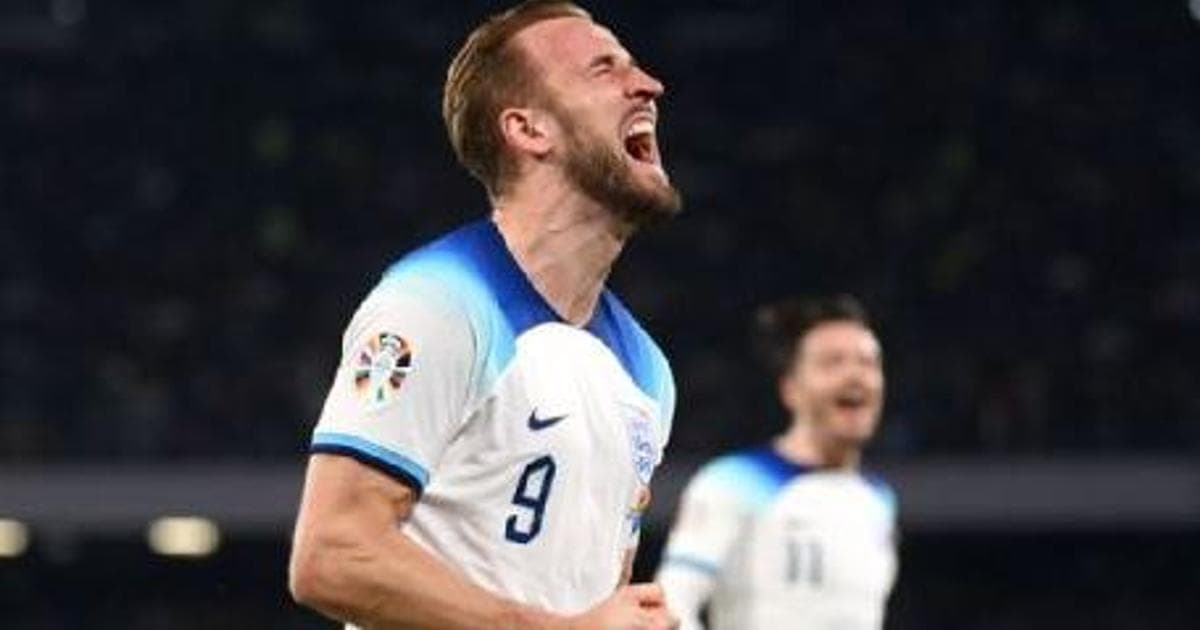
Marc Cucurella does the opposite. The Spain defender whips his hair, loosens his body and almost dances into frame. Diego Moreira, representing Belgium, lifts a forearm across his face to hide his eyes and reveal an unsettling tattoo. Harry Kane drops awkwardly on to one knee, caught between poise and discomfort.
Welcome to the World Cup’s quietest circus: the official portraits.
There are 1,248 players and 48 managers at this tournament. None of them gets a pass. Before a ball is kicked, every one of them shuffles into a makeshift studio, stands under the lights and gives the world their chosen face.
Production line of personalities
Getty Images, commissioned by Fifa, has spent recent weeks chasing teams around the globe to build this visual roll call. Two photographers are assigned to each squad, running what amounts to a high-speed conveyor belt of superstars. One set-up is plain, one more distinctive, so players and coaches can be spun in and out with minimal fuss.
The lighting is simple, almost austere: a big studio strobe with a softbox punching light into the subject, rim lights skimming the shoulders and jawline to carve out shape. No elaborate rigs, no Hollywood theatrics. Time doesn’t allow for that.
What the photographers do have is glass. Special lens filters turn those muted backdrops into something far richer, bending light into unpredictable smears and kaleidoscopic flares. That’s how you get the Messi image: the captain frozen in the middle, the world around him fractured and blurred, as if the noise of the World Cup is spinning while he stays still.
The Guardian’s Tom Jenkins knows this drill as well as anyone. Photographing elite footballers is rarely easy; doing it in a production line raises the stakes.
“With these kinds of shoots, you only get a few minutes with each player and you have to bash out various pictures and think incredibly quickly,” he says. You don’t have the luxury of coaxing out a personality over half an hour. You need an idea, then another, then another.
The brief has changed over the years. Once, portraits were stiff, school-photo affairs: straight shoulders, neutral expression, eyes front. Now, clubs and sponsors have trained a generation of players to perform for the camera. The job is to catch both sides – the clean headshot and the more expressive, emotive version that might actually tell you something.
“A lot of players will have their own poses and goal celebrations already but you’ve also got to have a list in mind,” Jenkins explains. You can’t wait for inspiration. You bring it with you.
Superstars under orders
For all their fame, the power dynamic flips the moment players step into the light. The studio belongs to the photographer. The framing, the timing, the rhythm – all dictated from behind the lens.
“The interesting thing is that you’re in control of these superstars and every aspect of the shoot,” Jenkins says. That control comes with pressure. There is no time to fiddle with cables or tweak settings once a player walks in. Everything has to be tested, locked, ready. When Messi appears, you cannot be troubleshooting a softbox.
Even the most recognisable faces carry name cards, Messi included. It’s not for the photographers. It’s for the vast editing chain that follows, where thousands of images will be sorted, tagged and shipped to broadcasters, federations and media outlets around the world. No one wants to be the person who mislabels the greatest player of his generation.
Players now understand exactly what these images can do. They check the monitor, ask for another frame, adjust their hair, their collar, their expression. Instagram has taught them the value of a single shot.
“Most football players are very aware of their own image these days and they know how powerful it can be, especially through Instagram,” Jenkins says. Many have already been through the corporate machine: Eberechi Eze in Burberry campaigns, Declan Rice fronting L’Oréal. The camera is no longer an intruder; it’s part of the job.
Some enjoy it. Some endure it. Either way, the pictures travel.
England’s close-up – and the internet’s verdict
England’s squad discovered the flip side of that exposure. Declan Rice’s sunburn became a talking point, his reddened skin clashing with the polished studio sheen. Anthony Gordon’s portrait sparked a wave of comparisons to Princess Diana. Dean Henderson’s heavy side-eye unsettled more than a few viewers.
The reaction was merciless. That’s the modern equation: one flash, one frame, and a global audience ready to dissect every detail.
Yet those same sessions produced some of the most striking images of Jude Bellingham and his team-mates. With the right filters and angles, the photographers pulled drama out of simple set-ups – proof that you don’t always need a naturally charismatic subject if you can bend the light around them.
Bielsa, the reluctant subject
And still, the standout image of this World Cup cycle doesn’t feature a player at all. It belongs to Marcelo Bielsa.
At Uruguay’s base in Cancún, Mexico, Michael Regan set up his kit and waited for the famously intense Argentinian coach. What he got was resistance. Bielsa refused to play along with the conventions of the shoot. He did not square his shoulders, did not lift his chin, did not offer the lens a neat, marketable expression.
Instead, he looked down at his feet.
The resulting portrait is jarring. In a gallery of front-facing, camera-ready professionals, Bielsa turns away, lost in his own thoughts, the line of his back and the tilt of his head saying more than any forced smile could. It’s an image that speaks of stubbornness, privacy, maybe even disdain for the circus around him.
“I’m not a model,” he protested afterwards. He didn’t need to be. The refusal became the statement.
For Jenkins, that is exactly the point. The best portraits don’t flatter; they reveal. They catch something true in the split second between instruction and instinct.
“Ultimately I think the best portrait is one that displays the individual’s personality, and that’s why the Bielsa picture is so brilliant,” he says. “It’s perfectly him.”
On a World Cup stage built on spectacle and spin, one man staring at his own shoes might just be the most honest image of all.