Scaloni's Intensity Philosophy Ahead of Argentina vs Austria
In the heavy Texas heat, with Argentina tuning up for a decisive Group J date in Dallas, Lionel Scaloni chose calm over conflict.
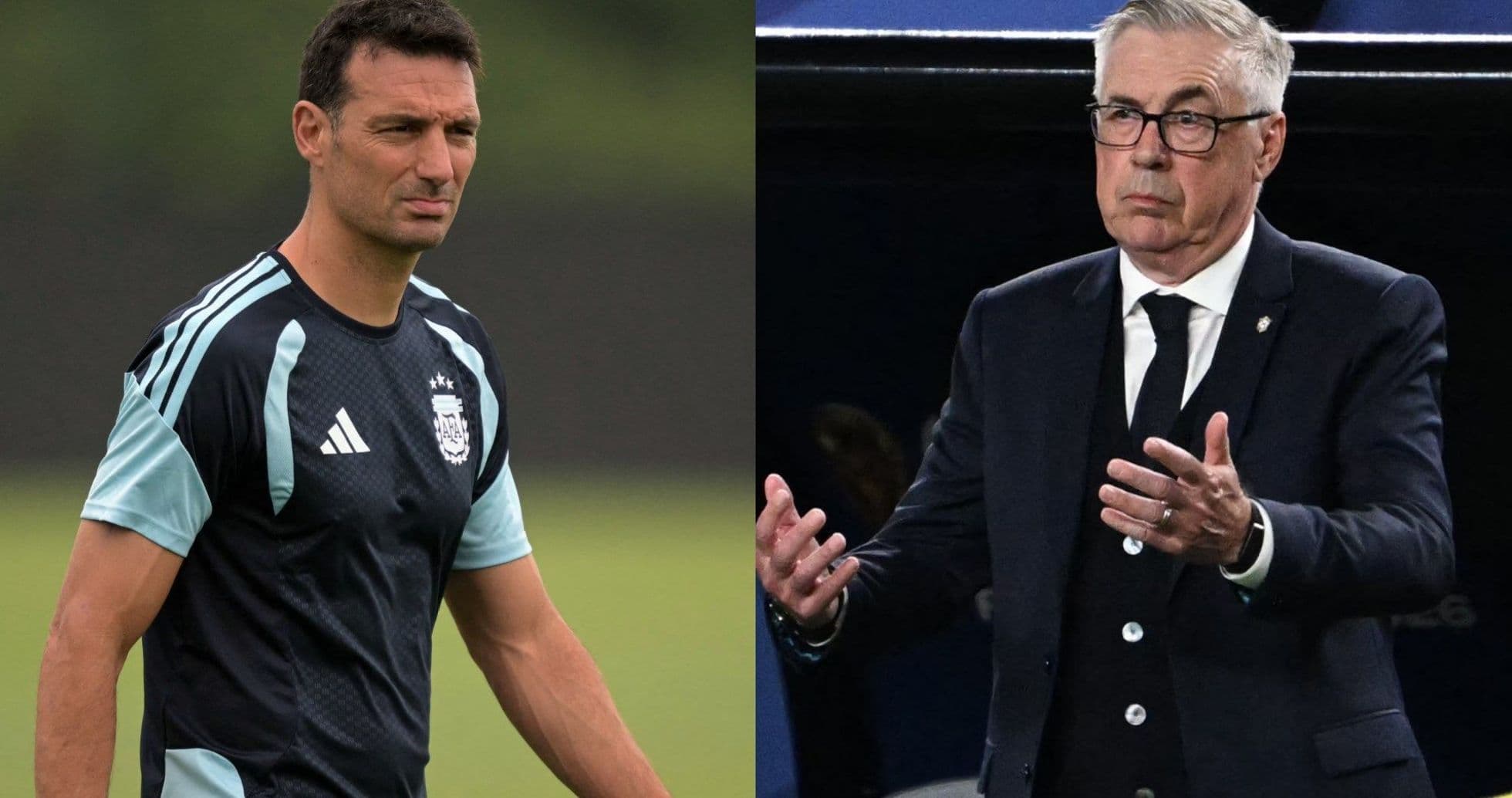
Carlo Ancelotti had lit the fuse earlier in the week, noting that the world champions are not a side built on relentless, high-octane pressing. In a football landscape obsessed with sprints, counter-pressing charts and “intensity” metrics, the remark was enough to stir debate over whether Argentina truly empty the tank without the ball.
Scaloni refused to bite.
“I take it in a good way. He spoke highly of us, he didn't speak badly,” the Argentina coach said, brushing away any hint of friction. Ancelotti’s blend of Spanish, Italian and Portuguese, Scaloni suggested, might have muddied the nuance. The meaning, in his mind, was clear. “I understood it as a compliment and not a criticism. I'm very sure of that.”
No feud. No drama. Just a coach doubling down on his own idea of what modern intensity looks like.
Scaloni’s idea of intensity
Scaloni used the moment to lay out his philosophy. The obsession with charging around the pitch, he argued, misses the point of what wins at the highest level.
You can run. Or you can run with purpose.
“You have to see what is understood by intensity,” he said. For him, the game starts with what happens when his team do not have the ball. “When you don't have the ball, you have to try to ensure they don't hurt you.”
Few sides, he noted, actually commit to full-throttle, man-to-man pressing across the pitch. At this level, coaches fortify the middle third. That is where matches tilt, where control is won or lost. Teams, especially in tournament football, choose structure over chaos.
“Teams become strong in the middle of the pitch and that's where the game is being defined,” Scaloni explained. Systems and formations are tools, not dogma. “Whether you win with three forwards or defend with three or five at the back, the reaction when losing the ball is what matters.”
For Argentina, intensity is not measured by the height of the press. It is measured by how quickly they snap back into shape, how ruthlessly they close space when possession turns over, how little they allow opponents to breathe between the lines.
A champion side, refreshed
Almost three and a half years on from lifting the trophy in Qatar, the question hangs over every champion: have they lost their edge?
Scaloni insists this group has not. The core remains, but the bench looks different. Younger faces like Nico Paz and Giuliano Simeone have been folded into the squad, not as decoration but as genuine tactical options.
He sees them as fresh profiles, players who can tilt a match in a different direction, especially when Argentina need to go more direct and vertical in attack. The idea is clear: same hunger, more variety.
“The team is on the right track even though three and a half years have passed,” he said. “They haven't shown signs of taking their foot off the gas and that’s why they are here.”
He did not hide the toll of the calendar. No one, he admitted, arrives at a major tournament at a perfect 100 per cent after such a grind of fixtures. Yet there was one key line that will soothe Argentine nerves: all 26 players are fit and ready to play.
“There is always room for improvement and they understood the message very well,” Scaloni added. The standard has been set. The message, he believes, has landed.
Austria next, and no margin for error
All of that talk now meets reality in Dallas.
Argentina and Austria sit level on three points in Group J, and the stakes are obvious. A win for the world champions would all but lock up top spot and clear their path into the knockout rounds. Anything less, and the final matchday turns edgy.
Austria arrive as one of the early eye-catchers of the group, organised and ambitious enough to trouble anyone who drifts even slightly below their level. This is exactly the sort of opponent that tests Scaloni’s theory of control over chaos: strong in the middle, quick in transition, ready to punish any lapse when the ball is lost.
Across the bracket, Brazil have already bought themselves some breathing space. Ancelotti’s side brushed aside Haiti 3-0, a result that leaves them needing only a draw against Scotland to book their place in the round of 32.
The narrative threads are hard to ignore. Ancelotti’s Brazil cruising, Scaloni’s Argentina grinding through the heat and the scrutiny, both coaches shaping tournament favourites in their own image.
Now comes the real examination: can Argentina’s measured, intelligent intensity carry them past a rising Austria and back to the commanding position a world champion expects to occupy?