AC Milan's Dominance Over Lecce: A Tactical Breakdown
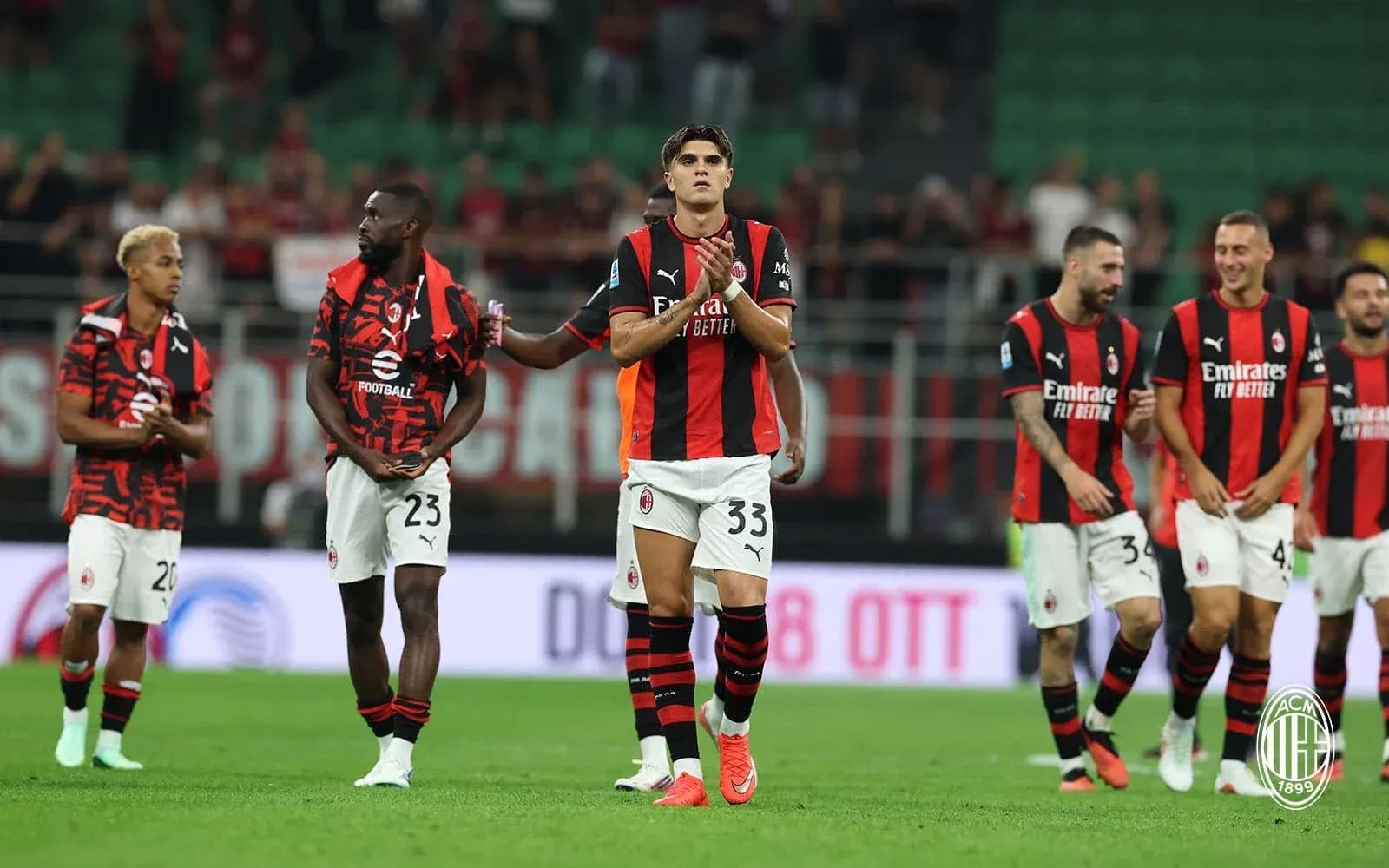
Under the San Siro lights, this was billed as a clash between a side refining a new identity and one still searching for a stable one. By full time, AC Milan’s 3-0 win over Lecce felt less like a contest and more like a statement of what Ruben Amorim’s project is becoming: a controlled, aggressive, structurally coherent machine that is beginning to match numbers with narrative.
I. The Big Picture – Milan’s evolving DNA vs Lecce’s volatility
Heading into this game, Milan were already building a compelling statistical profile. Fifth in Serie A with 11 points from 5 matches, they were unbeaten overall, with 3 wins and 2 draws and a goal difference of 6, derived from 10 goals scored and 4 conceded. At home, the numbers were even more emphatic: 2 wins from 2, 5 goals scored and none conceded, underpinned by an average of 2.5 home goals for and 0.0 against.
Amorim’s commitment to a 3-4-2-1 was total; Milan had used that shape in all 5 league fixtures. The system’s hallmarks were clear again here: a back three of M. Gila, K. De Winter and S. Pavlovic stepping high, wing-oriented width from P. Estupinan and S. Chukwueze, and dual creators behind a single reference point in G. Ramos, supported by C. Pulisic and A. Saelemaekers.
Lecce arrived in Milano with a very different energy. Twelfth in the table with 6 points from 5 matches, their season had been streaky: 2 wins, 3 defeats, and a negative goal difference of -5, from 5 goals scored and 10 conceded. On their travels, they had 1 win and 2 losses, with 2 goals scored and 4 conceded, an away average of 0.7 goals for and 1.3 against. The 4-3-3 chosen by Eusebio Di Francesco was only one of three systems they had already used in the league, a sign of tactical searching rather than settled identity.
II. Tactical Voids – Absences and discipline
Lecce’s squad arrived with notable absences that chipped away at their attacking depth. M. Berisha, O. Gandelman, W. Geubbels and Tiago Gabriel were all ruled out as missing this fixture, through a mix of lacking match fitness, inactivity and injuries. For a side that had already failed to score in 3 of their 5 league matches overall, losing options in the final third was more than an inconvenience; it was a structural problem.
Milan, by contrast, had a full bench of variety. From the experienced R. Loftus-Cheek and the dynamism of Y. Musah in midfield to the youthful spark of F. Camarda and Diego Moreira in attack, Amorim had levers to pull in every line.
Disciplinary trends also framed the contest. Milan’s yellow cards this season had been concentrated in the second half: 25.00% of their bookings between 46-60 minutes, another 25.00% between 61-75, 25.00% from 76-90 and 25.00% in added time up to 105 minutes. It painted a picture of a side that defends aggressively once the game opens up but rarely loses control. They had no reds in the league.
Lecce, by contrast, were more scattershot. Their yellows were spread across all phases, with 10.00% in the opening 15 minutes, 20.00% in each of the 31-45, 46-60 and 76-90 windows, and another 20.00% deep into added time. Danilo Veiga, starting at right-back, embodied that edge: 3 yellow cards in 5 appearances and also listed among the top red-carded profiles in the league context, a defender who lives on the disciplinary edge without yet tipping over it in this dataset.
III. Key Matchups – Hunter vs Shield, and the engine rooms
The “Hunter vs Shield” duel was etched across Milan’s attacking band and Lecce’s fragile defensive record. Overall this campaign, Lecce had conceded 10 goals in 5 matches, an average of 2.0 per game. Away, they had shipped 4 in 3, at 1.3 per match. Milan, meanwhile, were scoring 2.0 goals per game overall and 2.5 at home.
Up front, G. Ramos was the nominal spearhead, but the real threats were distributed. A. Rabiot, starting in the midfield line, had already scored 2 goals and provided 2 assists in the league, while Diego Moreira, waiting on the bench, had 3 goals from just 127 minutes, making him one of Serie A’s most efficient finishers so far. Add C. Pulisic’s movement between the lines and the wide threat of S. Chukwueze – 2 assists and 10 key passes in the league – and Milan had multiple “hunters” arriving from different zones.
The shield on Lecce’s side was supposed to be the back four of D. Veiga, K. Gaspar, J. Siebert and A. Gallo, protected by a midfield trio of S. Pierotti, I. Ilic and Y. Maleh. But the numbers told a harsher story: Lecce had yet to keep a clean sheet at home and had only 1 clean sheet on their travels. Their biggest away defeat, 3-0, was a warning that they could collapse if the first line of pressure was broken.
In the engine room, two duels defined the narrative. For Milan, Rabiot and L. Modric orchestrated the tempo. Rabiot’s 209 completed passes at 88% accuracy and 4 key passes in the league underlined his role as both metronome and line-breaker. Opposite them, I. Ilic was Lecce’s most refined passer, with 141 passes at 89% accuracy and 2 assists, tasked with threading transitions into the front three of L. Coulibaly, N. Stulic and J. Monteiro.
Coulibaly, officially listed as a forward here but operating with a midfielder’s work rate, was Lecce’s talisman: 2 goals, 1 assist, 50 duels contested and 27 won. His job at San Siro was double: carry their counter-attacking threat and help Ilic resist Milan’s central press.
IV. Statistical Prognosis – Why 3-0 felt inevitable
Strip away the romance of San Siro and the numbers made this result feel almost pre-written. Milan’s overall defensive record heading into the match was elite: only 4 goals conceded in 5 games, an average of 0.8 per match. At home, they had not conceded at all, with 2 clean sheets in 2. Lecce, meanwhile, had failed to score in 3 of their 5 league fixtures overall, and on their travels had found the net just 2 times.
Offensively, Milan were trending upwards. Their biggest home win in the league so far was 3-0, and they had already shown they could score multiple goals while maintaining control. Lecce’s biggest away defeat being 3-0 created a statistical echo: when their defensive structure breaks against top opposition, it tends to break completely.
With no penalties taken or missed by either side this season, the balance was always going to be decided in open play and set pieces rather than from the spot. In that pure tactical environment, Amorim’s settled 3-4-2-1, backed by a deep, versatile bench, simply had more layers than Di Francesco’s evolving 4-3-3.
Following this result, the narrative and the metrics align. Milan look every inch a Europa League stage contender with Champions League ambitions, their structure now producing scorelines as emphatic as their underlying numbers. Lecce, for all the industry of Coulibaly and the passing of Ilic, remain a team whose volatility is as much a weakness as a threat – dangerous in flashes, but too porous and too light in depth to withstand an evening like this at San Siro.