Chelsea and Hull City Draw 2-2: A Tactical Showcase
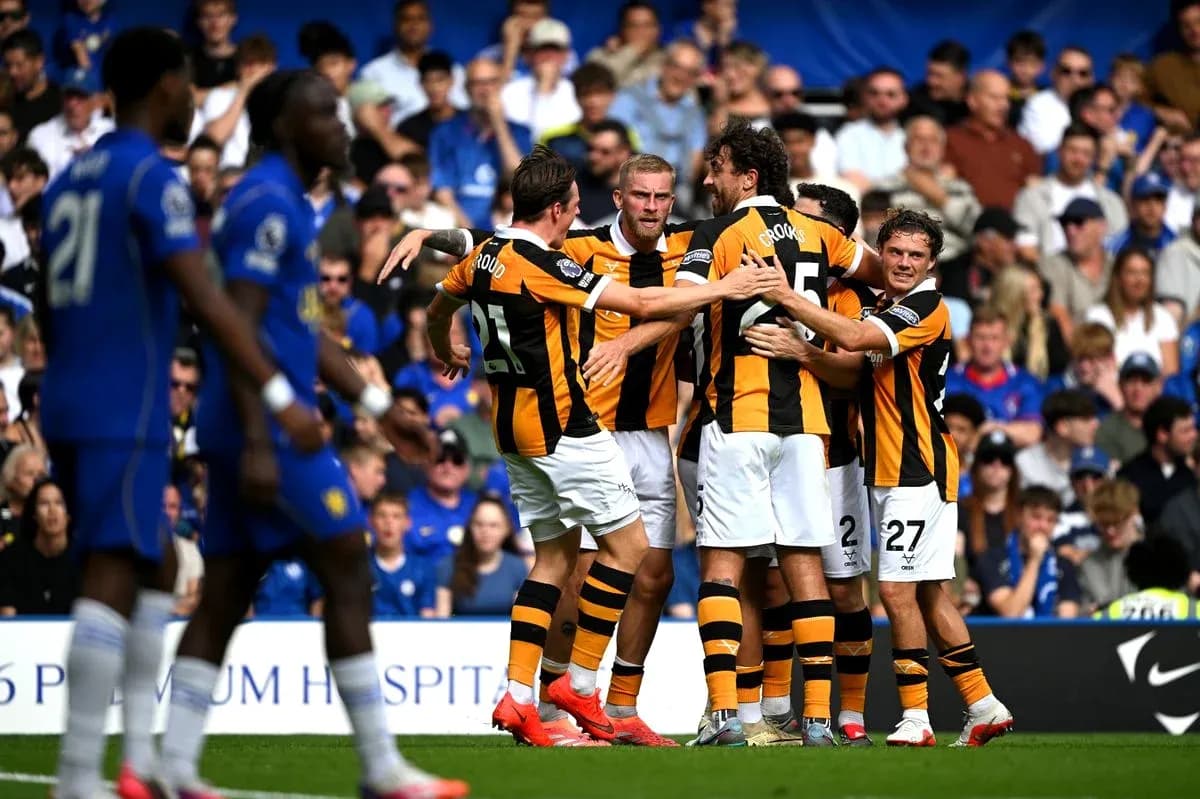
Stamford Bridge closed on a note of frustration and fascination. Under the grey London sky, Chelsea and Hull City played out a 2–2 draw that felt less like two points dropped or gained and more like a tactical manifesto from both dugouts. In a Premier League season still in its opening movements, this Regular Season - 4 fixture showcased why Chelsea sit 5th with 7 points and a goal difference of +1, and why Hull’s early surge has carried them to 3rd with 8 points and a goal difference of +3.
I. The Big Picture – Structure vs Chaos at the Bridge
Xabi Alonso’s Chelsea lined up in a 4-2-3-1, a clear evolution from the three-at-the-back shape that has been their primary template this season. Across the campaign overall, Chelsea have scored 10 goals and conceded 9 in 4 matches; at home they have been wild and open, with 6 scored and 5 conceded in just 2 games. The numbers tell of a side that leans into attacking risk: an overall average of 2.5 goals scored per match and 2.3 conceded, with no clean sheets either at home or on their travels.
Opposite them, S. Jakirović doubled down on Hull City’s identity: a rigid 5-4-1, the same structure used in all 4 league outings. Hull’s campaign has been built on control and economy. On their travels they have scored 3 and conceded 2 in 2 matches, part of an overall return of 5 for and only 2 against. An overall defensive average of 0.5 goals conceded per match, with 3 clean sheets in 4 games, underlines why they arrived in London as early-season overachievers.
The match itself honoured those profiles. Chelsea’s front four – Pedro Neto, Cole Palmer, Morgan Rogers and João Pedro – played with the freedom and fluidity of a side that expects to outscore problems. Hull, with K. Tzolakis behind a back five of L. Coyle, S. Ajayi, J. Egan, N. Mendy and R. Giles, trusted their structure to bend but not quite break.
II. Tactical Voids – The Missing Pieces
The absentees shaped the texture of the contest as much as those on the pitch. For Chelsea, the absence of M. Caicedo through injury stripped Alonso of his most natural defensive midfielder. Without Caicedo’s ball-winning and positional discipline, the double pivot of R. Lavia and R. James had to do double duty: progressing play and closing transitions. J. Henderson’s wrist injury removed an experienced organiser from the bench, and the injuries to E. Emegha and M. Palestra narrowed Chelsea’s attacking and rotational options.
Hull’s injury list was even longer, if not as star-laden. I. Ansah, J. Butland, D. Gyabi, C. Hughes, E. Matazo and H. Morita were all missing, thinning Jakirović’s options in goal, midfield and depth across the lines. That made the starting eleven’s discipline non‑negotiable: there was little room for reshaping the structure mid-game without compromising their defensive identity.
Disciplinary patterns from the season added another layer of tension. Heading into this game, Chelsea’s yellow cards were scattered but with a late-game surge: 22.22% of their bookings coming between 76-90 minutes, and 33.33% in the opening 0-15. Hull’s cautions have tended to spike just after half-time, with 30.77% of their yellows arriving between 46-60 minutes. In a match where Chelsea’s chaos meets Hull’s composure, those windows of indiscipline hinted at when control might slip.
III. Key Matchups – Hunter vs Shield, Engine Room vs Enforcer
The headline duel was always going to be João Pedro against Hull’s defensive block. With 3 goals and 3 assists in 4 league appearances, and a rating of 7.64, João Pedro arrived as one of the division’s most influential attackers. His 8 shots (4 on target), 7 successful dribbles and 7 key passes overall tell of a forward who drifts into pockets, combines, and then pierces.
He was flanked by Morgan Rogers and Cole Palmer, both already among the league’s top performers. Rogers, with 3 goals and 1 assist and a 7.74 rating, attacks the half-spaces with power, having attempted 12 dribbles and taken 7 shots overall. Palmer, with 2 goals, 2 assists and 9 key passes, is Chelsea’s chief conductor between the lines, his overall pass accuracy of 80% underpinning his role as tempo-setter.
Their task: unpick a Hull defence that had allowed only 2 goals overall all season and kept 1 clean sheet on their travels. The back three of Ajayi, Egan and N. Mendy, shielded by a hard-working midfield line, were the “shield” in this narrative. In front of them, M. Belloumi was the hinge – a two-way midfielder with 2 goals, 1 assist, 10 tackles and 9 interceptions overall. He not only offered progression but also stepped into passing lanes to disrupt Chelsea’s rhythm.
In the “engine room” battle, Lavia’s positioning and circulation were tested by the presence of M. Crooks and R. Slater. Crooks, who has already collected 2 yellow cards in just 2 appearances, is Hull’s enforcer: 6 tackles and a willingness to foul when necessary. His duel with Palmer – one intent on threading passes, the other on breaking play – was a microcosm of the wider clash of philosophies.
Up front for Hull, O. McBurnie offered a very different kind of threat. He has not yet scored in the league but brings 1 assist, 6 shots, and a bruising 74 duels overall, winning 36. He is also walking a disciplinary tightrope with 2 yellow cards and a place among the league’s leading offenders. His battle with L. Colwill and J. Hato was less about pace and more about aerial dominance, knockdowns and second balls for Belloumi and E. Stroud to attack.
IV. Statistical Prognosis – xG Without Numbers
Even without explicit xG values, the statistical backdrop frames the likely balance of chances. Chelsea’s overall scoring average of 2.5 goals per match, combined with Hull’s overall defensive record of just 0.5 conceded, suggests a clash where Chelsea generate volume but not necessarily clear-cut opportunities. Hull’s compact 5-4-1, already proven away from home with 3 goals for and 2 against on their travels, is designed to funnel shots into less dangerous zones.
On the flip side, Chelsea’s overall concession rate of 2.3 goals per match and their lack of a single clean sheet point to vulnerabilities whenever the press is broken. Hull may not flood the box, but with Belloumi’s timing and McBurnie’s physical presence, their limited chances tend to be high value.
Following this result, the 2–2 scoreline feels like the meeting point of these curves: Chelsea’s attacking verve dragging the game into chaos, Hull’s structure and efficiency ensuring they emerge unbowed. In a season still young, this was less a final verdict and more a chapter in two evolving identities – one chasing expressive dominance, the other mastering the art of controlled resistance.