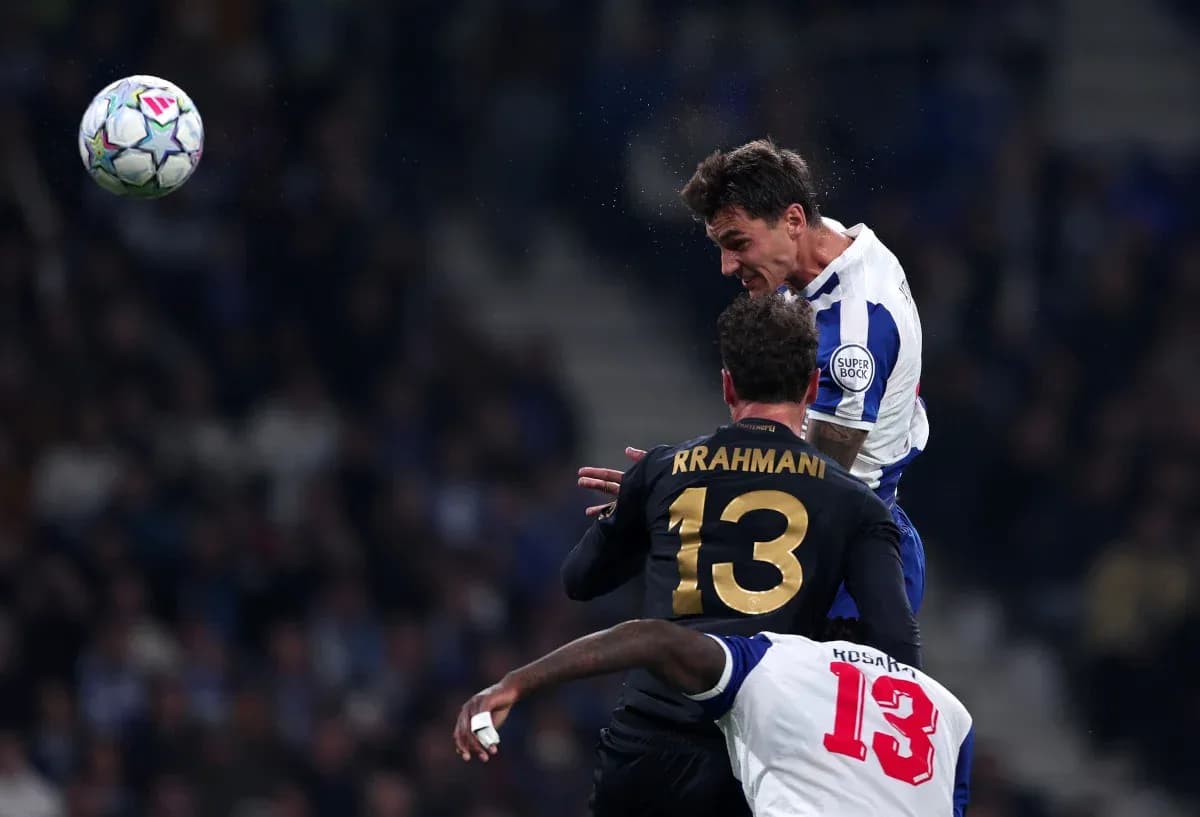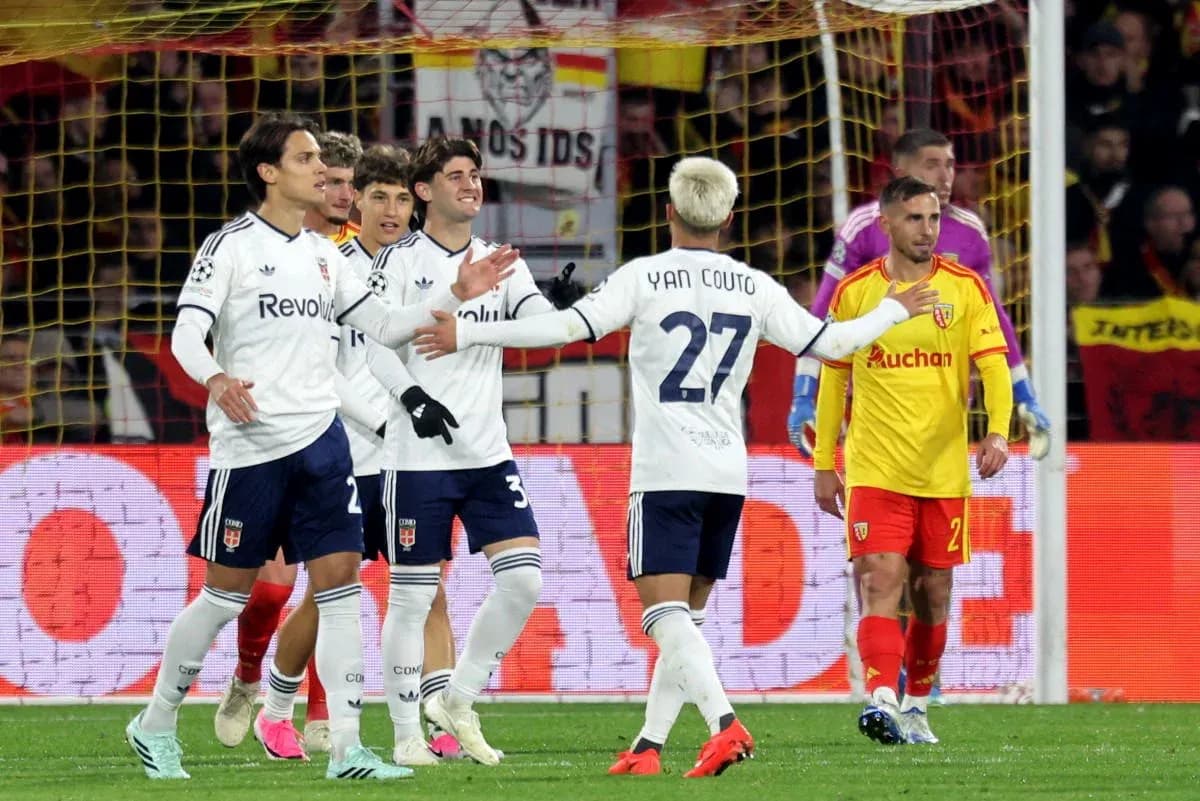
Como's Dominance Over Lens in UEFA Champions League Clash
Under the floodlights of Stade Bollaert-Delelis, this League Stage - 4 clash in the UEFA Champions League felt less like a routine group game and more like a brutal audit of two projects heading in opposite directions. Lens, ranked 33rd heading into this game with 3 points from 4 matches, had already been wobbling. Como, up in 4th with 9 points and a place in the play-off path towards the 1/8-finals in their sights, arrived as one of the competition’s most explosive attacks.
By full time, the scoreline – Lens 1, Como 9 – told a story of structural collapse versus ruthless clarity.
I. The Big Picture: Identities Exposed
Lens came into the night with a season-long pattern that was already alarming. Overall in this Champions League campaign, they had scored 4 goals and conceded 16, giving them a goal difference of -12. At home, the numbers were even more stark: 1 goal for, 11 against across 2 games, an average of 0.5 goals scored and 5.5 conceded at Stade Bollaert-Delelis. Their biggest home defeat before this was already a 1-9, and that result now feels less like an aberration and more like a warning that went unheeded.
Como, by contrast, travelled with the swagger of an emerging heavyweight. Overall they had 19 goals for and 6 against – a goal difference of +13 – from just 4 matches. On their travels, they had scored 11 and conceded 4, averaging 5.5 goals scored and 2.0 conceded away. Their biggest away win was 1-9; the repeat of that margin here only underlined how their attacking structure scales regardless of venue.
Lens stayed loyal to their 3-4-2-1, a shape they had used in all 4 Champions League fixtures so far. R. Risser behind a back three of R. Aguilar, S. Baidoo and K. Antonio; a midfield line of M. Skoras, M. Cuisance, A. Haidara and M. Udol; with F. Thauvin and T. Hazard supporting F. Ivanovic. It is a formation that promises numbers between the lines, but only if the back three and double pivot can hold.
Cesc Fabregas, meanwhile, doubled down on his preferred 4-2-3-1. J. Butez in goal, a back four of Y. Couto, J. Ramon, M. O. Kempf and A. Valle; L. Milla and M. Perrone as the double pivot; an advanced trio of L. Da Cunha, N. Paz and M. Caqueret behind lone striker A. Douvikas.
II. Tactical Voids and Absences
Lens arrived depleted and brittle. J. Chavez (coach’s decision), O. Edouard (groin injury), I. Ganiou and M. Nawrocki (both knee injuries), A. Sima (muscle injury) and I. Jourdren (off the roster) all missed out. The absences particularly at the back – Nawrocki and Sima – stripped Yannick Cahuzac of alternative defensive profiles and pace in recovery. It forced a reliance on S. Baidoo and K. Antonio in wide centre-back roles that were relentlessly targeted.
Como were not without their own issues – J. Addai (muscle injury), T. Chalobah and J. Rodriguez (injuries), A. Diao (thigh injury), M. Kean (leg injury), plus E. Goldaniga, W. Kambwala and A. Lahdo (off the roster). Yet Fabregas still fielded a near-ideal spine. Crucially, the creative and finishing core of N. Paz and A. Douvikas was intact.
Disciplinary trends added another layer. Lens, across the campaign, had shown a tendency to collect yellow cards late: 42.86% of their cautions between 61-75 minutes and 28.57% between 76-90. Como’s yellows clustered after the break too, with 33.33% between 46-60 and another 33.33% between 61-75. This shared late-game aggression hinted that if the game remained close into the final quarter, it could turn chaotic. Instead, Como killed that possibility long before.
III. Key Matchups: Hunter vs Shield, Engine Room
The “Hunter vs Shield” duel was brutally one-sided. A. Douvikas came in as the Champions League’s top-rated forward for Como, with 6 goals and 1 assist in 4 appearances, converting 7 of his 9 shots on target. He was facing a Lens defence that overall conceded 4.0 goals per game and 5.5 at home, with 31.25% of those goals arriving between 46-60 minutes and another 25.00% between 61-75.
Como’s attacking minute distribution slotted perfectly into those cracks. They score 30.00% of their goals between 46-60 and 25.00% between 76-90, with another 15.00% in the 31-45 window. That meant Lens’ most vulnerable phases – either side of half-time and into the final stretch – aligned almost exactly with Como’s surges. The 0-3 half-time scoreline reflected that early 0-15 and 31-45 sharpness; the eventual 1-9 was the product of an onslaught that continued after the interval, right where Lens statistically leak the most.
In the “Engine Room”, N. Paz was the game’s quiet dictator. Across the campaign he had 3 goals and 5 assists, 187 passes at 85% accuracy, 7 key passes, and 17 dribble attempts with 10 successful. He is not just a creator but a two-way presence: 11 tackles, 2 blocked shots and 7 interceptions. Against a Lens midfield where A. Haidara and M. Cuisance had to both shield the back three and connect with Thauvin and Hazard, Paz repeatedly found the half-spaces behind them.
L. Milla and M. Perrone did the dirty work, screening passing lanes into Thauvin and Hazard and forcing Lens’ build-up wide to Skoras and Udol. From there, Como’s full-backs Y. Couto and A. Valle could press aggressively, knowing their double pivot was in control centrally.
IV. Statistical Prognosis and Tactical Verdict
Even before kick-off, the statistical indicators pointed heavily towards Como. They had gone over 2.5 total goals in 3 of 4 games, and over 3.5 in 3 of 4 as well. Lens, conversely, had seen opponents go over 2.5 in half their matches and over 3.5 in one of four, with no clean sheets at all.
Both sides had yet to take a penalty in the competition – no penalties scored, none missed – which meant the expected goals profile would be driven almost entirely by open play and set pieces. In that domain, Como’s structure is simply superior: a consistent 4-2-3-1 used in all 4 games, a high-volume attack (4.8 goals per match overall), and a defence that, while not watertight at 1.5 goals conceded per game, is more than compensated for by their offensive firepower.
Lens’ 3-4-2-1, also used in all 4 games, looks principled but fragile. Their goals for minute distribution shows 40.00% of their goals coming between 61-75 and another 40.00% between 76-90, a late surge profile that only matters if they are still in the contest. Against Como’s relentless scoring across all phases – including 3 goals (15.00%) in the opening 15 minutes and 6 (30.00%) just after half-time – they were never allowed that platform.
Following this result, the tactical narrative is clear: Como are a high-octane, structurally coherent side built around the finishing of A. Douvikas and the all-round brilliance of N. Paz, both fully supported by a balanced midfield and aggressive full-backs. Lens, hampered by injuries and a porous defensive block, are caught between ideals and realities. Until their back three and double pivot are reinforced – in personnel or in structure – nights like this in Europe will remain less about glory and more about survival.