FC Porto's Tactical Masterclass Against Napoli in Champions League
On a cool Champions League night at Estádio do Dragão, FC Porto finally found the performance their campaign had been threatening to produce. In a league stage that had left them stranded in 26th place with just 3 points and a goal difference of -1 heading into this game, they tore into Napoli with a 4-1 win that rewrote the narrative of their European season in ninety ferocious minutes.
This was not a dead rubber between struggling sides. Both clubs arrived with identical overall records: 1 win and 3 defeats from 4 matches, 6 goals scored apiece. The difference lay in how much punishment they had taken. Napoli’s overall goals against stood at 11, giving them a goal difference of -5, a fragile defensive shell now exposed further under the lights in Porto.
Francesco Farioli stayed loyal to Porto’s season-long identity: the 4-3-3 that has started all four of their Champions League matches. Diogo Costa was shielded by a back four of A. Costa, Jan Bednarek, Jakub Kiwior and M. Fernandes. In front of them, V. Froholdt, P. Rosario and G. Veiga formed a compact, industrious midfield triangle, freeing a front three of Pepê, Andre Silva and B. Sainz to stretch Napoli’s three-man defence.
Across the halfway line, Massimiliano Allegri leaned into pragmatism. Napoli lined up in a 3-5-1-1, a shape he has only used once in this Champions League run, with A. Meret behind a trio of S. Beukema, Amir Rrahmani and Rafa Marín. The wing-backs and midfield five – M. Politano, F. Anguissa, B. Gilmour, S. McTominay and A. Vergara – were tasked with both protecting central spaces and feeding the creative fulcrum, Kevin De Bruyne, operating just off Rasmus Højlund.
Yet the tactical story of the night was how Porto’s structure directly attacked Napoli’s known weaknesses. On their travels this season, Napoli had already conceded 7 goals in just 2 away matches, an away average of 3.5 goals against per game. The timing of those concessions painted an even darker picture: 41.67% of the goals they had shipped in total came in the 76-90 minute window, a period where concentration and legs seemed to desert them.
Porto, by contrast, have been a side that grows into games. Overall this campaign, 33.33% of their goals have arrived between 61-75 minutes and another 33.33% between 76-90. That late-game surge met Napoli’s late-game collapse head-on – and at Dragão, the collision was brutal.
First Half
The first half, which ended 1-1, was a contest of ideas as much as execution. Porto’s front three held high and wide positions, pinning Napoli’s back three and forcing Rafa Marín and Beukema into uncomfortable decisions: step into wide channels to meet Pepê and B. Sainz, or leave the wing-backs exposed. With Froholdt and Rosario screening transitions and Veiga drifting into half-spaces, Porto repeatedly found 3v2 overloads on the flanks.
Napoli’s best moments came when De Bruyne could receive on the half-turn between the lines, drawing Bednarek and Kiwior out and slipping passes into Højlund’s runs. But the Italian side’s season-long fragility without the ball – 2.8 goals conceded per game overall, with no clean sheets either home or away – always felt like a time bomb.
Injuries and absences only sharpened those edges. Napoli travelled without a spine of experience: B. Badiashile, A. Buongiorno, G. Di Lorenzo, S. Lobotka, M. Olivera and L. Spinazzola were all unavailable, while Alisson Santos, David Neres, C. Favasuli and L. Marianucci were also out of the picture. De Bruyne himself had been listed as questionable with an ankle issue before the match, but was risked from the start – a decision that underlined how stretched Allegri’s options were.
On the Porto side, C. Smalling, V. Sousa and William Gomes were among those missing, with Gabriel Mec and D. Prpic off the roster and O. Pietuszewski only questionable. Yet crucially, Farioli had his starting core intact, and it showed in the cohesion of their press and the clarity of their attacking patterns.
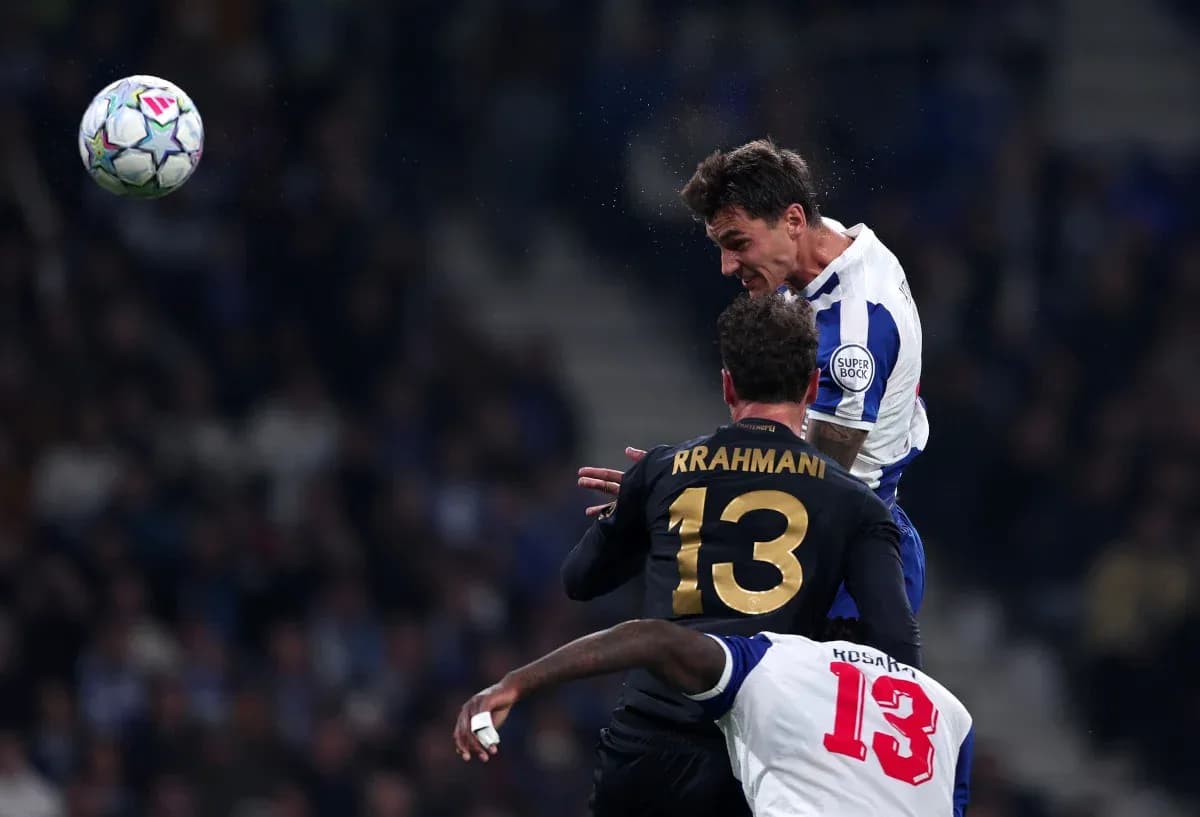
The “Hunter vs Shield” duel here was less about an individual scorer and more about Porto’s collective front line against Napoli’s porous defence. Heading into this game, Porto’s overall scoring rate stood at 1.5 goals per match, with 4 of their 6 goals coming at home. Napoli, though, had conceded 4 times at home and 7 away, and Rafa Marín – one of the few consistent presences in their back line – carried the scar of a red card earlier in the campaign. His statistical profile is that of a defender under siege: 10 tackles, 2 successful blocks, 5 interceptions, 30 duels contested and 5 fouls committed in 4 appearances, plus that solitary dismissal. At Dragão, faced with constant 3v3 scenarios and midfield runners breaking the line, the strain on him and Rrahmani was relentless.
Engine Room Battle
In the “Engine Room” battle, Porto’s trio quietly dominated. Rosario anchored, Froholdt patrolled second balls, and Veiga found pockets that Gilmour and Anguissa struggled to close. McTominay’s attempts to surge forward often left Napoli’s midfield line broken in two, exposing the back three to direct runs from Andre Silva and wide diagonal movements from Pepê and Sainz.
As the match tipped into its decisive phase after the interval, the statistical intersection became reality. Porto’s historical strength between 61-90 minutes collided with Napoli’s tendency to concede in exactly those periods – 25.00% of their goals against overall between 61-75 minutes, and that glaring 41.67% between 76-90. The hosts’ third and fourth goals flowed from precisely this pattern: fresher legs, braver pressing, and an away side mentally and physically unable to reset.
Discipline, too, hinted at Napoli’s unraveling. Across the campaign, they have spread yellow cards throughout the match but spike in the 31-45, 46-60 and 76-90 ranges, each accounting for 25.00% of their cautions. With one red card already on their record this season – again, a burden carried by Rafa Marín – their defensive aggression has often tipped into desperation. Porto, by contrast, have picked up most of their yellows between 46-90 minutes but have yet to see red, suggesting a side that plays on the edge without regularly crossing it.
Following this result, both teams remain on 3 points, but the trajectories feel utterly different. Porto’s biggest win of the campaign is now this 4-1 home statement, matching their “biggest win” metric and finally aligning their performances with the promise of their structure. Napoli, whose heaviest away defeat was already 4-1, have seen that wound reopened, their defensive average away from home reinforced in the harshest possible way.
From a tactical lens, this was Porto’s 4-3-3 fully realized: a compact block, disciplined midfield, and a front three that hunted a vulnerable back line at exactly the moments the numbers predicted. For Napoli, it was a confirmation of every warning sign in their data – late collapses, an away defence conceding in clusters, and a squad stretched too thin to absorb the blows.
On a night where numbers and narrative aligned, Porto did not just beat Napoli. They exploited them with clinical, data-backed precision.