Manchester City Edges RB Leipzig in UEFA Champions League Clash
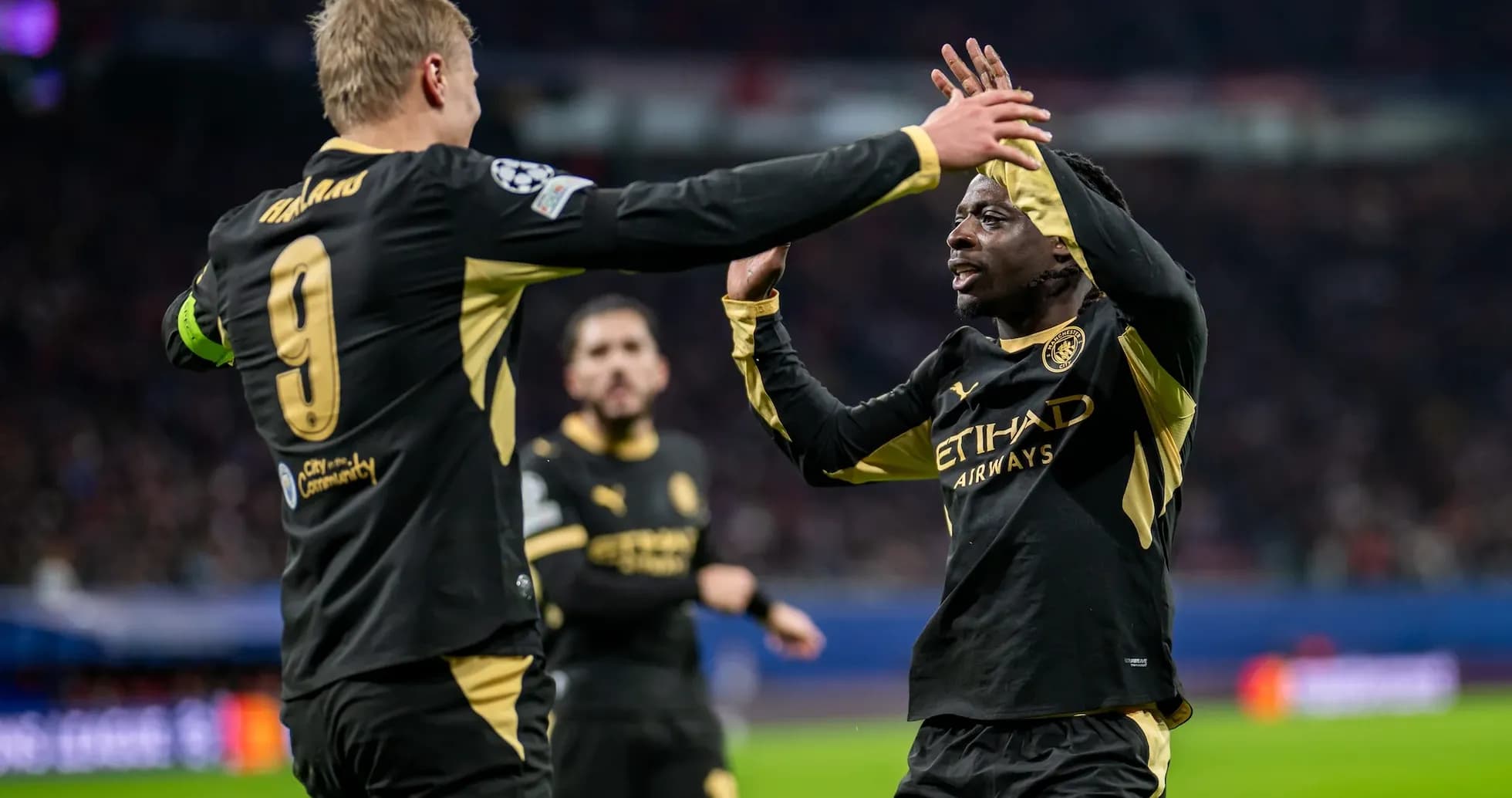
Under the Leipzig floodlights at the Red Bull Arena, this League Stage - 4 clash in the 2026 UEFA Champions League delivered exactly what it promised: chaos, quality and a stark reminder of where these two squads currently live on the continental food chain. Manchester City edged RB Leipzig 3–2, a scoreline that felt like the logical extension of their seasons so far rather than an aberration.
Heading into this game, the table already told a brutal truth. RB Leipzig were 30th in the overall ranking, with 3 points from 4 matches, a goal difference of -6 built from 5 goals scored and 11 conceded. Their campaign has been defined by fragility: overall they had allowed 2.8 goals per match, with a particularly punishing 4.0 conceded on their travels, even if at home they had been more balanced at 1.5 scored and 1.5 conceded. Manchester City arrived in almost the opposite mood: 7th overall, 9 points from 4 matches, and a positive goal difference of 5 (12 scored, 7 conceded). Their attack has been relentless, averaging 3.0 goals per match overall, with 2.5 on their travels and 3.5 at home.
The lineups underlined the tactical identities. Martin Demichelis rolled out a 4-3-3 for Leipzig, an aggressive shape that tried to stretch City horizontally and vertically. M. Vandevoordt anchored the side in goal, with a back four of R. Baku, W. Orban, C. Lukeba and D. Raum. In front of them, N. El Aynaoui, C. Baumgartner and E. Banzuzi formed a midfield trio tasked with both protecting a vulnerable defensive record and connecting to a fluid front three of B. Gruda, Romulo and A. Nusa.
Enzo Maresca’s Manchester City answered with a 4-1-4-1 that quickly morphed into a suffocating positional web. G. Donnarumma stood behind a back four of M. Nunes, A. Khusanov, M. Guehi and N. O’Reilly. E. Anderson operated as the single pivot, with a line of four creators and runners—P. Foden, E. Fernandez, R. Cherki and I. Ndiaye—buzzing behind the spearhead, E. Haaland.
The absentees framed the stakes. Leipzig were without M. Finkgrafe (thigh injury), M. Guiu (hamstring), A. Ouedraogo (shoulder) and L. Zingerle (off the roster), trimming Demichelis’ options for rotation and in-game adjustment. City’s only listed absentee was A. Semenyo with a knee injury, a blow to depth but not to the starting structure. The contrast was clear: Leipzig’s bench had to cover more gaps, while City could afford to keep high-level alternatives like R. Dias, J. Gvardiol, M. Kovacic and J. Doku in reserve.
The match narrative mirrored the season-long statistical profiles. City’s attacking surge this campaign has been most ferocious after the break: 36.36% of their goals have arrived between 46–60 minutes, another 18.18% between 61–75, and 27.27% in the 76–90 window. They are built to overwhelm you once legs tire and spaces open. Leipzig, by contrast, have been most vulnerable precisely when City tend to accelerate. A full 30.00% of Leipzig’s goals conceded this season have come between 46–60 minutes, and an alarming 40.00% between 76–90. The intersection was always likely to be fatal: City’s second-half wave crashing into Leipzig’s late-game fragility.
That pattern played out across the 90 minutes. City struck first before the interval, leading 1–0 at half-time, exploiting Leipzig’s tendency to concede in the 31–45 band, where 20.00% of their goals against have been clustered. Leipzig’s response after the break—two goals to drag themselves into the contest—spoke to their own offensive rhythm. This season, 33.33% of Leipzig’s goals have arrived between 46–60 minutes and another 33.33% between 61–75, exactly the phase where their front three of Gruda, Romulo and Nusa found more space between City’s lines, aided by Baumgartner’s vertical running and Banzuzi’s willingness to step beyond the ball.
Yet City always had another gear. With Haaland as the reference point, the visitors leaned into their statistical superiority. Haaland came into this fixture as one of the competition’s most dangerous forwards: 5 goals in 3 appearances, backed by 17 shots (10 on target). His rating of 6.18 may hint at games where he has been starved of service, but when City’s midfield clicks, his presence alone bends defensive structures. Leipzig’s centre-backs, Orban and Lukeba, had to defend higher than they would have liked, leaving the exact channels City’s late surges so often exploit.
Behind Haaland, the “engine room” duel was decisive. E. Anderson’s screening role in front of Khusanov and Guehi allowed City to keep their full-backs involved without losing central stability. Opposite him, El Aynaoui had to juggle too many tasks: covering half-spaces, tracking Cherki’s drifting, and still offering an outlet in possession. As Leipzig chased the game, those central distances stretched, and City’s 4-1-4-1 began to look more like a 2-3-5 in possession, with Foden and Fernandez dictating tempo and Ndiaye driving into the inside-left channel.
Discipline added another layer of tension. Leipzig’s season-long yellow-card distribution shows a steady burn rather than sudden explosions: 22.22% of their cautions come between 16–30 minutes, another 22.22% between 61–75, and 22.22% again in the 76–90 period. As they tired and chased, the risk of late bookings—and with it, defensive hesitation—rose. City’s own bookings tend to spike after the break too, with 28.57% between 46–60 and another 28.57% between 91–105, reflecting a team that often defends transitions high and aggressively once they are ahead.
From a statistical prognosis perspective, this result felt baked into the numbers. City arrived with 12 goals scored in 4 matches and had failed to score in none of them. Leipzig, for all their effort, had kept just one clean sheet and had conceded in three of four fixtures. Both sides had yet to miss a penalty this campaign, but with no spot-kicks awarded, the contest was decided in open play, where City’s attacking structure and depth simply outweighed Leipzig’s courage.
Following this result, Leipzig’s negative goal difference deepens, and the story of their campaign remains one of brave intentions undermined by structural frailty, especially late in games. City, meanwhile, continue to look every inch a side built for the 1/8-finals: a ruthless second-half machine, powered by Haaland’s penalty-box gravity and a midfield that knows exactly when to squeeze, when to sit, and when to suffocate.