Crystal Palace vs Manchester City: Premier League Clash Analysis
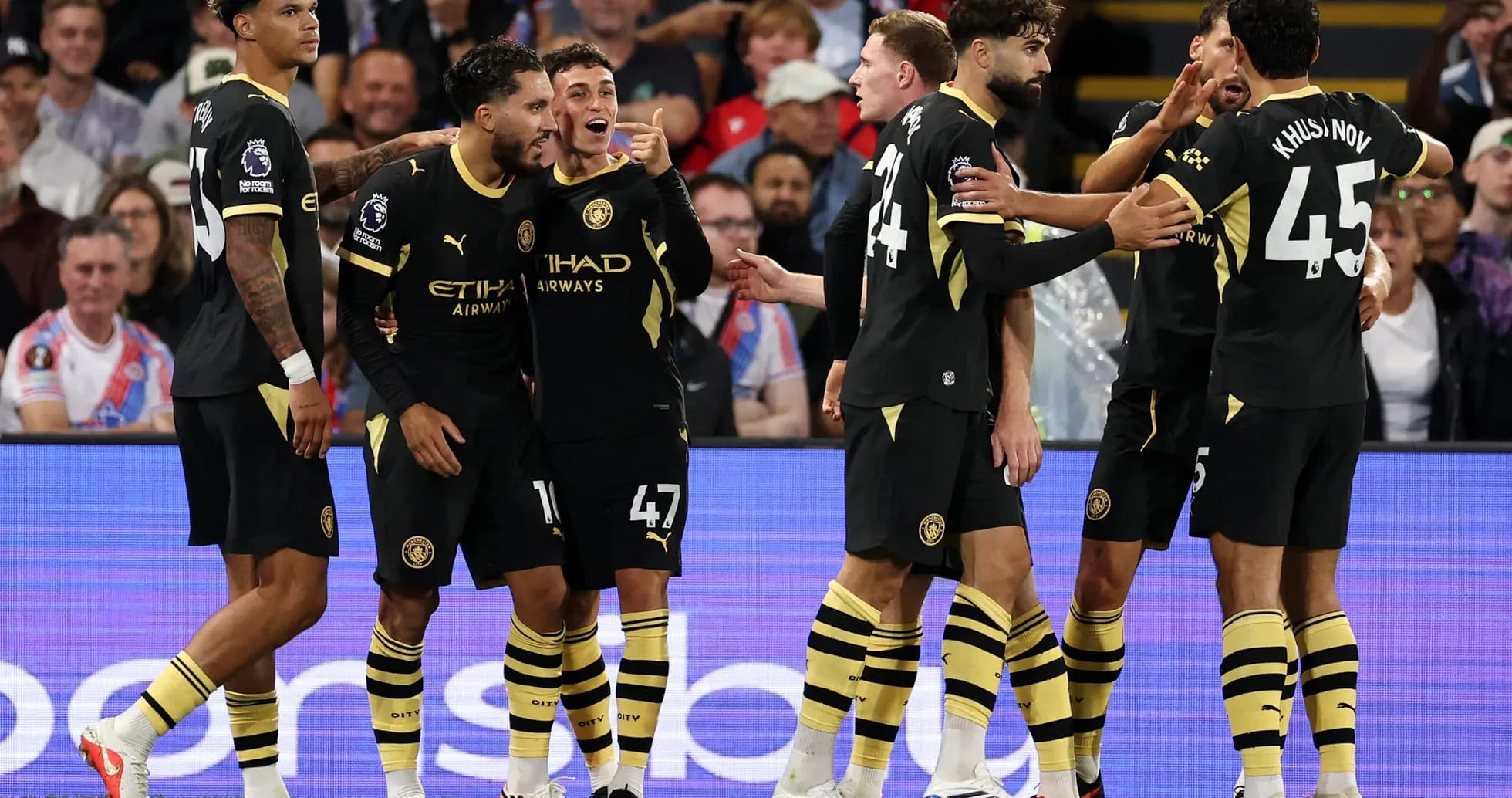
Selhurst Park under the lights offered a familiar Premier League contrast: a reshaped Crystal Palace side still searching for its identity, and a Manchester City machine already humming. By full time, the 4-1 scoreline to City crystallised the gulf between a project at the beginning of its arc and one already in full flow.
I. The Big Picture – Structures and Seasonal DNA
This was Round 2 of the Premier League season, and the table framed the story. Following this result, Palace sit 19th with 0 points from 2 matches, their overall goal difference at -5 from 1 goal scored and 6 conceded. At home they have played 1, scored 1 and conceded 4; on their travels they have played 1, scored 0 and conceded 2. The pattern is stark: an overall average of 0.5 goals scored per game against 3.0 conceded.
Manchester City, by contrast, leave London at the top of the league. Following this result they have 6 points from 2 matches, with an overall goal difference of +4 built on 6 goals scored and 2 conceded. At home they have played 1, scored 2 and conceded 1; away they have played 1, scored 4 and conceded 1. Their overall averages – 3.0 goals for and 1.0 against per game – speak to early-season authority.
The formations told their own tactical tale. Pierre Sage doubled down on a 3-4-2-1 that has now been used in both league fixtures, asking his side to compress space centrally and spring forward from wing-backs. Enzo Maresca mirrored City’s season blueprint with a 4-2-3-1, a shape that morphs in possession, giving the champions layers between the lines.
II. Tactical Voids – Absences and Discipline
Palace entered this fixture stripped of some of their most direct weapons. J. Mateta (hamstring injury), C. Riad (knee injury) and I. Sarr (injury) were all listed as missing, removing a target presence in the box and a vertical runner who might have stretched City’s back line. For a side that has already failed to score once overall and averages just 1.0 goal at home, those absences narrowed the attacking playbook.
City had their own creative incision missing in J. Doku (calf injury) and the all-purpose dynamism of M. Nunes (injury). Yet Maresca’s squad depth meant those voids were filled by different profiles rather than weakening the structure. The presence of R. Cherki, P. Foden and A. Semenyo ensured City still fielded multiple ball-carriers and line-breakers.
Disciplinary trends hinted at the emotional balance of each camp. Palace’s season card map shows two yellow cards overall, split evenly: 50.00% between minutes 16-30 and 50.00% between 61-75. It suggests a team that can become reactive in the early and middle phases of each half, often when opponents ramp up pressure. City’s yellows are more evenly scattered: 33.33% in 31-45, 33.33% in 46-60 and 33.33% in 76-90. This distribution speaks to a controlled cynicism – tactical fouls spread across the match rather than emotional spikes.
Crucially, neither side has seen a red card overall, and with both teams having zero penalties taken and therefore zero missed, there was no spot-kick drama to tilt the narrative.
III. Key Matchups – Hunter vs Shield, Engine Room Battles
The “Hunter vs Shield” duel was headlined by Erling Haaland against a Palace back three anchored by C. Richards, flanked by T. Tomiyasu and J. Canvot. Haaland arrived with 2 goals from 2 appearances, 9 shots overall with 5 on target. City’s away scoring average of 4.0 goals per game collided with Palace’s home defensive record of 4.0 goals conceded per match – an unforgiving equation for the hosts.
Behind Haaland, R. Cherki – already on 2 goals and 2 assists overall, with 7 key passes and a passing accuracy of 92 – operated as City’s creative knife. His ability to slip between lines forced Palace’s central trio of A. Wharton, D. Kamada and A. Khalaili into constant recalibration: step out to close Cherki and you expose Haaland; sit deep and you invite wave after wave of City possession.
Palace’s best “shield” higher up the pitch was paradoxically an attacker. A. Khalaili, rated 7.3 overall this season, has produced 14 tackles, 1 shot blocked and 3 interceptions across his appearances. His 20 duels won from 29 overall underline his work rate and physical presence. In the 3-4-2-1 he functioned as an auxiliary wing-back at times, tasked with helping T. Mitchell contain City’s left-sided rotations of J. Gvardiol and Semenyo.
In City’s engine room, E. Anderson and N. O’Reilly formed the double pivot. Anderson’s numbers – 159 passes overall at 90% accuracy, 7 tackles and 4 interceptions – define him as the enforcer-playmaker hybrid. His job was to suffocate transitions, preventing E. Nketiah and J. Larsen from turning Palace’s rare regains into clean counters. O’Reilly provided the complementary passing lane, keeping City’s tempo high and angles varied.
On the flanks, J. Gvardiol’s dual-threat profile was decisive. With 1 goal, 1 assist, 126 passes at 83% accuracy and 4 interceptions overall, he is not just a defender but a deep creator. Against Palace’s narrow front three, his ability to step into midfield and hit diagonal switches stretched Sage’s compact block until it frayed.
IV. Statistical Prognosis – What the Numbers Say
Even without explicit xG data, the season metrics point to a predictable balance of chances. City’s overall attacking output of 3.0 goals per game, combined with Palace’s overall concession rate of 3.0, suggested that the visitors were likely to generate a high volume of quality opportunities. Palace, averaging 0.5 goals overall and failing to score in one of their two matches, were always likely to rely on low-probability moments – set pieces, broken play, or individual brilliance from Y. Pino or Nketiah.
Defensively, City’s overall record of 1.0 goal conceded per match, with no clean sheets yet, hints at a side that can be got at in isolated moments but rarely collapses structurally. Palace’s single home goal – against 4 conceded – fits the pattern: they can land a punch, but they cannot yet sustain pressure.
Following this result, the trajectories diverge. For City, the blend of Haaland’s penalty-box gravity, Cherki’s creativity, Foden’s connective tissue and the control of Anderson and Gvardiol suggests their attacking xG will remain among the league’s highest, even if individual finishing streaks ebb and flow. For Palace, the immediate tactical question is whether Sage can keep faith with the 3-4-2-1 while tightening the spaces between his lines, or whether the defensive data will force a more conservative recalibration.
On the evidence of these opening rounds, City’s structure and squad depth mean they can ride out absences and still impose their game. Palace, stripped of Mateta and Sarr, look one injury away from losing what little vertical threat they have. The numbers, and the night at Selhurst Park, underline the same truth: one side is already playing to its ceiling, the other is still trying to find the staircase.