Fulham vs Chelsea: Premier League Tactical Analysis
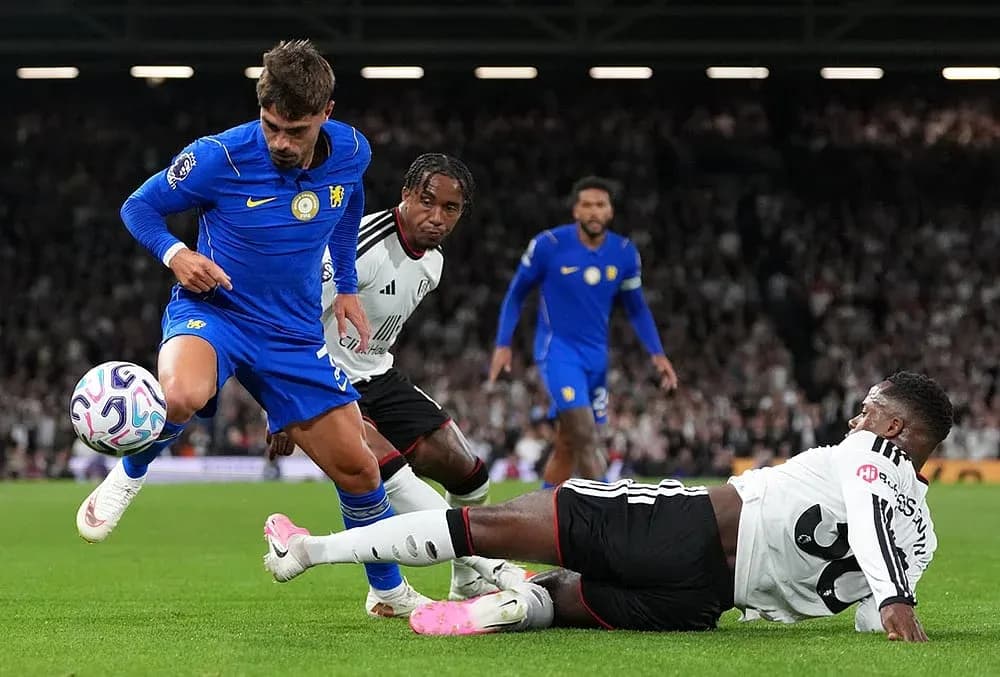
Under the Craven Cottage floodlights, Fulham and Chelsea opened their Premier League seasons with a game that felt less like a curtain-raiser and more like an early litmus test of identity. By the final whistle, Chelsea had edged a 3–2 away win, leaving Fulham in 12th with 0 points and a goal difference of -1, while Chelsea rose to 6th with 3 points and a goal difference of 1. Following this result, both sides revealed as much about their tactical DNA as about the scoreboard.
I. The Big Picture – Structures and Seasonal DNA
Fulham, under Alvaro Arbeloa, stayed faithful to a 4-2-3-1 that is already defining their early-season profile. In total this campaign, they have played 1 match, lost 1, and scored 2 goals while conceding 3. At home, the picture is identical: 1 match, 2 goals for, 3 against, with an attacking average of 2.0 goals for and 3.0 goals against. It is an open, ambitious template that promises entertainment but leaves the back door ajar.
Their shape here was clear: Bernd Leno behind a back four of Timothy Castagne, Calvin Bassey, Jorge Cuenca and Antonee Robinson; a double pivot of Sander Berge and Alex Iwobi; an attacking trio of Oscar Bobb, J. King and C. Palacios feeding G. Garcia as the lone forward. The structure is built to progress through the thirds, with Berge as the metronome and Iwobi stepping into half-spaces to link play.
Chelsea, by contrast, arrived with Xabi Alonso’s 3-4-2-1 – a system that already looks calibrated for control and vertical punch. On their travels they have played 1, won 1, scoring 3 and conceding 2, an away average of 3.0 goals for and 2.0 against. Overall, that is also 3 goals for and 2 against from 1 match, a profile of a side willing to trade chances but with enough firepower to survive the chaos.
Their back three of J. Acheampong, Maxence Lacroix and Levi Colwill anchored the structure, with Malo Gusto and Reece James as advanced wing-backs. In midfield, Roméo Lavia and J. Hato formed a dynamic central pairing, while the front line of Cole Palmer, Morgan Rogers and Joao Pedro provided fluid rotation and constant threat between the lines.
II. Tactical Voids – Absences and Discipline
Both squads were shaped by notable absences. Fulham were without J. Andersen (suspended after a red card) and T. Cairney (knee injury). Andersen’s absence forced Bassey and Cuenca into a partnership that, while promising, lacked the established hierarchy and communication of a settled pairing. Without Cairney, Fulham lost a natural tempo-setter between the lines, leaning more heavily on Iwobi and the youthful craft of Bobb.
Chelsea’s list of missing players was longer: A. Anselmino (inactive), M. Caicedo and M. Sarr (injuries), E. Emegha (hamstring injury), W. Fofana (red card suspension) and J. Henderson (wrist injury). That stripped Alonso of a natural ball-winner like Caicedo and a dominant centre-back in Fofana, making Lacroix’s presence as the defensive organiser even more critical.
Disciplinary patterns from the early season also framed the contest. Fulham’s only yellow cards so far have come in a late-game surge: 100.00% of their yellows have arrived between 76-90 minutes, underlining how their intensity – or desperation – spikes as matches slip away. Castagne embodies that edge; he has already collected 1 yellow card while still contributing 1 assist, 1 blocked shot and a strong duel count.
Chelsea’s caution map is different: 66.67% of their yellows have come in the opening 0-15 minutes, with the remaining 33.33% between 61-75. That suggests an aggressive early press that occasionally spills over, followed by tactical fouls to break rhythm as the second half opens up. Lavia, who has 1 yellow card from his 65 minutes, personifies that risk-reward balance at the base of midfield.
III. Key Matchups – Hunter vs Shield, Engine Room Battles
The headline attacking narrative belongs to Chelsea’s front three. Palmer, Joao Pedro and Rogers each scored once in this match and now sit among the league’s early top performers. Palmer’s profile is especially striking: in his 83 minutes he produced 1 goal, 1 assist, 4 shots (2 on target), 32 passes at 87% accuracy, 3 key passes, 5 successful dribbles from 8 attempts, and won 10 of 16 duels. He is the archetypal “hunter” in this contest – a roaming creator-finisher.
Against Fulham’s back line, that is a dangerous cocktail. Bassey and Cuenca had to cope without Andersen’s authority, while Castagne and Robinson were constantly torn between tucking in to protect central spaces and stepping out to Gusto and Rogers. Lacroix’s assist from the back – built on 50 passes at 94% accuracy, 5 tackles, 1 blocked shot and 2 interceptions – shows how Chelsea’s “shield” is not merely reactive but a launchpad. He reads pressure, breaks lines and then immediately steps into duels, having contested 17 and won 7.
In midfield, the engine-room duel between Berge/Iwobi and Lavia/Hato was a study in contrast. Berge, tasked with recycling possession, tried to give Fulham a platform, but Lavia’s numbers underline his disruptive influence: 22 passes at 95% accuracy, 3 tackles and 1 interception in just 65 minutes. His yellow card is the tax Chelsea pay for that intensity, but his presence allowed Palmer and Rogers to stay higher, ready to spring.
Rogers’ role deserves special mention. With 1 goal, 5 key passes and 3 successful dribbles from 3 attempts, he repeatedly attacked the channel between Castagne and Bassey, forcing Fulham’s right side into emergency defending. Castagne, to his credit, responded with 40 passes at 85% accuracy, 2 key passes, 1 assist, 1 blocked shot and 1 interception – a full-back trying to be both outlet and firefighter.
IV. Statistical Prognosis – What This Tells Us Going Forward
Following this result, the statistical balance is stark. Fulham’s total averages of 2.0 goals for and 3.0 against hint at a side that will entertain but suffer if the defensive structure does not tighten. Their lack of clean sheets, combined with a tendency to collect late yellows, suggests they are often chasing games rather than controlling them.
Chelsea’s overall profile – 3 goals scored and 2 conceded from 1 away match – points to a high-ceiling, high-variance side, but the underlying roles offer reassurance. A back three led by Lacroix, a midfield anchored by Lavia and a front line where Palmer and Joao Pedro both combine goals and assists give Alonso a coherent spine. The fact that Chelsea have no penalties scored or missed so far underlines that their output is coming from open play patterns rather than set-piece fortune.
In tactical terms, the intersection is clear: Fulham’s attacking ambition in a 4-2-3-1 can trouble opponents, especially through Castagne’s overlaps and the creative band behind Garcia, but their current defensive fragility makes them vulnerable to precisely the kind of fluid, multi-threat attack Chelsea showcased. If Fulham cannot reduce the volume of late-game chaos – where their cards cluster and their structure frays – they will remain a side that plays on the edge.
Chelsea, meanwhile, leave Craven Cottage with more than three points. They depart with confirmation that Palmer is an elite-level fulcrum, that Rogers and Joao Pedro can share the scoring load, and that Lacroix can be both shield and quarterback. If their early yellow-card spikes can be moderated without blunting the press, the numbers and the eye test together suggest a team whose attacking xG profile will continue to outstrip what they concede – and a side that, even this early, looks built to climb from 6th rather than fall from it.