Genoa vs AC Milan: Tactical Analysis of a Close Encounter
The afternoon at Stadio Luigi Ferraris closed on a knife-edge: Genoa 1, AC Milan 2, a result that felt like a distillation of both clubs’ seasonal DNA heading into this game. Under the grey Genoese sky, 14th‑placed Genoa tried to drag a Champions League contender into a street fight; 3rd‑placed Milan, with 70 points and a goal difference of 19 (52 scored, 33 conceded), ultimately imposed their structure just enough to escape.
Genoa arrived as a team defined by struggle and late surges. Overall this campaign they had taken 41 points from 37 matches, with a goal difference of -9 (41 for, 50 against). At home they had been inconsistent: 6 wins, 4 draws, 9 defeats, scoring 22 and conceding 26. Yet their attacking profile was clear: a side that grows into matches, with 30.23% of their goals coming between 76-90 minutes and another 20.93% between 61-75. Milan, by contrast, came in as one of Serie A’s most balanced machines: 20 wins from 37, only 7 defeats, and a ruthlessly efficient away record of 11 wins, 5 draws, 3 losses, with 28 goals scored and just 14 conceded on their travels.
I. The Big Picture: Structures and Intent
On the tactical board, this was a clash of shapes and philosophies. Daniele De Rossi rolled the dice with a 4-3-2-1, a departure from Genoa’s more familiar back-three systems that had dominated their season (18 matches in a 3-5-2, 9 in a 3-4-2-1). J. Bijlow anchored the side in goal, shielded by a back four of J. Vasquez, S. Otoa, A. Marcandalli and M. E. Ellertsson. Ahead of them, M. Frendrup, Amorim and R. Malinovskyi formed a combative midfield trio, with T. Baldanzi and Vitinha tucked in behind lone striker L. Colombo.
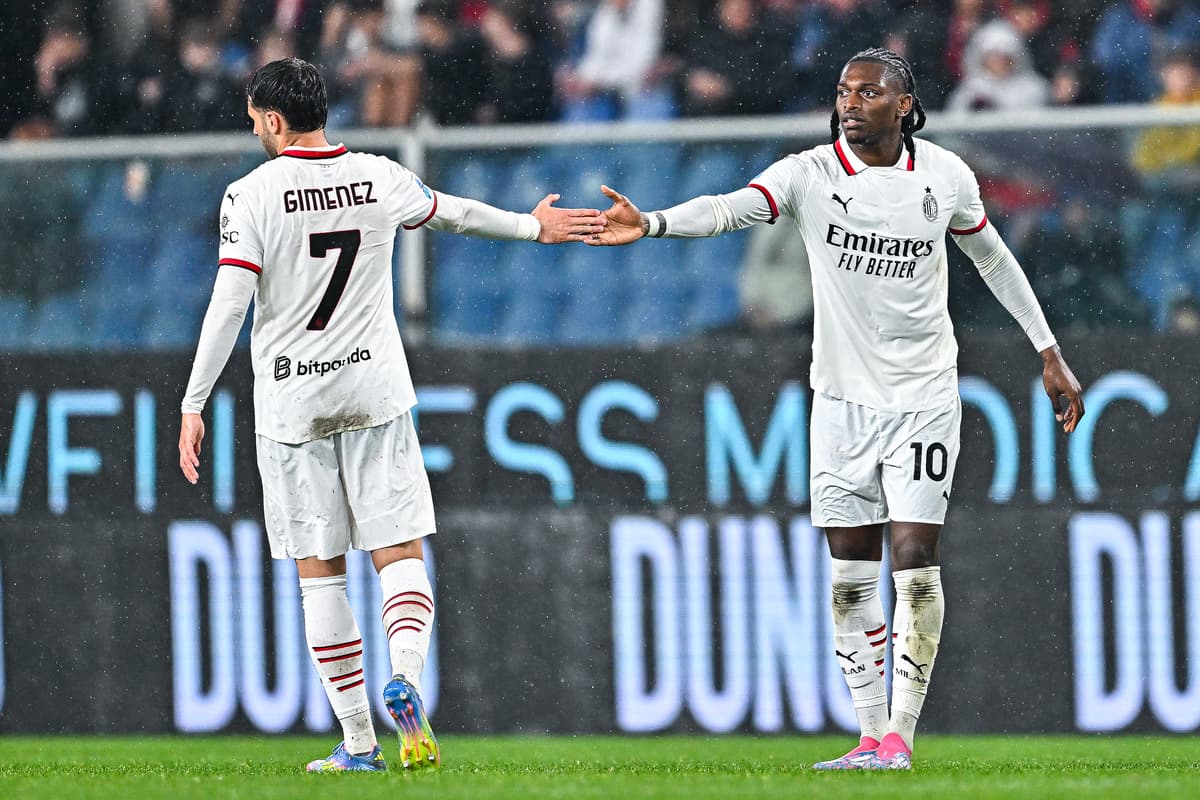
Across from them, Massimiliano Allegri trusted the system that had underpinned Milan’s season: a 3-5-2, used 33 times in the league. M. Maignan started behind a back three of S. Pavlovic, M. Gabbia and F. Tomori. The wing and half-space lanes were patrolled by D. Bartesaghi and Z. Athekame, while the central axis of A. Rabiot, A. Jashari and Y. Fofana provided control and vertical thrust. Up front, S. Gimenez and C. Nkunku offered a blend of penalty-box presence and roaming movement.
The first half, which finished 0-0 at 45+4', mirrored the numbers: Genoa a side that rarely blows teams away early (only 11.63% of their goals between 0-15 and another 11.63% between 16-30), Milan a team comfortable biding their time, with only 7.55% of their league goals in each of those early windows. The match simmered rather than exploded.
II. Tactical Voids: Absences and Discipline
The absences told their own tactical story. Genoa were stripped of width and rotation options: M. Cornet and Junior Messias (both muscle injuries), B. Norton-Cuffy (thigh injury), J. Onana (injury) and L. Ostigard (knock) all missed out. De Rossi’s decision to go with a back four, and to keep A. Martin on the bench, reflected both necessity and caution; without natural wide depth, he trusted the compact Christmas-tree shape to funnel Milan into central traffic.
Milan’s voids were more high-profile and more structural. P. Estupinan, Rafael Leão and A. Saelemaekers were all suspended due to yellow cards. The numbers underline what was missing: Leão had delivered 9 league goals and 3 assists, a constant outlet for direct running and one‑v‑one chaos. Estupinan, who had already accumulated 5 yellows and 1 red, was both an aggressive presser and a progressive passer from wide areas. Allegri’s solution was to load the midfield with A. Rabiot and A. Jashari, then look to S. Gimenez and C. Nkunku to provide the cutting edge Leão usually brings.
Disciplinary trends shaped the risk profiles. Genoa, with 10 yellows to Malinovskyi alone this season and a team yellow-card peak of 25.40% between 61-75 minutes, are used to walking the line. Milan, whose bookings spike late (25.81% of their yellows between 76-90), tend to absorb pressure then foul cynically to break rhythm. That pattern replayed itself as Genoa chased the game in the final quarter, Milan managing the chaos with tactical infringements rather than panic.
III. Key Matchups: Hunter vs Shield, Engine Room vs Enforcer
Without Leão, Milan’s “Hunter vs Shield” battle was more collective than individual. As a unit, Milan had averaged 1.5 away goals per game heading into this fixture, while Genoa were conceding 1.4 overall and 1.4 at home. The real clash was between Milan’s second‑half scoring surge and Genoa’s vulnerability after the break: Milan score 24.53% of their goals between 46-60 and 26.42% between 76-90; Genoa concede 18.75% in both the 46-60 and 61-75 windows and 16.67% from 76-90. When Milan accelerated after the interval, the numbers suggested Genoa’s block would bend—and it did, twice.
In midfield, the “Engine Room” duel was fascinating. Malinovskyi, Genoa’s creative heartbeat with 6 goals and 3 assists this season, carried both playmaking responsibility and disciplinary risk. His 36 fouls committed and 10 yellows speak to a player who defends forward, often on the edge. Up against him, A. Rabiot and Y. Fofana formed Milan’s enforcer axis: physically dominant, able to break lines with carries, and crucial in preventing Baldanzi and Vitinha from receiving between the lines.
Genoa’s best route was always going to be through structured possession and late surges. Their goal-timing profile—30.23% of goals in the final quarter of normal time—matched Milan’s only real defensive soft spot, with 18.75% of Milan’s concessions also arriving between 76-90. When Genoa finally broke through for their solitary goal in that late window, it felt less like a surprise and more like statistical destiny briefly asserting itself.
IV. Statistical Prognosis: Why Milan Edged It
Following this result, the underlying numbers still paint Milan as the more complete side. Overall, they average 1.4 goals for and only 0.9 against per match, with 15 clean sheets (7 at home, 8 away) and just 7 failures to score. Genoa, by contrast, average 1.1 goals for and 1.4 against, with 14 matches where they have failed to find the net.
Expected Goals models would likely have tilted towards Milan: a team that spends long stretches in control, concedes relatively few high-quality chances (only 33 goals against in 37 games), and has the away defensive record—0.7 goals conceded per match on their travels—to survive hostile environments like Ferraris. Genoa’s late push, consistent with their season-long habit of finishing strong, narrowed the scoreline but not the structural gap.
In narrative terms, this 2-1 away win was a microcosm. Genoa fought, pressed late, and leaned on the creativity of Malinovskyi and the industry of Frendrup, but their systemic fragilities after half-time and in central defence were exposed by Milan’s methodical 3-5-2. Milan, even without Leão and Estupinan, found enough quality in the Gimenez–Nkunku axis and the Rabiot‑Fofana‑Jashari engine room to turn territorial control into goals.
The story of the afternoon, then, is of a contender doing just enough, and a battler showing why they sit in mid-table: spirited, dangerous in bursts, but ultimately a step below the cold efficiency that defines a top‑three Serie A side.