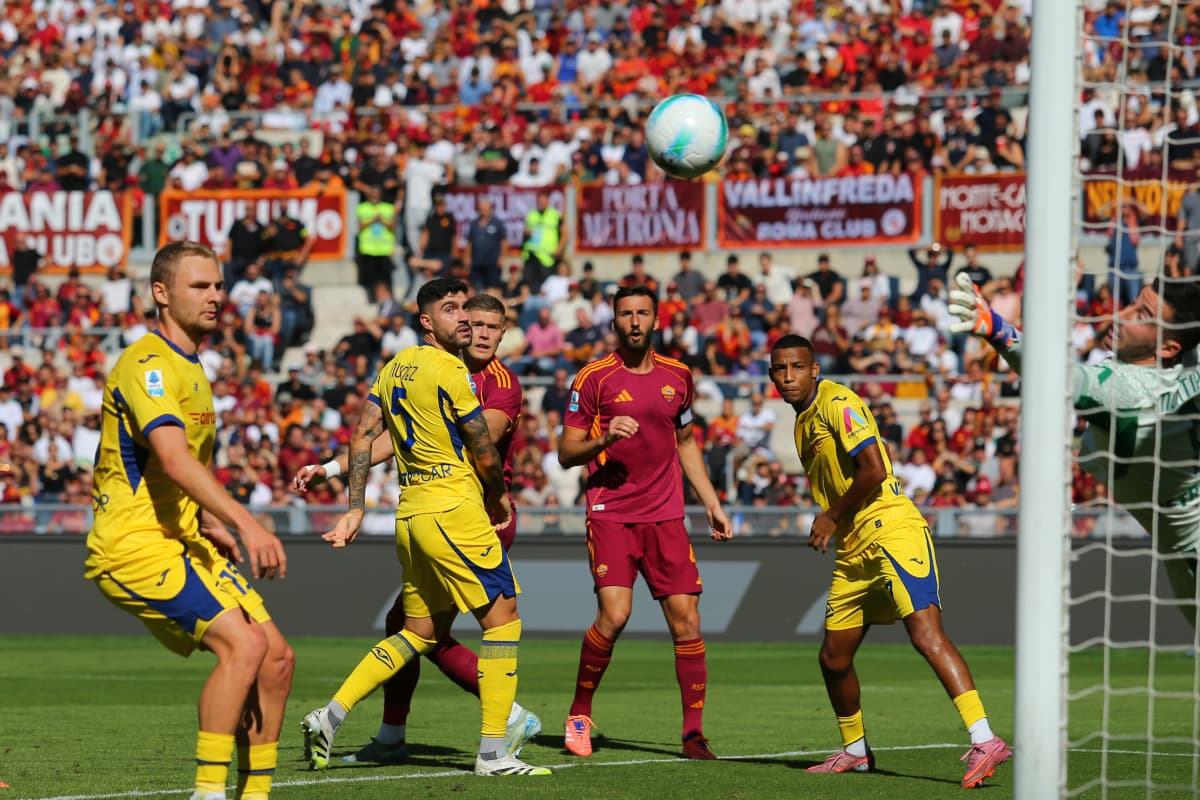
Hellas Verona vs AS Roma: High-Stakes Serie A Finale
In 2026, the final-day Serie A match at Stadio Marcantonio Bentegodi sets up a high-stakes contrast: 19th-placed Hellas Verona, already in the relegation zone with 21 points, host 4th-placed AS Roma, who arrive on 70 points and are defending a Champions League qualifying position in Round 38 of the regular season. For Verona, this is a last chance to avoid or at least soften the blow of relegation; for Roma, it is about locking in a top-4 finish and potentially improving their final rank.
Head-to-Head Tactical Summary
The recent head-to-head pattern is sharply split by venue. On 28 September 2025 at Stadio Olimpico, AS Roma beat Hellas Verona 2-0 in Serie A (Regular Season - 5), leading 1-0 at half-time. Earlier in 2025, on 19 April at Stadio Olimpico (Regular Season - 33 of the 2024 season), Roma again won 1-0, having been 1-0 up at the break.
When the fixture moved to Verona, the dynamic changed. On 3 November 2024 at Stadio Marcantonio Bentegodi (Regular Season - 11, 2024), Hellas Verona defeated Roma 3-2, after leading 2-1 at half-time in an open, high-scoring contest. Going further back, on 20 January 2024 at Stadio Olimpico (Regular Season - 21, 2023), Roma beat Verona 2-1, leading 2-0 at half-time. And on 26 August 2023 at Stadio Marcantonio Bentegodi (Regular Season - 2, 2023), Verona again prevailed 2-1 over Roma after a 2-0 half-time lead.
Tactically, this recent series shows Roma generally controlling home fixtures with narrow, defensively solid wins, while Verona have managed to turn Bentegodi into a more volatile, higher-scoring battleground where they have twice edged Roma 2-1 and 3-2.
Global Season Picture
- League Phase Performance: In the league phase, Hellas Verona sit 19th with 21 points from 37 games, scoring 25 and conceding 59 (goal difference -34). Their home record at Bentegodi is particularly weak: 1 win, 5 draws, 12 losses, with 12 goals for and 26 against. AS Roma are 4th with 70 points from 37 matches, having scored 57 and conceded 31 (goal difference +26). Away from home, Roma have 9 wins, 1 draw and 8 defeats, with 24 goals scored and 21 conceded.
- Season Metrics: In the league phase, Verona’s attacking output is low at 0.7 goals per match (25 in 37) with an average of 0.7 both home and away, while they concede 1.6 per game (59 in 37), with 1.4 at home and 1.7 away, underlining a fragile defense (59 conceded) and a blunt attack (25 scored). Clean sheets are rare (6 total) and they have failed to score in 19 matches, pointing to a consistently struggling offense. Roma, by contrast, average 1.5 goals per league game (57 in 37), with 1.7 at home and 1.3 away, while conceding just 0.8 per match (31 in 37), including an outstanding 0.5 at home and 1.2 away, reflecting a well-balanced, top-4 level side. They have 17 clean sheets and have failed to score only 7 times, indicating a reliable attack and a robust defensive structure. Disciplinary data show Verona picking up a high volume of yellow cards across all time ranges and multiple reds, suggesting defensive pressure and late-game stress, whereas Roma’s card profile is more controlled, with yellows concentrated after the break and fewer reds.
- Form Trajectory: In the league phase, Verona’s form string “DLDDL” shows a run of 5 games without a win, with 3 draws and 2 losses, consistent with a team unable to generate the wins needed to escape the bottom. Roma’s “WWWWD” reflects 4 consecutive wins followed by a draw, a strong late-season surge that has consolidated their top-4 position and gives them momentum heading into this finale.
Tactical Efficiency
Without explicit numerical Attack/Defense Index values from the comparison block, the efficiency contrast must be inferred from league-phase production and consistency. Verona’s 0.7 goals scored and 1.6 conceded per match, combined with 19 games without scoring and only 6 clean sheets, signal a low attacking efficiency and a defense under constant strain, even when using compact systems like 3-5-2 and related back-three variants. Their biggest wins (3-1 at home, 1-2 away) are isolated events rather than a repeatable pattern, and the frequency of yellow and red cards suggests that their defensive work often becomes reactive rather than controlled.
Roma’s profile is the opposite: 1.5 goals scored and 0.8 conceded per match, 17 clean sheets, and only 7 matches without a goal indicate a high tactical efficiency on both sides of the ball. Their most-used structure, a 3-4-2-1, has been deployed in 29 league games and provides stability: they can protect leads (low goals against, especially at home) and still create enough chances to maintain a strong scoring rate. The away defensive average of 1.2 goals conceded per game is competitive and, paired with 1.3 scored away, underpins an away record that, while not dominant, is clearly superior to Verona’s home output.
From a probabilistic standpoint, any comparison-based Attack/Defense Index would be expected to rate Roma’s attack as significantly above league average and their defense as among the stronger units in the division, whereas Verona’s indices would sit well below average in attack and among the weakest in defense. This underpins a matchup where Roma’s structured, efficient approach should, on paper, exploit Verona’s need to overcommit in a must-get-result scenario.
The Verdict: Seasonal Impact
For Hellas Verona, this fixture is season-defining at the bottom. Sitting 19th with 21 points and a -34 goal difference in the league phase, they are deep in relegation trouble. A win could still be necessary but not sufficient, depending on other results; a draw or defeat would almost certainly confirm their drop to Serie B. Beyond the mathematics, performance here will shape the post-2026 narrative: a positive result against a top-4 side could provide a platform for a rebuild and maintain some squad value, whereas another limp home display would underline structural issues in both recruitment and tactical setup.
For AS Roma, arriving 4th on 70 points with strong form (“WWWWD”), the primary seasonal impact is on Champions League security and final ranking. A win would likely cement 4th place and might even open a path to climbing higher if teams above them slip, reinforcing the perception of Roma as a stable Champions League club in 2026. Dropped points, especially a defeat against a relegation candidate, would not only risk their grip on the top-4 if the table is tight, but could also raise questions about their away resilience and game management in high-pressure, end-of-season contexts.
Strategically, Roma can approach this match as an opportunity to translate a strong statistical profile into a clear outcome: control the tempo, lean on their defensive solidity (31 conceded in the league phase), and punish Verona’s low-scoring attack. Verona, by contrast, must embrace risk: their historical ability to unsettle Roma at Bentegodi, as seen in the 2-1 win on 26 August 2023 and the 3-2 win on 3 November 2024, is the template they need to recreate. The result will either confirm Roma’s Champions League trajectory and Verona’s relegation, or produce one of the most disruptive final-day twists in the 2025 Serie A campaign.