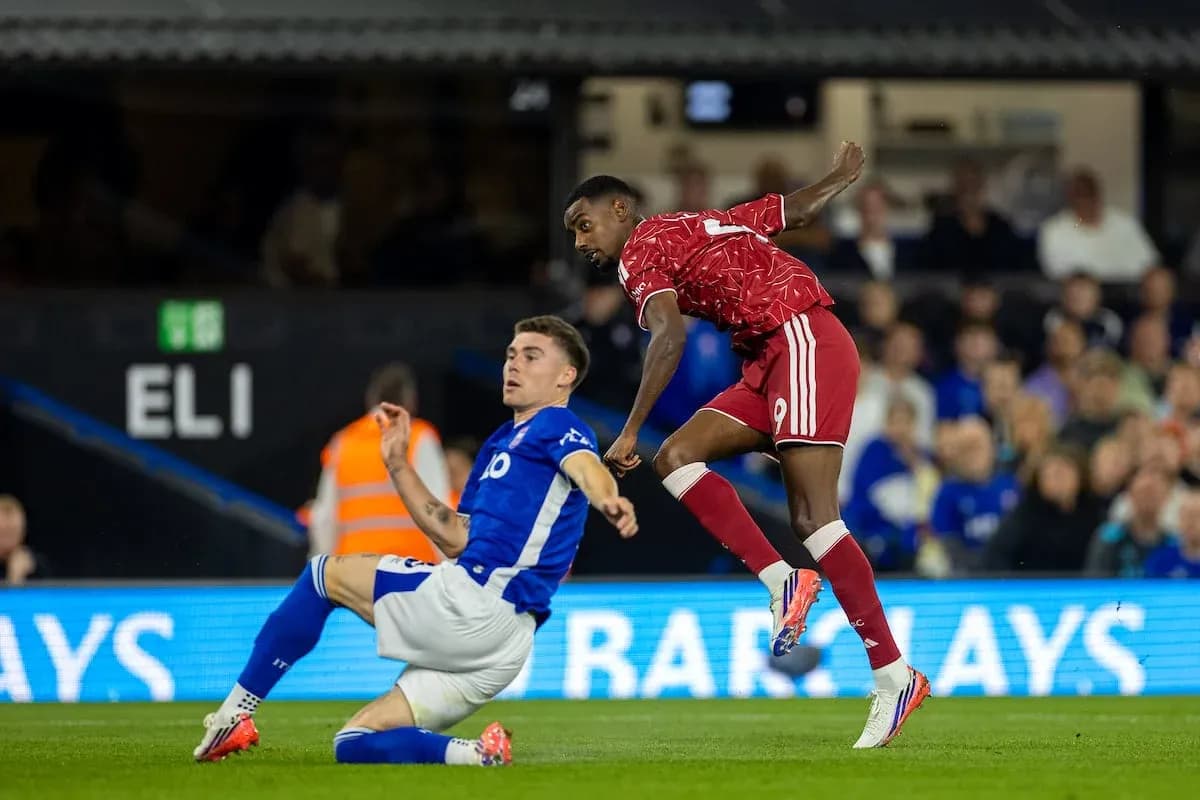
Ipswich vs Liverpool: Premier League Clash at Portman Road
Portman Road under the Friday night lights hosted a meeting of two very different Premier League projects. Ipswich, newly feeling the weight of top-flight reality, came into Round 3 in 14th, with 3 points from 3 matches and a goal difference of -4, their early-season story written in sharp contrasts: 4 goals scored in total, but 8 conceded overall. Liverpool arrived as the more stable force, 6th in the table with 5 points, unbeaten, and carrying a total goal difference of +2 from 6 goals for and 4 against.
Final Score: Ipswich 0 - 2 Liverpool
The final scoreline – Ipswich 0, Liverpool 2 – felt like a logical extension of the underlying numbers heading into this game. Ipswich had been relatively modest at home, with 2 goals scored and 3 conceded at Portman Road, averaging 1.0 goal for and 1.5 against at home. Liverpool, by contrast, had been efficient on their travels: 4 away goals from 2 matches, conceding just 2, for an away average of 2.0 goals scored and 1.0 conceded.
Team Formations
Both managers leaned into a 4-2-3-1, but the systems carried very different intentions. Gary O’Neil’s Ipswich used K. Scherpen behind a back four of D. O’Shea, I. Diop, J. Greaves and L. Davis, with S. Lukić and E. Palacios as the double pivot. Ahead of them, the creative burden fell on A. Fatawu, J. Enciso and D. Maeda, with Emersonn as the lone forward.
Andoni Iraola mirrored the shape but not the mentality. Alisson Becker anchored a back line of R. Araújo, J. Jacquet, V. van Dijk and M. Kerkez. In front, D. Szoboszlai and A. Mac Allister formed a technically gifted screen, with Víctor Muñoz, F. Wirtz and C. Gakpo floating behind the spearhead, A. Isak – the league’s leading scorer so far with 3 goals from 3 appearances.
Injuries and Tactical Adjustments
The absences framed the tactical voids. Ipswich were without A. Matusiwa, J. Philogene and J. Taylor, all ruled out through injury. Matusiwa’s absence removed a natural destroyer from midfield, forcing O’Neil to lean heavily on Lukić’s positional discipline and Palacios’ work rate. Without Philogene’s one‑v‑one threat and Taylor’s running power, Ipswich’s attacking band behind Emersonn looked talented but light on Premier League-hardened penetration.
Liverpool’s injury list was longer but better absorbed by squad depth. C. Bradley, F. Chiesa, H. Ekitike, J. Gomez and G. Leoni all missed out, thinning Iraola’s options in the full-back rotations and forward line. Yet with Van Dijk marshalling the defence, and Kerkez and Araújo both capable of aggressive front-foot defending, Liverpool could still maintain their trademark high line and compact pressing.
Discipline and Card Distribution
Discipline was always going to be a subtext. Ipswich, heading into this match, had collected all their yellow cards in first-half and early second-half windows: 75.00% of their yellows arriving between 31-45 minutes, and the remaining 25.00% in the 46-60 period. That pattern suggested a side that starts aggressively, perhaps overcompensating physically as games slip away. Liverpool, by contrast, spread their cautions more evenly, with 10.00% in the opening 15 minutes, 20.00% between 16-30, then a spike to 40.00% between 46-60, and 20.00% in the closing 15 minutes. The implication: Iraola’s team tend to tighten the vice after half-time, sometimes stepping over the disciplinary line as they increase the tempo.
Key Individual Performances
Individually, Liverpool brought some of the league’s most combative defenders. M. Kerkez, already on 2 yellow cards this season and featuring among the top disciplinary offenders, had also blocked 3 shots, a sign of his front-foot engagement. R. Araújo, with 1 yellow and 2 blocked shots, embodied the blend of aggression and recovery pace that allows Liverpool to defend high without constant fear of the ball in behind.
The “Hunter vs Shield” duel was always going to centre on A. Isak against an Ipswich defence that had conceded 8 goals in total across their first 3 matches. Isak’s 3 goals from 7 shots (5 on target) and a rating of 7.77 painted the portrait of a ruthless finisher in form. Diop and Greaves, with Scherpen behind them, were tasked with compressing the space between the lines and denying Isak the pockets where he thrives. But Ipswich’s total average of 2.7 goals conceded per game, and particularly the 5 goals allowed on their travels, hinted at structural fragility that better sides can expose even at Portman Road.
Midfield Battles
In the “Engine Room” duel, A. Mac Allister and D. Szoboszlai faced Lukić and Palacios. Mac Allister’s passing range and press resistance allowed Liverpool to dictate the tempo, while Szoboszlai’s verticality threatened to pin Ipswich’s double pivot deep. On Ipswich’s side, J. Enciso and A. Fatawu represented the creative counterweight. Enciso arrived with 2 assists in total and a rating of 7.00, having produced 83 passes at 87% accuracy, 4 key passes and 11 shots. Fatawu, with 1 assist, 7 key passes and 15 dribble attempts (7 successful), offered the direct running needed to turn Liverpool’s advanced full-backs.
Yet Liverpool’s own wide threat was formidable. C. Gakpo, top of the league’s assist charts with 3 in total, had already created 8 key passes and chipped in with 1 goal himself. His tendency to drift between the lines and combine with Wirtz and Isak made him the primary “connector” in Iraola’s system. Ipswich’s full-backs, Davis and O’Shea, were forced into a constant balancing act: step out to Gakpo and risk the run in behind, or stay compact and concede space between the lines.
Statistical Insights
Statistically, the pre-match patterns tilted heavily towards the visitors. Liverpool’s total average of 2.0 goals scored per game, combined with Ipswich’s total average of 2.7 goals conceded, suggested that the away side were likely to generate a higher xG profile, even without explicit xG figures available. Liverpool’s defensive record – just 4 goals conceded in total, with 2 on their travels – underscored a unit that, while not yet watertight, was considerably more stable than Ipswich’s.
Penalties as a Factor
Penalties offered a small but telling detail. Liverpool had been awarded 1 penalty this season and converted it, with 100.00% success and no misses. Ipswich, by contrast, had yet to take a penalty at all, their total standing at 0. That reliability from the spot added another layer of threat if Liverpool were able to force desperate challenges in the box.
Taken together, the narrative of this fixture was of an Ipswich side still learning the margins of the Premier League, leaning on the individual flair of Enciso and Fatawu but undermined by a porous defensive structure, against a Liverpool team that married elite individual quality with a coherent 4-2-3-1. The 2-0 full-time score at Portman Road simply crystallised what the numbers had been whispering all week: Liverpool’s firepower and organisation were likely to edge, and ultimately control, this contest.